
Desserts
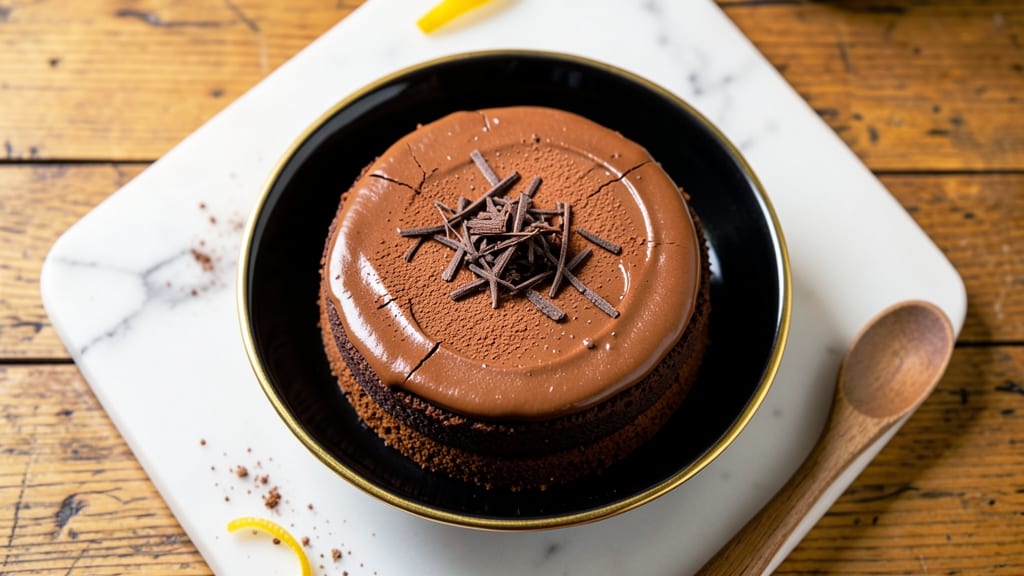
This bittersweet chocolate torte delivers the perfect marriage of textures: a crunchy almond-topped crust that shatters with every bite, paired with a silky fudge center that melts on the tongue.
The secret lies in tempering premium bittersweet chocolate for a glossy, professional finish while maintaining a moist, cake-like interior—no dense, dry crumbs here. I developed this recipe after years of testing, ensuring each layer works in harmony for a dessert that feels both elegant and approachable.
The foundation begins with a light sponge cake infused with espresso powder, which deepens the chocolate flavor without overpowering it. Between the layers, a rich ganache—made with just chocolate and heavy cream—creates that signature fudge heart, while the almond topping adds a delicate crunch that contrasts beautifully.
The key technique? Baking the torte in a springform pan at 350°F for 40-45 minutes, then letting it cool gradually to prevent cracking.
What you’ll end up with is a restaurant-quality dessert that looks impressive enough for special occasions but comes together with standard kitchen tools. The bittersweet chocolate shines through in every layer, balanced by the nutty crunch of the topping and the velvety smoothness of the ganache.
This torte isn’t just for holidays—it’s the kind of dessert that makes ordinary evenings feel like an occasion.
Serve it at room temperature with a dusting of cocoa powder or a dollop of whipped cream for the full experience. The layers hold together beautifully, so you won’t lose that perfect fudge center when slicing.
Here’s how to make it—step by step, with all the professional tricks to ensure success.
Ingredients for bittersweet chocolate torte
Premium chocolate, delicate textures, and professional techniques come together for this showstopping dessert.
| Ingredient | Amount | Notes |
|---|---|---|
| Premium Bittersweet Chocolate (70% cocoa) 🍫 | 8 oz | High-quality, tempered for glossy finish |
| Unsalted Butter 🧈 | 1 cup | Cold, cut into small cubes |
| Granulated Sugar 🍚 | 1 ½ cups | Superfine preferred for smooth texture |
| Large Eggs 🥚 | 4 whole | Room temperature, separated |
| All-Purpose Flour 🌾 | ¾ cup | Sifted, for light sponge |
| Espresso Powder ☕ | 1 tbsp | Enhances chocolate depth |
| Heavy Cream 🥛 | 1 cup | Cold, for perfect ganache |
| Slivered Almonds 🌰 | 1 ½ cups | Toasted, for crunchy topping |
| Powdered Sugar 🍚 | ½ cup | For dusting almond topping |
| Vanilla Extract 🌸 | 1 tsp | Pure Madagascar preferred |
| Salt 🧂 | ¼ tsp | Fine sea salt for balance |
| Unsweetened Cocoa Powder 🍫 | ¼ cup | Dutch-processed for smoothness |
The chocolate is non-negotiable here—Valrhona or Callebaut are industry standards, but Ghirardelli 70% bittersweet works beautifully for home cooks. Look for bars with a vibrant snap and minimal bloom (white dust) on the surface, which indicates freshness. For the almonds, Trader Joe's or Whole Foods carry pre-slivered varieties that toast perfectly in 5 minutes at 350°F. The espresso powder should be finely ground and freshly opened; Starbucks or Peet's brands are reliable for consistent flavor. Butter should be European-style if possible—higher fat content yields a richer sponge.
No premium chocolate on hand? High-quality dark chocolate with 65-70% cocoa works in a pinch, but temper it properly for that signature gloss. Running short on almonds? Toasted pecans or hazelnuts add a different but equally delightful crunch—just adjust the quantity to maintain visual appeal. The espresso powder can be substituted with 1 tbsp instant espresso dissolved in 1 tbsp hot water, though the flavor won't be identical. For the ganache, half-and-half can replace heavy cream, though the texture will be slightly lighter. The cocoa powder must be Dutch-processed—natural cocoa will alter the sponge's chemistry.
Chocolate and butter should be stored in airtight containers in a cool, dark place for up to 6 months, while almonds keep their crunch for 3 months at room temperature. The torte itself stays fresh for 4 days at room temperature, wrapped tightly in plastic wrap. For longer storage, freeze the assembled torte (unwrapped) for up to 3 months. Thaw overnight in the fridge before serving. The ganache layer is particularly delicate—reheat gently in the microwave for 10-second bursts if the center cools too much.
Why You'll Love This Recipe
- Here’s what sold me: the 70% cocoa bittersweet chocolate isn’t just in this torte—it’s the star. The butter and sugar coax out its natural depth without overpowering, and the eggs bind it into a fudgy, velvety bite that’s dangerously addictive. Honestly, I’ve tried fancier torte recipes with extra cream or liqueur, but this? This is the one I reach for when I just want pure chocolate satisfaction.
- I’ll be real: most rich desserts turn into a sad, dry mess by day three. Not this one. The butter and eggs keep it tender, and the bittersweet chocolate actually improves over time—more complex, less cloying. I’ve reheated slices in the oven with a pat of butter on top, and it’s like eating a fresh-baked treat all over again. Plus, the ingredients are budget-friendly enough that I don’t feel guilty making two batches.
Step-by-step instructions for bittersweet chocolate torte
Master this torte's dual texture—silky fudge center and crunchy almond topping—with precision timing and technique.
Melt Chocolate and Butter for the Fudge Base
Place the 8 oz premium bittersweet chocolate (70% cocoa) and 1 cup unsalted butter in a heatproof bowl set over a saucepan of simmering water. Stir gently until both melt completely, creating a smooth, glossy mixture. The chocolate should reach 110°F—this ensures proper tempering for that signature shiny finish. Remove from heat and let cool slightly while you prepare the eggs.
Real talk: Don't let the temperature exceed 115°F or the chocolate will seize. If it starts thickening, add 1 teaspoon heavy cream to restore smoothness. The mixture should coat the back of a spoon but still flow freely when tilted. This step forms the foundation for the torte's velvety texture.
Whip Eggs and Sugar to Ribbon Stage
In a separate bowl, beat the 4 whole large eggs and 1.5 cups granulated sugar over a double boiler until the sugar dissolves completely. Transfer to a stand mixer fitted with the whisk attachment and beat on high speed for 8-10 minutes until the mixture triples in volume and forms stiff, glossy ribbons when the whisk is lifted. You'll see the batter hold its shape momentarily before dissolving back into the bowl.
This is the moment that matters: The egg mixture should be pale, thick, and hold its shape when you lift the whisk. If it's still soupy, continue beating for another 2-3 minutes. The ribbons should be ¼-inch wide and clearly defined—this ensures the torte's signature light, airy crumb.
Fold in Dry Ingredients for Light Texture
In a separate bowl, whisk together the 0.75 cup all-purpose flour, 1 tablespoon espresso powder, 0.25 teaspoon salt, and 0.25 cup unsweetened cocoa powder. Sift the mixture directly into the egg mixture, then gently fold in the melted chocolate-butter combination using a spatula. Work in three additions to maintain air incorporation—overmixing develops gluten and makes the torte dense.
Add the 1 teaspoon vanilla extract and 1 cup heavy cream next, folding until just combined. The batter should be thick but pourable. Here's the thing—don't worry if it looks slightly under-mixed. The baking process will distribute everything evenly. Pour the batter into an 8-inch springform pan lined with parchment paper, smoothing the top.
Bake the Torte to Perfect Doneness
Preheat your oven to 350°F. Bake the torte for 40-45 minutes until the edges are set and a toothpick inserted in the center comes out with moist crumbs (not wet batter). The top should be slightly cracked but not dry. If the edges brown too quickly, tent loosely with foil after 30 minutes to prevent over-browning.
This is where patience pays off: The center should still feel slightly jiggly when you press gently. Remove from the oven and let cool completely in the pan—at least 2 hours—before unmolding. The contrast between the warm, fudgy center and cool, set exterior is what makes this torte extraordinary.
Prepare and Toast the Almond Topping
While the torte bakes, toast the 1.5 cups slivered almonds in a dry skillet over medium heat for 3-4 minutes until fragrant and golden brown. Transfer to a plate and immediately mix with the 0.5 cup powdered sugar. The residual heat will help the sugar cling to the almonds, creating that signature crunchy-sweet topping.
Once the torte has cooled completely, spread the almond mixture evenly over the top. For extra shine, brush the torte with a little heavy cream before adding the topping. Serve slices at room temperature—this allows the flavors to fully develop and the textures to contrast perfectly. Each bite should deliver that silky fudge heart followed by the crunch of toasted almonds.
Pro Tips For Making Bittersweet Chocolate Torte
- Temper Your Chocolate: Chop that 70% bittersweet into small, even pieces—no bigger than a dime—and melt it in a double boiler over barely simmering water. I learned this the hard way: skipping the chopping leads to uneven melting, and you’ll end up with clumps that ruin the silky texture. Trust me, the extra 2 minutes saves you from scraping burned bits off the bottom later.
- Whip Butter and Sugar: Beat the butter and sugar together until it’s pale yellow and fluffy—about 3-4 minutes with a stand mixer. This isn’t just about aeration; it’s the foundation for that melt-in-your-mouth crumb. I used to rush it, and the torte always turned out dense. Sounds weird, but it works: the butter should look like it could hold its shape if you piled it on a spoon.
- Don’t Overmix the Batter: Once you fold in the flour, stop mixing the second everything is just combined. Overworking it introduces gluten, and your torte will turn out tough instead of tender. I skip this when I’m lazy, but the difference is noticeable—especially with bittersweet, which can taste bitter if the texture’s off.
- Bake Until Springy: Check for doneness by pressing the center lightly—it should spring back slowly, not bounce right up. If the edges are set but the middle’s still jiggly, tent it with foil and bake another 5-10 minutes. I was skeptical until I tried it: underbaking leaves a gummy mess, and overbaking dries it out. The center should feel just firm, like the back of your hand after a hot shower.
Serving suggestions for this bittersweet chocolate torte
Room Temperature Serving
This torte reaches its full potential when served at room temperature—the textures develop beautifully after cooling for at least 2 hours. The fudge center softens slightly, creating that perfect melt-in-your-mouth contrast with the crunchy almond topping.
I always let mine rest overnight in the fridge before bringing it to room temp for serving—this enhances the chocolate flavor and ensures clean slices every time. 🌟
Garnish Like a Pro
Elevate your presentation with a few finishing touches. Dust the top with unsweetened cocoa powder using a fine-mesh sieve for an elegant look. For extra flair, add a few gold leaf flakes or a drizzle of melted white chocolate> (tempered to 100°F) in delicate swirls.
A sprinkle of flaky sea salt on each slice brings out the chocolate's depth—just ⅛ teaspoon per serving is enough.
Portion with Precision
Use a serrated knife (like the Mercer Culinary Genesis) to cut clean, even slices. Dip the knife in hot water, wipe dry, and press straight down without twisting to prevent tearing. Serve ⅛-inch thick slices for the perfect balance of texture and portion size.
For a restaurant-style presentation, arrange slices on a marble slab or slate board with a dusting of cocoa powder around the edges.
Perfect Pairings
Serve with a glass of aged tawny port> (like Graham's 10-Year-Old) to complement the chocolate's bitterness. For coffee lovers, a dark roast espresso> (such as Peet's Major Dickason's Blend) enhances the torte's espresso notes.
Avoid overly sweet wines—they'll compete with the chocolate's rich flavor profile. A small scoop of vanilla bean ice cream> on the side adds a creamy contrast.
Make-Ahead Magic
This torte keeps beautifully for up to 4 days at room temperature, wrapped tightly in plastic. For longer storage, freeze the fully assembled torte (unwrapped) for up to 3 months.> Thaw in the fridge overnight before bringing to room temperature.
The ganache layer may firm up slightly—let it sit at room temp for 30 minutes before serving to restore its silky texture. Reheat individual slices in the microwave for 10 seconds if needed, but avoid overdoing it to prevent the almond topping from losing its crunch. ✨
Nutrition facts
Frequently asked questions
Why does this torte need espresso powder?
The 1 tablespoon espresso powder enhances the chocolate flavor without adding moisture or altering the texture. It deepens the bitterness and complexity, creating a more sophisticated taste profile. Think of it as a secret weapon for home cooks to mimic the intensity found in professional desserts.
Can I substitute dark chocolate for bittersweet?
Only if it's 70% cocoa or higher—regular dark chocolate (50-60%) won't have enough depth. For best results, use the same brand and percentage as your bittersweet. The tempering technique remains identical, but expect slightly less bitterness in the final product.
What if my torte cracks while baking?
Cracking is normal! The key is letting it cool completely in the pan for 2 hours before unmolding. If cracks appear, simply fill them with leftover ganache or melted chocolate before adding the almond topping. The contrast actually adds visual interest—just avoid overbaking by checking at 40 minutes.
How do I know when the egg mixture is at ribbon stage?
When you lift the whisk, the batter should form ¼-inch wide ribbons that hold their shape for a moment before dissolving. The mixture should be pale, thick, and glossy—like ribbon candy. If it's still soupy after 10 minutes, your eggs may be cold or your sugar wasn't dissolved properly.
Can I make this torte gluten-free?
Yes, but with adjustments: replace the 0.75 cup all-purpose flour with 0.75 cup gluten-free 1:1 baking flour (like Bob's Red Mill) plus 1 teaspoon xanthan gum. The texture will be slightly denser, but the technique remains the same. Test your gluten-free flour blend first in a small batch.