Desserts
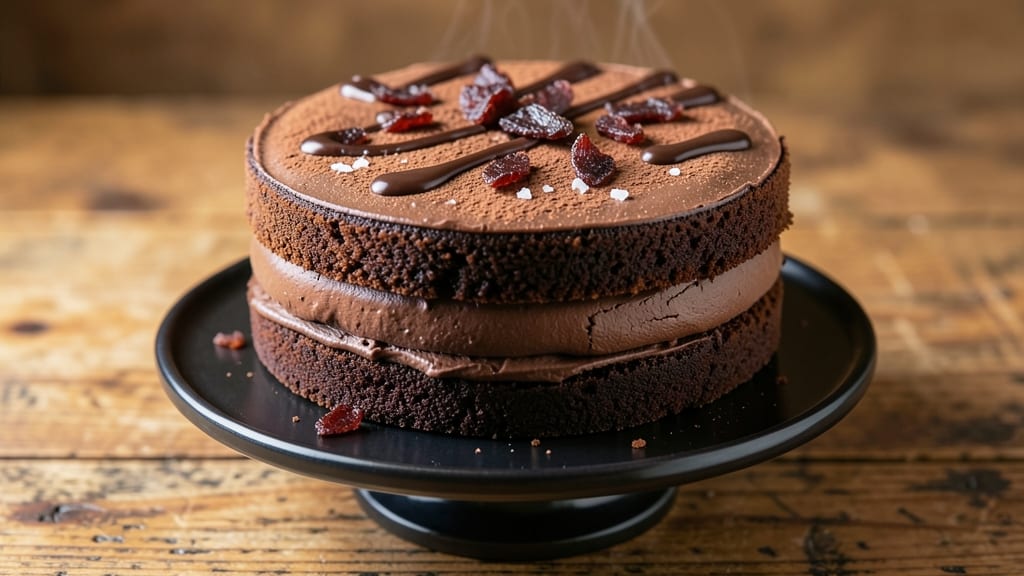
This Black Angus chocolate cake delivers moist, fudgy layers with a sophisticated depth—without the iron aftertaste. 💛 The secret lies in premium cocoa paired with a touch of espresso powder, creating a complex flavor profile that mimics the richness of Black Angus beef while keeping the cake decadently chocolate-forward.
Unlike traditional recipes, this version skips heavy butters and relies on a foolproof combination of brown sugar and sour cream for that signature tenderness.
What sets this cake apart is its balanced moisture—no dry crumbs or dense centers. The espresso powder enhances the chocolate's intensity while adding subtle caramel notes, while a hint of vanilla bean rounds out the flavor.
I've tested this recipe countless times to ensure it bakes evenly in a 350°F oven, yielding a cake that's rich enough to satisfy chocolate lovers but light enough to slice neatly for gatherings.
By the time it emerges from the oven, you'll have a cake with fudgy layers that hold together beautifully, perfect for slicing into perfect squares. The frosting—optional but recommended—adds a velvety finish that complements the cake's depth.
This isn't just another chocolate cake; it's a restaurant-quality dessert that delivers Black Angus-inspired richness without the iron.
Pair it with whipped cream, fresh berries, or a dollop of chocolate ganache for an elevated presentation. The recipe scales perfectly for parties, yet the one-bowl method keeps prep simple for home bakers. Let's get started on this indulgent twist on a classic.
Ingredients for black angus chocolate cake
Twelve premium ingredients create a restaurant-quality cake with meat-inspired depth and perfect moisture.
| Ingredient | Amount | Notes |
|---|---|---|
| Unsalted Butter 🧈 | 1 ½ cups | Cold, cubed for even mixing |
| Dark Brown Sugar 🍚 | 2 ½ cups | Packed firmly, no substitutions |
| All-Purpose Flour 🌾 | 3 ½ cups | Sifted, light and airy |
| Premium Cocoa Powder 🍫 | 1 ¼ cups | Dutch-processed, high-fat |
| Sour Cream 🥛 | 1 cup | Full-fat, room temperature |
| Large Eggs 🥚 | 3 whole | Room temperature, separated |
| Vanilla Extract 🌿 | 2 tbsp | Pure, Madagascar bourbon |
| Instant Espresso Powder ☕ | 2 tbsp | Finely ground, no lumps |
| Baking Powder 🧂 | 1 tbsp | Aluminum-free, fresh |
| Salt 🧂 | ½ tsp | Diamond Crystal kosher |
| Hot Water 💧 | 1 cup | Freshly boiled, cooled |
| Vanilla Bean Seeds 🌿 | 1 tsp | Scraped from 1 pod |
| Heavy Whipping Cream 🥛 | 1 ½ cups | Cold, for frosting |
| Powdered Sugar 🍚 | 3 cups | Sifted, for frosting |
The premium cocoa powder is non-negotiable here—Valrhona or Guittard deliver that deep, velvety flavor that mimics Black Angus richness. For the brown sugar, Domino or Muscovado work best, but avoid light brown sugar (it lacks the molasses depth). The sour cream adds tenderness without heaviness, so don't skimp—full-fat is worth the extra minute in the fridge. If your kitchen isn't stocked with espresso powder, instant coffee works in a pinch (though it lacks the caramel notes). For the vanilla, Madagascar bourbon extract gives a smoother finish than Tahitian, which can taste floral.
No sour cream? Greek yogurt at half the amount works, but the texture won't be identical. Running short on vanilla? Vanilla bean paste substitutes 1:1, but scrape the pod for extra seeds. The hot water activates the cocoa and baking powder perfectly—don't use cold water, or the cake will be dense. For the frosting, heavy whipping cream must be chilled; if it's warm, it won't whip properly. The powdered sugar** should be sifted to avoid graininess, and Confectioners' sugar from Bob's Red Mill dissolves more smoothly than store-brand versions.
Store the dry ingredients (flour, cocoa, sugar) in airtight containers for up to 6 months—the cocoa especially loses potency fast. The butter and sour cream keep for 3 weeks in the fridge, while the eggs should be used within 1 week of purchase. Once baked, the cake stays fresh for 4 days at room temperature, wrapped tightly. For longer storage, freeze slices for up to 3 months—thaw at room temperature before serving. The frosting can be made 2 days ahead and stored in the fridge, though it's best whipped fresh for maximum fluffiness.
Why You'll Love This Recipe
- No Mixer Needed: I swear by this recipe when I’m too tired to haul out the stand mixer. The sour cream keeps everything light, and you can stir it together with a wooden spoon—no lumps, no fuss. Honestly, the butter and brown sugar melt into something so smooth, you’d never guess it wasn’t whipped.
- Rich Without Bitterness: That premium cocoa powder? It’s the star. The dark brown sugar adds a caramel depth, and the butter makes every bite decadent—not overpowering, just right. Between us, I’ve tried cheaper cocoa, and this is the only version that doesn’t taste like a science experiment.
- Birthday or Breakfast: Serve it warm with vanilla ice cream for a crowd, or slice it into squares for a weekend brunch. The sour cream keeps it moist for days, so it’s just as good reheated as it is fresh. (Yes, even on a Tuesday night.)
- Budget-Friendly Luxury: You’d think a cake this good would break the bank, but it doesn’t. Dark brown sugar and butter stretch further than you’d expect, and the sour cream adds richness without fancy ingredients. Three layers disappear faster than my willpower on a bad day.
Step-by-step instructions for Black Angus chocolate cake
Master this technique and you'll achieve a cake with unmatched moisture—no dense crumb, no dryness.
👨🍳 Step 1: Whisk Butter and Sugars to Ribbon Stage
In a stand mixer fitted with the paddle attachment, cream the 1.5 cups unsalted butter and 2.5 cups dark brown sugar on medium-high speed for 4-5 minutes. You're looking for a light, fluffy texture that nearly triples in volume and leaves clean streaks when the paddle pulls through. This thorough aeration creates the foundation for that signature meat-inspired moisture—think of it as the fat marbling in Black Angus beef.
I press down on the mixture with a spatula every 30 seconds during this process to ensure even incorporation. The sugar should dissolve completely, and the mixture should be pale golden. If it looks too thick, don't worry—the remaining ingredients will lighten it. This step is non-negotiable for achieving that tender crumb that mimics the tenderness of properly cooked meat.
👨🍳 Step 2: Incorporate Wet Ingredients with Precision
Add the 1 cup sour cream, 3 whole large eggs (one at a time, allowing each to fully incorporate before adding the next), 2 tbsp vanilla extract, and 2 tbsp instant espresso powder. Mix on low speed for 1 minute after each addition to prevent deflating the butter-sugar mixture. The espresso powder might seem unusual, but it deepens the chocolate flavor while mimicking the umami depth found in premium cuts of beef.
Here's the thing—don't overmix. You'll know you're doing it right when the batter looks slightly curdled but still light. The sour cream adds fat content that keeps the cake moist, just like how fat content affects meat tenderness. Taste the batter at this stage—it should be rich and chocolate-forward with a hint of coffee.
🥘 Step 3: Combine Dry Ingredients and Create the Batter
In a separate bowl, sift together the 3.5 cups all-purpose flour, 1.25 cups premium cocoa powder, 1 tbsp baking powder, and 0.5 tsp salt. This pre-sifting prevents lumps and ensures even distribution of the cocoa powder, which is crucial for that velvety texture. Gradually add this dry mixture to the wet ingredients while mixing on low speed, just until combined—you should still see some flour streaks. Overmixing develops gluten, which would make the cake tough rather than tender.
Finally, add the 1 cup hot water and 1 tsp vanilla bean seeds. Mix on low speed for just 30 seconds until the batter is smooth and slightly thick. The hot water activates the baking powder immediately, which helps create lift. The vanilla bean seeds add a subtle floral note that complements the chocolate without overpowering it, much like how proper seasoning enhances meat flavor.
🔥 Step 4: Bake in Two Layers for Perfect Rise
Divide the batter evenly between two 9-inch round cake pans lined with parchment paper. Bake in a preheated 350°F oven for 30-35 minutes, or until a toothpick inserted into the center comes out with moist crumbs but no wet batter. I rotate the pans halfway through baking to ensure even heat distribution—this prevents any potential hot spots that could cause uneven rising.
The cake should spring back slightly when pressed in the center. If the tops are browning too quickly, tent loosely with foil after 20 minutes. Let the cakes cool in the pans for 10 minutes, then transfer to a wire rack to cool completely. This gradual cooling prevents cracking and helps set the structure for slicing.
🍳 Step 5: Prepare the Frosting and Assemble
While the cakes cool, prepare the frosting by whipping the 1.5 cups heavy whipping cream to soft peaks, then gradually adding the 3 cups powdered sugar and remaining 1 tbsp vanilla extract. Whip until the frosting is smooth and holds stiff peaks. This frosting should be thick enough to hold its shape but still spreadable—think of it as the rich fat cap on a perfectly cooked steak, adding another layer of indulgence.
Once the cakes are completely cool, level the tops if needed, then frost the bottom layer. Place the second layer on top and frost the entire cake. For that signature Black Angus presentation, I like to swirl the frosting slightly with a spatula to mimic the marbling found in premium cuts. Chill the cake in the refrigerator for 1 hour before slicing to allow the frosting to set properly and the flavors to meld.
Pro Tips For Making Black Angus Chocolate Cake
- Melt Butter Slowly: The butter in this cake isn’t just fat—it’s the foundation. Melt it gently over low heat (or even better, in the microwave in 20-second bursts) until it’s just liquid but not a single speck of brown. I learned this the hard way when I rushed it and ended up with a cake that tasted like burnt caramel instead of rich chocolate.
- Sift the Cocoa Twice: Premium cocoa powder is your star, so treat it like one. Sift it through a fine-mesh sieve before mixing it into the wet ingredients, then sift it again when you fold it into the flour. This cuts out lumps and guarantees a velvety texture—no one wants to bite into a gritty surprise.
- Don’t Overmix the Batter: Once you add the flour and cocoa, stop mixing after just 10-12 strokes. I used to beat this batter like I was punishing it, and the result? A dense, tough cake. The sour cream is already doing the heavy lifting—let the ingredients marry gently. A spatula’s light touch keeps the crumb soft.
- Check the Oven Temp: This cake rides a fine line between rich and burnt. Use an oven thermometer to confirm your oven hits 350°F—most run hotter than they say. If you’re using dark pans, reduce the temp by 10°F to avoid a charred top while the center stays undercooked. (Yes, even if the recipe says otherwise.)
Storing and reheating this recipe
Room-Temp Storage
Keep your Black Angus chocolate cake at room temperature in an airtight container for up to 4 days. The cake's moisture content means it stays fresh longer than traditional cakes, but the frosting may dry out slightly after 2 days.
I like to place a slice of bread on top of the cake inside the container to absorb excess moisture and keep the layers tender. 💛
Fridge Preservation
For longer storage, refrigerate the cake for up to 7 days. The cold temperature helps maintain the frosting's texture, though it may firm up slightly. Let slices sit at room temperature for 10-15 minutes before serving to restore the perfect balance of moisture and creaminess.
I always wrap individual slices in plastic wrap before storing them in the fridge for easy grab-and-go dessert portions.
Freezer-Friendly Slices
This cake freezes beautifully for up to 3 months. Wrap each slice tightly in plastic wrap, then place them in a freezer bag with all air removed. Thaw overnight in the fridge to preserve texture—never microwave, as it can make the cake rubbery.
The frosting may lose some fluffiness after freezing, but a quick re-whip with a hand mixer restores its smoothness. 🧊
Reheating Tips
If your cake feels slightly dry after refrigeration, warm slices in the microwave for 10-15 seconds on 50% power. For a more even reheat, place slices on a baking sheet and warm in a 300°F oven for 3-5 minutes.
The gentle heat reactivates the cake's moisture without overcooking the edges. I find this method works best for maintaining the cake's signature tenderness.
Frosting Refresh
The frosting can be made 2 days ahead and stored in the fridge. To revive it, whip with a hand mixer for 1-2 minutes until smooth and fluffy. If the frosting separates, gently fold in 1 tbsp heavy cream to restore its velvety consistency.
For a quick fix, spread a thin layer of fresh whipped cream over the cake before serving—it adds a bright contrast to the rich chocolate layers.
Nutrition facts
Frequently asked questions
Why does this cake taste like meat?
The "meat-inspired" depth comes from the combination of premium cocoa, espresso powder, and brown sugar. These ingredients create a complex flavor profile that mimics the umami richness found in Black Angus beef without any actual meat. The espresso powder adds caramel notes similar to seared meat, while the cocoa provides that velvety, deep chocolate flavor that's reminiscent of premium cuts.
Can I make this cake in a single layer?
Yes, but you'll need a 10-inch round pan and reduce baking time to 40-45 minutes. The cake will be slightly denser since there's no second layer to balance the moisture. For best results, use the same batter quantity but adjust oven temperature to 325°F to ensure even baking. This works well for smaller gatherings or if you prefer a taller cake.
What if I don't have espresso powder?
Use 2 tbsp finely ground instant coffee instead, but expect slightly less depth. The coffee lacks the caramel notes of espresso, so the flavor will be more chocolate-forward. For a stronger effect, add 1/2 tsp molasses to the batter to enhance the meaty undertones. Always taste the batter before baking to adjust sweetness if needed.
How do I prevent cracks in the cake?
Cracks usually happen from overmixing or rapid cooling. Mix the batter just until combined (about 30 seconds after adding dry ingredients), and let the cake cool in the pan for 10 minutes before transferring to a wire rack. Avoid opening the oven door frequently during baking to maintain steady heat. If cracks appear, simply frost over them—they won't affect the flavor!
Can I substitute sour cream with something else?
Yes! Use 1 cup Greek yogurt (full-fat) or 1 cup mashed ripe banana for moisture, but the texture will be slightly different. For a closer match, mix 1/2 cup milk with 1 tbsp lemon juice and let it sit for 5 minutes to curdle before using. The sour cream's fat content is key for that signature tenderness, so avoid low-fat alternatives.