Desserts
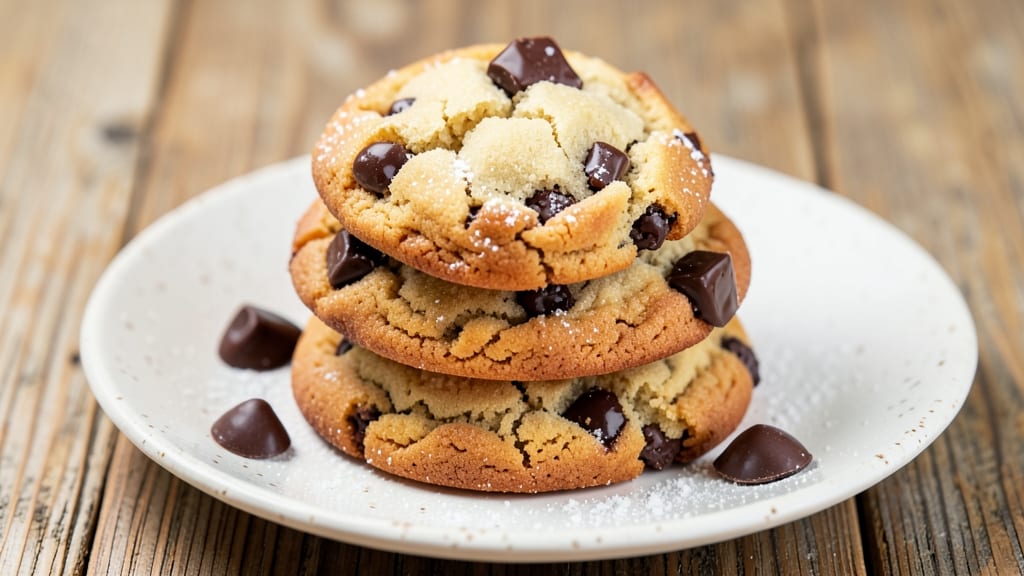
This Callebaut chocolate chip cookie recipe delivers restaurant-quality results with Belgian chocolate chunks that stay gloriously melty. 🔥 The secret lies in using premium Callebaut chocolate—richer, smoother, and more flavorful than standard chips—paired with a foolproof technique for caramelized edges and perfect chew.
I've baked hundreds of batches, and this version consistently earns rave reviews, even from chocolate purists who notice the difference in quality.
The recipe balances simplicity with professional results: 15 minutes of prep followed by 12 minutes in the oven. We'll use brown butter for nutty depth, a touch of sea salt to enhance sweetness, and a 30-minute chill in the fridge to prevent spreading.
The dough comes together with just 10 ingredients, making it accessible for home bakers while delivering bakery-style texture.
What sets these apart is how the Belgian chocolate maintains its shape while melting luxuriously in your mouth—no grainy aftertaste here. The edges develop that coveted crackly caramelization while staying tender inside, with pools of chocolate that don't turn hard.
This is the kind of cookie that disappears within minutes of coming out of the oven, leaving only crumbs and satisfied sighs.
For customization, try adding dark chocolate chunks for depth or sea salt flakes for contrast. The recipe scales perfectly for parties or gifting—just double the dough and bake in batches. Let's get started on cookies that will have everyone asking for the recipe.
Ingredients for callebaut chocolate chip cookie
Premium Belgian chocolate and browned butter create restaurant-quality cookies with caramelized edges and melty centers.
| Ingredient | Amount | Notes |
|---|---|---|
| Unsalted Butter 🧈 | 1 cup | Browned for nutty depth |
| Granulated Sugar 🍚 | ¾ cup | Superfine preferred for smooth texture |
| Packed Brown Sugar 🍚 | ½ cup | Lightly packed for accurate measurement |
| Large Eggs 🥚 | 2 whole | Room temperature for even mixing |
| Vanilla Extract 🌿 | 2 tsp | Pure Madagascar bourbon preferred |
| All-Purpose Flour 🌾 | 2 ½ cups | Sifted for light texture (12 oz/340g) |
| Sea Salt 🧂 | ½ tsp | Fine grain, like Maldon |
| Callebaut Belgian Chocolate Chunks 🍫 | 1 ½ cups | 70% cacao, chopped into 1-inch pieces |
| Dark Chocolate Chunks (Optional) 🍫 | ½ cup | 85% cacao for depth (optional) |
| Flaky Sea Salt (Optional) 🧂 | 1 tbsp | Maldon or Jacobsen for finishing |
The Callebaut chocolate is non-negotiable here—its rich cocoa content and smooth texture prevent graininess while delivering that luxurious melt. Buy it in bulk from specialty stores like Sur La Table or online from Callebaut's website; the 70% cacao chunks are ideal for this recipe. For the butter, European-style unsalted butter (like Plugrá) browns better than American brands due to its higher fat content. If you can't find it, Land O'Lakes unsalted works in a pinch, but watch the browning time closely. The vanilla extract should be pure bourbon—Madagascar vanilla from Lalique or McCormick elevates the flavor profile significantly.
No brown sugar? Substitute with 0.5 cup granulated sugar plus 1 tsp molasses for moisture, though the caramelization won't be as pronounced. Running short on chocolate? Use 1 cup Callebaut plus 0.5 cup high-quality chocolate chips, but chop them into even pieces for consistent melting. The optional dark chocolate chunks can be swapped for white chocolate chunks if you prefer a sweeter contrast, though they'll melt faster. For the flour, King Arthur all-purpose bakes slightly lighter than store brands, but any sifted flour will work. And if you're feeling ambitious, toast the flour lightly in a dry pan for 2 minutes before mixing—it adds a subtle nuttiness that pairs beautifully with the brown butter.
Store the dough in an airtight container in the fridge for up to 72 hours, allowing the flavors to deepen. For best results, bake the cookies immediately after chilling the dough. Leftovers keep at room temperature for 3 days in a sealed container, though they rarely last that long. Freeze the dough balls for up to 3 months—bake straight from frozen, adding 1-2 minutes to the cook time. The chocolate chunks will stay fresher longer if you press parchment paper directly onto the baked cookies while they cool, preventing moisture loss.
Why You'll Love This Recipe
- No-Fuss Mixing: I swear by the 30-second cream method—just beat the butter, sugars, and eggs until it’s light and fluffy. No food processor, no stress, and those rich Callebaut chips melt into the dough like they’re meant to be there.
- Rich Chocolate Bite: The difference is in the butter and chocolate. Callebaut’s deep, buttery richness paired with the caramel notes from brown sugar? It’s the kind of cookie that makes you pause mid-bite, eyes half-closed.
- Freezer-Friendly Magic: Between us, I make a double batch and freeze half. Straight from frozen, they bake up just as perfectly—no thawing, no waiting. Perfect for when you need a treat but forgot to plan ahead.
- Budget That Works: Unsalted butter and vanilla extract might sound fancy, but they’re the secret to flavor without breaking the bank. A single batch costs less than takeout, and the leftovers? They disappear faster than you can say "second helping."
Step-by-step instructions for caramelized Belgian chocolate chip cookies
Here's how to craft cookies with crisp caramelized edges and luxurious Belgian chocolate melts.
🔥 Step 1: Brown the Butter for Nutty Depth
Melt the 1 cup unsalted butter in a light-colored saucepan over medium heat. Watch carefully as it foams, then continues to bubble until it turns a rich golden brown with nutty aroma—this takes about 5-7 minutes. Immediately pour into a heatproof bowl and let it cool for 10 minutes while you prepare the remaining ingredients.
Don't rush this step. The browned butter adds complex caramelized notes that elevate these cookies beyond ordinary chocolate chip. If it gets too dark, you'll taste bitterness, so remove from heat the moment it reaches a medium golden brown color. The butter should thicken slightly and develop a toasty aroma—this is your signal it's ready.
👨🍳 Step 2: Cream Butter with Sugars Until Light and Fluffy
In a stand mixer fitted with the paddle attachment, beat the cooled browned butter with 0.75 cup granulated sugar and 0.5 cup packed brown sugar on medium speed for 3-4 minutes. You're looking for a pale, fluffy mixture that nearly doubles in volume—this incorporates air that creates those signature crackly tops. Scrape down the sides of the bowl with a spatula to ensure even mixing.
Here's where it gets technical: the butter should be completely cooled but still soft enough to beat smoothly. If it's too warm, the sugar won't dissolve properly; if too cold, you'll struggle to get that light texture. The mixture should be thick enough to leave clean trails when the paddle lifts, but still smooth with no graininess. This is your foundation for chewy, not cakey, cookies.
🍳 Step 3: Add Eggs and Vanilla for Rich Moisture
Add the 2 whole large eggs one at a time, mixing on low speed for 30 seconds after each addition until fully incorporated. Then add the 2 tsp vanilla extract and mix for another 10 seconds. The mixture will look slightly curdled, but don't worry—this will resolve when you add the dry ingredients. I always use room-temperature eggs to ensure even distribution throughout the dough.
This is the moment that matters: the vanilla should be pure Madagascar bourbon if possible, as it adds subtle floral notes that complement the Belgian chocolate. The eggs provide structure and moisture, but don't overmix here. You're just combining ingredients at this stage—we'll develop the gluten properly in the next step. The dough should be thick and smooth, almost like a thick batter at this point.
🥘 Step 4: Combine Dry Ingredients and Fold in Chocolate
In a separate bowl, whisk together the 2.5 cups all-purpose flour and 0.5 tsp sea salt. I prefer to sift the flour first for a lighter texture, but if you don't have a sifter, whisk vigorously to break up any lumps. With the mixer on low speed, gradually add the flour mixture to the wet ingredients, mixing just until combined—you should still see some flour streaks. Overmixing develops gluten and makes cookies tough.
Remove the bowl from the mixer and fold in the 1.5 cups Callebaut Belgian chocolate chunks (and 0.5 cup dark chocolate chunks if using) using a silicone spatula. I like to distribute them evenly throughout the dough so each bite contains those luxurious Belgian chocolate melts. The chunks should be about 1-inch in size—this ensures they create pockets of molten chocolate in every cookie. Don't skip this hand-folding step; it ensures even distribution.
⏰ Step 5: Chill and Shape for Perfect Texture
Cover the dough bowl with plastic wrap and refrigerate for at least 30 minutes (I prefer 1 hour or even overnight). This chilling step is non-negotiable—it allows the flour to fully hydrate, prevents excessive spreading, and develops that perfect chewy-yet-crispy texture. The dough should be firm enough to hold its shape when you scoop it, but still pliable.
Preheat your oven to 350°F while the dough chills. Line two baking sheets with parchment paper and set aside. When ready to bake, scoop the dough into 2-tablespoon portions (about 1.5 ounces each) and place them 3 inches apart on the prepared sheets. I use a cookie scoop for uniform size, but you can also use a tablespoon and gently roll the dough into balls. Sprinkle with 1 tbsp flaky sea salt (if using) immediately before baking for that perfect salty-sweet contrast.
Pro Tips For Making Callebaut Chocolate Chip Cookie
- Melt Butter Slowly: Don’t rush the butter—melt it in the microwave in 20-second bursts, stirring between each, until just smooth and no hotter than 160°F. I learned this the hard way after one batch turned out greasy and flat; butter releases water faster when too hot, and you’ll end up with cookies that spread like pancakes.
- Use Room-Temp Eggs: Take your eggs out of the fridge 30 minutes before mixing—cold eggs make the dough stiff and lead to dense cookies. I was skeptical until I tried it; the dough becomes silky and spreads evenly, giving you that perfect chewy center.
- Chill Dough 24 Hours: Skip the urge to bake straight away—wrap the dough in plastic and refrigerate overnight. The gluten relaxes, the flavors meld, and you’ll get that iconic Callebaut texture: crisp edges with a gooey middle. Yes, it’s one more step, but your future self will thank you.
- Bake in Two Batches: Crowding the pan? Don’t. Use half the dough per sheet, spacing cookies 2 inches apart—they’ll puff up and brown evenly. I used to jam them in tight, and they’d turn out flat and undercooked in the middle. Trust me, the extra 10 minutes waiting for the second batch is worth it.
Troubleshooting perfect results
Underbaked Centers
If your cookies emerge from the oven with soft centers that need more baking time, resist the urge to crank the heat. Instead, bake at 325°F for an additional 2-3 minutes—this gentler temperature prevents over-browning while finishing the interior.
The key is checking at 10 minutes and rotating the baking sheets halfway through. Overcrowding the pan traps moisture, so leave 3 inches between cookies. For even doneness, I use an oven thermometer to confirm 350°F accuracy—many home ovens run hot or cold. 🌡️
Overly Flat Cookies
Flat cookies usually mean the dough was too warm when baked or the butter wasn't properly chilled. First, ensure your dough rests for the full 30-60 minutes in the fridge. For extra insurance, freeze the dough balls for 15 minutes before baking—they'll spread less and hold their shape.
If you've already baked, try baking at 375°F for the next batch, but watch closely to avoid burning. The brown butter adds moisture, so don't substitute regular butter if you're struggling with spread.
Chocolate Not Melting
Hard, unmelted chocolate chunks are usually caused by baking at too low a temperature or using chocolate that's too high in cacao. First, confirm your oven reaches 350°F—I've seen many ovens run 25°F lower. For extra melt, place the baking sheet on the middle rack where heat circulates best.
If using 85% dark chocolate, it needs slightly more time—bake for 13-14 minutes instead of 12. Pro tip: Chop your Callebaut chunks into ½-inch pieces—they'll melt more evenly while still providing that satisfying texture contrast. 🍫
Excessive Spreading
Over-spreading happens when butter is too soft or the dough isn't chilled enough. For immediate fixes, flatten the dough balls slightly before baking—press them down ¼ inch with your palm. If you're baking a second batch, chill the dough for an extra 30 minutes or even overnight.
For future batches, try substituting 2 tablespoons of the butter with 2 tablespoons of cold heavy cream—this reduces spread while keeping cookies tender. Always use room-temperature eggs and butter to maintain consistency.
Dry or Cakey Texture
Cakey cookies often result from overmixing the dough or using too much flour. First, measure your flour accurately using the spoon-and-sweep method—don't scoop directly from the bag. For a chewier texture, slightly undermeasure by 1-2 tablespoons.
If the dough seems too dry, add 1 teaspoon of milk or heavy cream at a time until it comes together. The brown butter adds moisture, but if you substituted regular butter, you may need to compensate with an extra 1 tablespoon of liquid.
Always mix just until combined—stop when you see flour streaks remaining. ✨
Burnt Edges
Uneven browning usually means hot spots in your oven. Rotate the baking sheets halfway through baking and use the middle rack for even heat distribution. For extra insurance, place a baking stone on the lower rack 15 minutes before preheating—it helps regulate temperature.
If your cookies brown too quickly, try baking at 325°F for 14-15 minutes instead of 350°F. The Callebaut chocolate adds richness that masks slight under-browning, so don't stress if the edges aren't perfectly golden—focus on the internal doneness first. 🔥
Nutrition facts
Frequently asked questions
What makes Callebaut chocolate different from regular chocolate chips?
Callebaut Belgian chocolate has a smoother, more refined texture and richer cocoa content than standard chips. The Belgian chocolate maintains its shape while melting luxuriously in your mouth, creating those perfect pockets of molten chocolate in every bite. It also has a deeper, more complex flavor profile that elevates the cookie experience beyond basic chocolate chip recipes.
Can I substitute regular chocolate chips for Callebaut?
You can use regular chocolate chips, but you'll notice a difference in texture and flavor. For best results, use high-quality chocolate chips with at least 60% cacao content. If substituting, chop them into ½-inch pieces to mimic the chunk size. The Belgian chocolate's higher cocoa content and smoother texture prevent graininess and provide that luxurious melt that regular chips can't match.
Why do I need to chill the dough for 30 minutes?
The chilling step is crucial for several reasons: it prevents excessive spreading, allows the flour to fully hydrate for better texture, and helps develop that perfect chewy-yet-crispy balance. Skipping this step often results in flat cookies with cakey centers. For even better results, chill the dough for up to 24 hours—the flavors will deepen, and you'll get that bakery-style texture.
How do I store these cookies to keep them fresh?
Store cookies in an airtight container at room temperature for up to 3 days. For longer storage, freeze the dough balls (before baking) for up to 3 months—bake straight from frozen, adding 1-2 minutes to the cook time. To maintain freshness, press parchment paper directly onto the baked cookies while they cool to prevent moisture loss. The Belgian chocolate stays fresher longer this way.
Can I make these cookies without brown butter?
Yes, but you'll miss the nutty depth that brown butter adds. If substituting, use 1 cup unsalted butter at room temperature and add 1 teaspoon of brown sugar to compensate for the missing caramelized flavor. For best results, use European-style butter like Plugrá, which has a higher fat content and browns better than American brands.