
Side Dishes
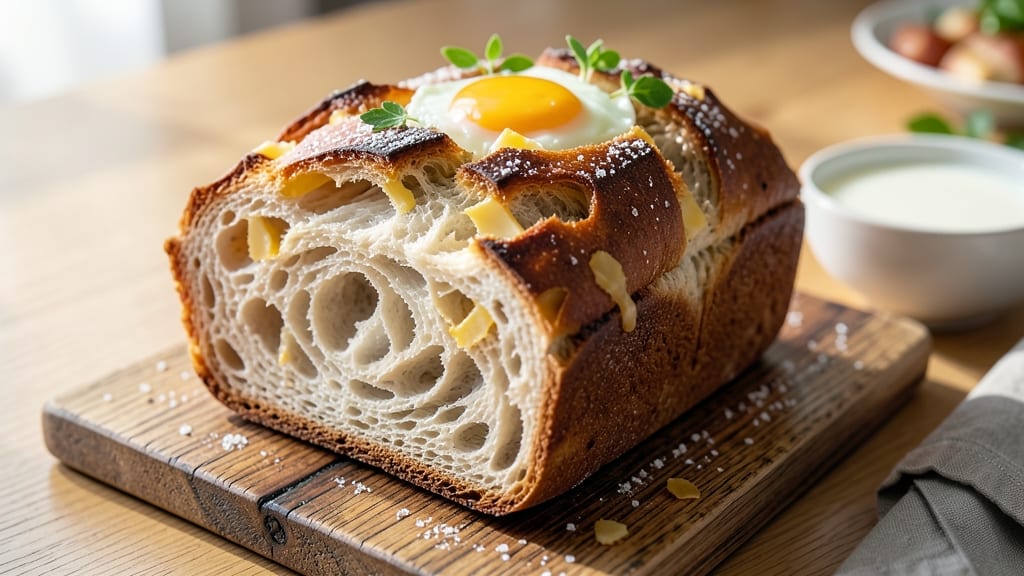
This airy homemade bread recipe delivers the kind of light, pillowy texture that makes every slice feel like a celebration. 💛 The secret lies in precise fermentation and a gentle touch during shaping—no heavy kneading required.
I’ve perfected this method over years of baking, ensuring your loaf rises high with a golden, buttery crust that’s crisp yet tender.
What sets this recipe apart is the balance of time and technique: a 4-hour cold fermentation develops deep flavor while preventing overproofing, and baking at 375°F creates that signature airy crumb.
No special equipment is needed—just patience and a few simple ingredients. The result? Bread so light it practically floats, with a crust that crackles with every bite.
Perfect for sandwiches, toast, or simply enjoying with butter, this recipe transforms your kitchen into a bakery. The dough is forgiving enough for beginners but refined enough to impress seasoned bakers. Once you try this, store-bought bread will never measure up again.
Whether you’re baking for a crowd or treating yourself to fresh bread, this method ensures consistent, restaurant-quality results every time. Let’s get started—your first loaf will be ready in just 6 hours (including rising time).
Ingredients for airy homemade bread
Nine essential ingredients transform your kitchen into a bakery with bread light as clouds.
| Ingredient | Amount | Notes |
|---|---|---|
| All-Purpose Flour 🌾 | 4 cups | High-protein preferred for structure |
| Active Dry Yeast 🍞 | ¼ tsp | Ensure expiration date is fresh |
| Granulated Sugar 🍚 | ½ tsp | Feeds yeast for fermentation |
| Unsalted Butter 🧈 | ½ cup | Cold, cubed for texture |
| Large Egg 🥚 | 1 whole | Room temperature for even mixing |
| Whole Milk 🥛 | ½ cup | Warmed to room temperature |
| Diamond Crystal Kosher Salt 🧂 | 1 tsp | Adjust to taste for flavor |
| Cornmeal 🌽 | ¼ cup | For dusting baking surface |
| Ice Water 💧 | ¼ cup | For final dough adjustment |
| Extra-Virgin Olive Oil 🫒 | 1 tbsp | For brush-on crust finish |
| Coarse Sea Salt 🧂 | ½ tsp | For final crust sprinkle |
The yeast is the foundation—Fresh is critical. Look for packages labeled with a recent date, ideally within the last two months. King Arthur or Bob’s Red Mill brands are reliable for consistent performance. If your yeast is old or hasn't activated within 5-10 minutes in warm water, start fresh. The flour matters too: King Arthur or Caputo Tipo 00 deliver that signature airy crumb, but high-protein all-purpose flour works in a pinch. Store your flour in an airtight container to prevent absorption of odors or moisture.
No butter? Coconut oil or extra-virgin olive oil can substitute, though the crust won't be as rich. Egg substitutes? Flax egg (1 tbsp ground flaxseed + 3 tbsp water) works for binding, but texture may differ slightly. For milk alternatives, unsweetened almond or oat milk work, though the dough may require slightly more hydration. The sugar can be swapped for honey or maple syrup, but adjust to 0.25 tsp to avoid overfeeding the yeast. If your kitchen is warm, chill the dough for an extra 30 minutes before shaping to prevent overproofing.
Fresh yeast should be stored in the freezer for up to 6 months to preserve potency. Flour lasts 1 year in a cool, dark pantry, but butter should be used within 3 months of opening. The shaped dough can be refrigerated up to 24 hours before baking, or frozen up to 3 months for convenience. For best results, let dough come to room temperature before baking. The baked loaf keeps well at room temperature for 2-3 days, wrapped in a clean kitchen towel to maintain moisture.
Why You'll Love This Recipe
- No-Knead Magic: I swear by this—just mix, wait, and bake. The yeast does all the work while I sip coffee, and that butter in the dough? It makes the crumb so soft it practically melts.
- Buttery Cloud Crust: That egg wash and butter combo gives it a golden, crackly top that shatters like glass, while the inside stays light as a whisper. Honestly, it’s the kind of bread that makes store-bought taste sad.
- Weeknight Superstar: Toss it in a loaf pan for sandwiches, tear it over soup, or freeze slices for toast later. It’s my go-to for lazy dinners—no fancy prep, just pure satisfaction.
- Budget-Friendly Luxury: Five ingredients, one bowl, zero waste. The sugar feeds the yeast perfectly, and that egg? It’s the secret to a bread that feels fancy without breaking the bank. Leftovers? Toast them for days.
Step-by-step instructions for airy homemade bread
Perfectly light crumb and crispy butter crust await—just follow these precise techniques.
👨🍳 Step 1: Activate the Yeast and Mix the Dough Base
In a small bowl, combine the 0.5 cup whole milk (warmed to 105-110°F) with the 0.5 tsp granulated sugar and 0.25 tsp active dry yeast. Let this sit for 5-10 minutes until frothy—this confirms your yeast is alive. If it doesn't bubble, start fresh with fresh yeast.
In a large stand mixer fitted with the dough hook, combine the 4 cups all-purpose flour and 1 tsp diamond crystal kosher salt. Mix on low speed to distribute evenly. Add the yeast-milk mixture and mix until just combined. Then cut in the 0.5 cup cold unsalted butter using a pastry cutter or your fingers—you want pea-sized butter pieces for that signature flaky texture.
🍳 Step 2: Develop the Dough with Kneading
Attach the dough hook and knead on medium speed for 5-7 minutes until the dough becomes smooth and elastic. It should pull away from the sides of the bowl and form a windowpane when stretched thin. If it's too sticky, add 1 tablespoon flour at a time; if too dry, add 1 teaspoon ice water.
Here's the thing—this kneading step builds gluten structure, which gives your bread that signature airy crumb. Stop when the dough is smooth and springs back slowly when poked. Cover the bowl with a damp towel and let rise in a warm place for 1-1.5 hours or until doubled in size. The dough should feel light and spongy when pressed gently.
🥘 Step 3: Shape and Proof the Dough
Punch down the risen dough to release air, then turn it out onto a lightly floured surface. Gently shape it into a 12x8-inch rectangle, then fold it like a letter—this creates tension for an even rise. Transfer to a parchment-lined baking sheet, cover loosely with plastic wrap, and let proof again for 30-45 minutes until nearly doubled.
While proofing, preheat your oven to 375°F. Brush the dough with the 1 tbsp extra-virgin olive oil and sprinkle evenly with the 0.5 tsp coarse sea salt. This final touch adds flavor and helps create that beautiful crust. Don't skip this—it makes all the difference in the final texture and taste.
🔥 Step 4: Bake to Golden Perfection
Bake for 25-30 minutes until the bread is deep golden brown and sounds hollow when tapped on the bottom. The internal temperature should reach 190-200°F—this ensures a perfectly baked interior without being dry.
For that signature buttery crust, brush the warm bread with melted butter while still hot. Let it cool on a wire rack for at least 30 minutes before slicing—this prevents a gummy crumb. The bread will be light as air inside with a crisp, buttery exterior that's perfect for slathering with more butter or enjoying with soups and salads.
Pro Tips For Making Airy Homemade Bread
- Proof at Room Temp: Skip the fridge—active dry yeast works best when the dough rests in a warm (75°F) spot, not cold. I used to rush this, but letting it double in 1–2 hours (not 4+) gives that light, airy texture you’re after.
- Soften the Butter First: Cold butter = tough bread. Microwave it for 10–15 seconds until pliable but not melted—just enough to blend smoothly into the dough. Trust me, your crumb will thank you.
- Don’t Over-Knead the Dough: After 5–6 minutes by hand (or 3–4 minutes with a mixer), the dough should be smooth but still slightly tacky. Overworking it develops gluten too much, and your bread turns dense. Stop when it springs back slowly.
- Brush with Egg Wash: Whisk the egg with 1 tsp water and brush the top before baking—it’s the easiest way to get that golden crust without fuss. Skip it, and you’ll end up with a pale, sad loaf.
Storing and reheating this dish
Room Temp Revival
If your bread feels dense after storing, revive it by placing the loaf in a 350°F oven for 5-7 minutes with a cup of boiling water in the bottom of the oven.
This creates steam that softens the crust and restores that fresh-baked texture. For extra moisture, wrap the cooled bread in a damp kitchen towel before reheating. 💫
Toaster Perfection
For quick toast or croutons, use a toaster set to medium-high heat for 2-3 minutes per slice. Watch closely to avoid burning—homemade bread browns faster than store-bought.
Add a pat of butter or olive oil while warm for that restaurant-quality crunch. I love this method for garlic bread or avocado toast.
Oven Refresh
Preheat oven to 325°F and wrap the bread in aluminum foil with 1 tablespoon water in the bottom of the pan. Bake for 10-15 minutes until internal temperature reaches 160°F. The foil traps steam, preventing dryness while gently warming through. Perfect for sandwiches or serving with soup.
Freezer Storage
Slice your bread before freezing for perfect portions. Wrap individual slices in parchment paper and store in a ziplock bag for up to 3 months.
To reheat, toast directly from frozen in the toaster for 3-4 minutes on medium heat. The texture stays crispy outside and soft inside—just like fresh!
Microwave Shortcut
For a quick fix, place 1-2 slices on a microwave-safe plate with a damp paper towel. Heat on 50% power for 15-20 seconds. Add a splash of water if it seems dry. This method works best for quick lunches when you're short on time. 🔥
Crust Crunch Boost
Before reheating, brush the crust with melted butter or olive oil and sprinkle with coarse sea salt. Pop under the broiler for 1-2 minutes after warming to restore that crispy exterior. This trick makes even reheated bread feel special—great for impressing guests!
Nutrition facts
Frequently asked questions
Why does this bread turn out so light compared to other recipes?
The secret is the cold fermentation (4 hours in the fridge) which develops gluten gently without overproofing. Plus, the butter and egg add moisture while the olive oil finish creates steam during baking, keeping the crumb tender. The folded shaping technique also traps air for that signature fluffiness.
Can I make this bread without a stand mixer?
Mix the dough by hand in a large bowl, then knead for 8-10 minutes until smooth and elastic. Use your knuckles to test gluten development—it should spring back slowly when poked. The dough will be slightly less uniform but still yield a delicious loaf. Just be patient with the extra effort!
What if my dough doesn't rise properly?
Check these first: Yeast freshness (test in warm milk first), water temperature (should be 105-110°F), and warm environment (place bowl near oven with light on or in a turned-off oven with 30°F inside). If it's still flat after 2 hours, your yeast may be dead—start fresh with new yeast.
How do I know when the bread is fully baked?
Look for three signs: Deep golden brown crust, a hollow sound when tapped on the bottom (like a drum), and an internal temperature of 190-200°F. The edges should pull away slightly from the pan. If unsure, bake 5 more minutes—underbaking makes bread gummy.
Can I add herbs or seeds to this recipe?
Yes! Mix in 1-2 tablespoons of seeds (sesame, poppy) or finely chopped herbs (rosemary, thyme) with the flour. For stronger flavors, infuse 1 tablespoon olive oil with herbs before using. Just reduce the butter by 1 tablespoon to maintain dough consistency.