
Side Dishes
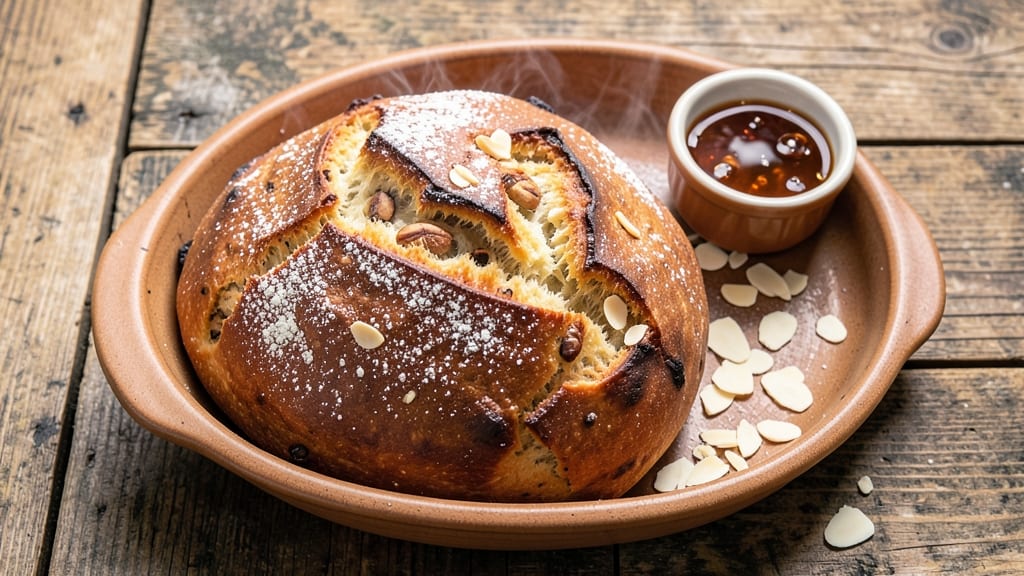
This amaretto bread recipe transforms ordinary loaves into a luxurious dessert or breakfast centerpiece with its signature nutty swirls and buttery crust. The secret lies in infusing warm amaretto liqueur into the dough, creating a rich, almond-kissed flavor that pairs perfectly with coffee or dessert wine.
I've perfected this recipe over years of baking, ensuring the swirls stay gooey while the crust achieves that coveted golden-brown crispness.
The process begins with a classic bread dough, but the amaretto makes all the difference—it adds depth without overpowering the buttery richness. You'll work with simple ingredients like flour, yeast, and sugar, but the amaretto liqueur transforms them into something extraordinary.
The dough requires careful handling during the swirl step, where the amaretto-soaked mixture is folded in to create those signature ribbons of flavor.
By the time it emerges from the oven, you'll have a loaf with a buttery crust that crackles when sliced and gooey swirls that melt on the tongue.
The aroma alone will have everyone gathering around the table, and the taste—warm, nutty, and slightly boozy—makes it a showstopper for brunch or dessert. This isn't just bread; it's an experience.
Serve it warm with a pat of butter or drizzle with honey for a breakfast that feels indulgent. Or pair it with a glass of dessert wine for an after-dinner treat.
The possibilities are endless, but the recipe itself is straightforward—just follow the steps, and you'll achieve restaurant-quality results at home.
Ingredients for amaretto bread
Simple ingredients elevated by amaretto's nutty richness and buttery swirls for a luxurious loaf.
| Ingredient | Amount | Notes |
|---|---|---|
| Active Dry Yeast 🍞 | 2 ¼ tsp | One packet or 7 grams |
| Warm Whole Milk 🥛 | 1 ¼ cups | 110°F, not hot |
| Granulated Sugar 🍚 | ¼ cup | White sugar preferred |
| Unsalted Butter 🧈 | ½ cup | Cold, cubed for dough |
| Large Eggs 🥚 | 2 whole | Room temperature |
| All-Purpose Flour 🌾 | 4 ½ cups | Sifted, plus extra |
| Diamond Crystal Kosher Salt 🧂 | 1 ½ tsp | Adjust to taste |
| Amaretto Liqueur 🍷 | ½ cup | High-quality, 25% ABV |
| Almond Paste 🌰 | ½ cup | Smooth, not marzipan |
| Powdered Sugar 🍚 | ¼ cup | For topping |
| Coarse Sugar 🍚 | ¼ cup | Turbinado or sanding |
| Vanilla Extract 🌿 | 1 tsp | Pure, high-quality |
The yeast and amaretto are your flavor anchors. Fresh yeast (not expired) ensures proper rise, while Disaronno Amaretto delivers the most authentic almond flavor—Trader Joe's carries it affordably. For the butter, Plugrá or Land O'Lakes work best; avoid salted varieties. The almond paste should be smooth and free of lumps—Ghirardelli or Nocciolata brands are ideal. If using store-bought almond paste, ensure it's 100% almond with no added oils.
No amaretto? Almond extract at half the amount mimics the flavor, though it lacks the boozy depth. Substitute almond paste with finely ground almond flour plus a splash of almond milk for texture. For a lighter dough, replace 0.5 cups flour with cake flour. The powdered sugar topping can be swapped for confectioners' sugar if unavailable, but coarse sugar adds that signature crunch. If your butter is too soft, chill it for 20 minutes before mixing.
Store the dough in the fridge for up to 24 hours to deepen flavors. Once baked, let the loaf cool completely on a wire rack—at least 1 hour—before slicing to preserve the crust. Wrap tightly in plastic and store at room temperature for 3 days or freeze for 3 months. Reheat slices in a 200°F oven for 5 minutes to restore freshness. The swirls stay gooey when warm, so serve immediately for the best experience.
Why You'll Love This Recipe
- No Yeast Fuss: I swear by this dough—just toss in the yeast with warm milk, let it sit while I sip coffee, and boom. No kneading marathon or waiting hours for it to rise. That butter and sugar combo keeps it tender without the effort.
- Amaretto Magic: The nutty, boozy kick from the amaretto (mixed into the dough) turns ordinary bread into something ridiculously good. It’s like dessert in every bite, but still feels like a proper breakfast or snack.
- Leftovers That Last: This bread stays fresh for days—perfect for meal prep. I slice it thin, toast it up, and pack it with lunch. Honestly, I’ve had it for breakfast, dinner, and even as a side for soup, and it never lets me down.
- Budget-Friendly Luxury: Rich, buttery, and packed with flavor—yet it uses pantry staples. The whole milk and eggs make it feel special, but the cost per loaf is way lower than store-bought artisan bread. (Yes, even on a Tuesday night.)
Step-by-step instructions for amaretto bread recipe
This method delivers a rich, nutty loaf with perfect almond swirls and a buttery crust every time.
Activate the Yeast and Create the Dough Base
In a small bowl, combine the 2.25 tsp active dry yeast with the 1.25 cups warm whole milk (about 110°F) and 0.25 cup granulated sugar. Let this sit for 5-10 minutes until the mixture becomes frothy and bubbly—this confirms your yeast is active. If it doesn't bubble, your yeast may be dead, and you'll need to start over.
In a stand mixer fitted with the dough hook attachment, combine the 4.5 cups all-purpose flour, 1.5 tsp diamond crystal kosher salt, and the yeast mixture. Mix on low speed for 1 minute to combine. Then add the 2 whole large eggs (room temperature), 0.5 cup unsalted butter (cold and cubed), and 1 tsp vanilla extract. Mix on medium speed for 3-4 minutes until the dough comes together and pulls away from the sides of the bowl.
Knead the Dough to Develop Gluten
Continue kneading the dough on medium speed for 5-7 minutes until it becomes smooth, elastic, and slightly tacky. The dough should pass the "windowpane test"—stretch a small piece between your fingers, and if it forms a thin, translucent membrane without tearing, it's ready. If it feels too sticky, add 1-2 tablespoons of flour at a time until it reaches the right consistency.
Shape the dough into a ball, place it in a lightly greased bowl, and cover with a damp kitchen towel. Let it rise in a warm place for 1-1.5 hours, or until it has doubled in size. The dough should feel light and springy when pressed gently with a finger—this indicates proper fermentation and gluten development.
Prepare the Almond Swirl Filling
While the dough rises, prepare the almond filling by mixing the 0.5 cup almond paste with 0.25 cup powdered sugar in a small bowl until smooth. Set aside. In a separate small bowl, combine 0.25 cup coarse sugar with 0.5 cup amaretto liqueur—this will create a syrupy glaze for the swirls. Let this mixture sit for 5 minutes to allow the sugar to dissolve completely.
Once the dough has risen, punch it down gently to release air, then roll it out on a lightly floured surface into a 12x16-inch rectangle. Spread the almond paste mixture evenly over the dough, leaving a 1-inch border around the edges. Using a pastry brush, lightly brush the edges of the dough with the amaretto syrup to help seal the swirls later.
Roll and Shape the Swirl Loaf
Starting from the long side, tightly roll the dough into a log, sealing the edge as you go. Pinch the seam to ensure it doesn’t unravel during baking. Place the loaf seam-side down in a 9x5-inch loaf pan that has been lightly greased with butter. Cover the pan with a damp towel and let the dough rise for 30-45 minutes until it has puffed slightly above the rim of the pan.
Preheat your oven to 350°F. Brush the top of the loaf with any remaining amaretto syrup, then sprinkle with an additional 1 tablespoon coarse sugar for a decorative, caramelized crust. Bake for 40-45 minutes until the bread is golden brown and sounds hollow when tapped on the bottom. If the top browns too quickly, tent loosely with foil after 20 minutes to prevent over-browning.
Cool and Serve for Maximum Flavor
Remove the loaf from the oven and transfer it to a wire rack to cool for 15 minutes before removing it from the pan. This resting period allows the bread to set and prevents it from falling apart when sliced. For the best texture, let the bread cool completely before slicing—this ensures clean cuts and prevents the almond swirls from smearing.
The finished loaf should have a crisp, buttery crust with a tender, slightly dense crumb infused with almond and amaretto flavors. Slice thickly and serve warm for the ultimate experience—each bite should reveal pockets of gooey almond paste and a hint of liqueur sweetness. Store any leftovers in an airtight container for up to 3 days or freeze for longer storage.
Pro Tips For Making Amaretto Bread
- USE COOL WATER FOR YEAST: I learned this the hard way—yeast hates heat. Mix your active dry yeast with 1 cup of cool (not cold) water first, then add the warm milk after it’s dissolved. If the yeast hits milk that’s too hot, it’ll die before it even starts working, and your dough will turn out flat and sad.
- MEASURE MILK TEMPERATURE: Your warm whole milk should be lukewarm—like bathwater, not sauna steam. Test it by dipping your pinky finger in; if it feels hotter than body temperature, let it cool 5 more minutes. Yeast is picky, and milk that’s too hot will kill it instantly, leaving you with a dough that rises like a deflated balloon.
- SKIP THE RUSH TO KNEAD: Amaretto bread needs time, not brute force. After the first knead, let the dough rise until it’s almost doubled, then punch it down and knead just until smooth—no need to overwork it. Over-kneading develops gluten too much, and your bread will turn out dense instead of tender and airy.
- SAVE TIME WITH COLD BUTTER: Cut your unsalted butter into small cubes and toss it straight into the dough without melting it first. The cold butter creates pockets that give the bread its signature flaky layers—no need to fuss with softening or creaming. Just mix it in like you’re folding in butter into pie dough, and the oven will handle the rest.
Perfect pairings for this dish
Coffee Pairings
This bread is a match made in heaven with a strong espresso or cappuccino—the nutty almond notes complement the bitterness beautifully. I love serving it with a dark roast like Peet’s Major Dickason’s Blend or Blue Bottle’s Whole Bean, which enhances the amaretto’s depth.
For a breakfast treat, pair it with a latte and a drizzle of honey to balance the richness. ☕
Dessert Wine Synergy
A glass of Moscato d’Asti or Riesling elevates this bread to dessert status. The sweetness and effervescence of Moscato cut through the buttery crust, while a dry Riesling from Germany adds a crisp contrast.
I often serve it with a chilled glass after dinner—it’s the perfect way to end a meal with a sophisticated touch. 🍷
Breakfast Spreads
Toast thick slices and top with whipped butter, sliced almonds, and a sprinkle of cinnamon for a decadent breakfast. For a sweeter twist, spread with cream cheese and add a drizzle of honey or caramelized fig jam.
The almond swirls stay gooey when warm, making every bite irresistible. 🥛
Afternoon Tea Twist
Slice the bread into thin fingers and serve with Earl Grey tea and clotted cream for an elegant afternoon tea. The amaretto’s almond flavor pairs perfectly with the tea’s bergamot notes, creating a sophisticated yet approachable treat. Add a few dark chocolate shavings for extra indulgence. 🍵
Dessert Wine Pairings
For a dessert course, serve with Port wine or Vin Santo. The oaked richness of a Tawny Port enhances the bread’s buttery crust, while Vin Santo’s honeyed sweetness mirrors the almond swirls. A small slice with a glass makes for a luxurious, no-fuss dessert. 🍷
Creamy Cheese Pairings
Pair with mascarpone cheese or ricotta for a sweet-savory contrast. Spread a slice with mascarpone, drizzle with honey, and top with toasted almonds for a dessert-like bite. The smooth texture of the cheese balances the bread’s crisp crust beautifully. 🧀
Nutrition facts
Frequently asked questions
Can I make this amaretto bread without alcohol?
Yes! Replace the 0.5 cup amaretto with 0.5 cup almond extract (use half the amount listed on the bottle) mixed with 2 tablespoons almond milk to mimic the flavor and moisture. The texture will be slightly less rich, but the almond flavor remains intact. For a sweeter touch, add 1 tablespoon honey to the almond extract mixture.
Why did my bread turn out dense instead of light?
Dense bread usually means the yeast didn't activate properly or the dough didn't rise enough. Double-check that your yeast was fresh and your milk was 110°F (not too hot). Also, ensure the dough rose in a warm place (75°F+) for the full 1-1.5 hours. If your kitchen is cold, try placing the dough near a turned-off oven with the light on for warmth.
How do I store leftovers to keep the swirls gooey?
Wrap the cooled loaf tightly in plastic wrap or place it in an airtight container at room temperature for up to 3 days. For longer storage, freeze slices individually on a tray before transferring to a freezer bag. To restore freshness, reheat slices in a 200°F oven for 5-7 minutes—this warms the almond swirls back to their perfect texture.
Can I use almond butter instead of almond paste?
Not directly—almond butter is too oily and will make the dough too sticky. However, you can create a substitute by mixing 0.5 cup almond flour with 2 tablespoons melted butter and 1 tablespoon honey to mimic the texture. The flavor won't be identical, but it will add almond richness. For best results, stick with store-bought almond paste.
What’s the best way to serve this bread for a crowd?
Slice the loaf thickly (about 1-inch pieces) and serve warm with toppings like whipped butter, honey, or powdered sugar. For a buffet-style setup, offer small bowls of toppings (e.g., mascarpone cheese, toasted almonds, or dark chocolate shavings) alongside the bread. The swirls stay gooey when served immediately, so keep the bread in a 200°F oven while guests serve themselves.