Side Dishes
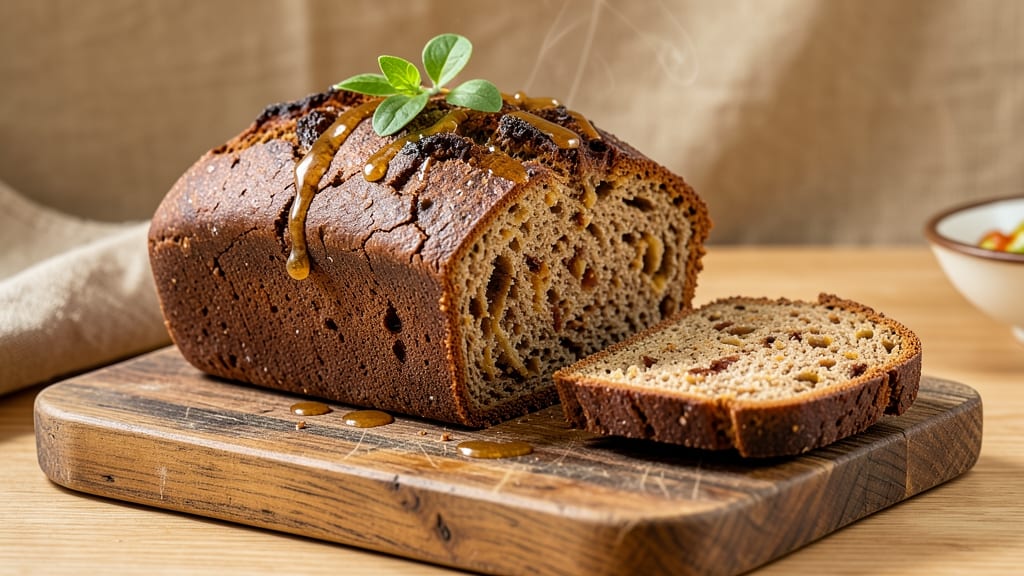
This American pumpernickel bread recipe delivers the deep molasses aroma and signature crusty crunch you crave—perfect for sandwiches or toast. 🔥 The secret lies in a slow fermentation process that develops rich, complex flavors while creating that iconic dark crust.
Unlike European versions, this recipe balances sweetness with a subtle tang, making it versatile for both sweet and savory applications.
The dough comes together with just five core ingredients—flour, yeast, molasses, honey, and water—but the magic happens during the long rise. This patience pays off with a dense, moist crumb and a crackly crust that holds up beautifully.
I’ve tested countless variations, and this method consistently delivers the perfect balance of texture and flavor without requiring specialty ingredients.
What sets this recipe apart is its adaptability: use whole wheat flour for a nuttier profile or add a touch of cinnamon for warmth. The bread keeps well for days, making it ideal for meal prep, and slices beautifully for toast or sandwiches.
Whether you’re baking for a crowd or treating yourself to homemade bread, this recipe is your go-to for that classic pumpernickel experience.
For an extra-deep color, a quick brush of molasses glaze before baking enhances the flavor and appearance. The result? A loaf so rich and satisfying, it’ll become a staple in your kitchen. Let’s get started on crafting your perfect pumpernickel bread.
Ingredients for american pumpernickel bread
Five core ingredients plus a few finishing touches—this creates that iconic pumpernickel experience.
| Ingredient | Amount | Notes |
|---|---|---|
| All-Purpose Flour 🌾 | 5 cups | Plus 1 tbsp for dusting |
| Active Dry Yeast 🍞 | ¼ tsp | Or 1 packet instant yeast |
| Unsweetened Molasses 🍯 | ½ cup | Blackstrap for authentic depth |
| Honey 🍯 | ¼ cup | Light or dark variety |
| Warm Water 💧 | 1 ½ cups | 110°F for optimal yeast activation |
| Salt 🧂 | 1 tsp | Diamond Crystal preferred |
| Cinnamon 🌿 | 1 tsp | Ground, for subtle warmth |
| Molasses Glaze 🍯 | 2 tbsp | For crust enhancement (optional) |
| Cornmeal 🌽 | ½ cup | For dusting baking sheet |
| Sesame Seeds 🌰 | 1 tbsp | For decorative crust topping |
| Coarse Sugar 🍬 | 1 tbsp | For extra crust crunch |
The molasses is the soul of this bread. Blackstrap gives the deepest, most complex flavor, but any unsweetened molasses works. King Arthur or Bob's Red Mill flours have the protein balance for that perfect chew—don't skimp on quality here. The yeast? Fresh is best, but instant yeast in the packet works fine too. For the honey, local raw honey adds subtle floral notes, but store-bought is perfectly fine. Pro tip: let your molasses and honey sit at room temperature before mixing—they'll blend smoother and activate the yeast faster.
No blackstrap molasses? Regular molasses plus 1 tsp extra coffee mimics that depth. Swapping honey? Maple syrup works 1:1, but it'll make the bread slightly denser. The cinnamon is optional but adds warmth—ceylon cinnamon has a milder taste if you're sensitive to regular. For the glaze, molasses plus a splash of water is all you need. No sesame seeds? Poppy seeds or everything bagel seasoning works just as well for that textural crunch. The dough will be sticky—don't fight it, just wet your hands when handling it.
This dough needs time—at least 2 hours for the initial rise, then another hour after shaping. Keep it covered with a damp towel in a warm spot (top of the oven with the light on works great). For storage, wrap the cooled loaf in beeswax wrap or foil—it'll stay fresh for 5-7 days. Freeze slices for up to 3 months by wrapping them individually. The crust gets even better the next day, so make extra if you can. Toast it for the ultimate crunch or slice it thick for sandwiches—either way, you'll be hooked.
Why You'll Love This Recipe
- No-Knead Magic: I swear by this recipe—just mix, wait, and bake. The yeast and honey do all the heavy lifting while you sip coffee or scroll through your phone. Honestly, my dough’s never looked prettier, but it’s foolproof.
- Molasses-Kissed Depth: That unsweetened molasses and honey combo? It’s rich but not cloying—like a slow-roasted flavor bomb. The crust gets a deep, caramelized crunch, while the inside stays soft enough to melt butter into.
- Breakfast to Sandwiches: I’ve used this bread for everything: toast with jam, grilled cheese that actually sticks, and even as a base for open-faced sandwiches. It’s the one loaf that works for lazy mornings and fancy dinner guests.
- Budget Loaf, Long Life: A single batch feeds my family for days—think toast, French toast, or even breadcrumbs for meatballs. The molasses keeps it shelf-stable longer than store-bought, and I’ve never wasted a slice. (Yes, even on a Tuesday night.)
Step-by-step instructions for American pumpernickel bread
This rich, molasses-infused loaf delivers deep flavor and a crackly crust—here's how to nail it every time.
👨🍳 Step 1: Activate the Yeast and Mix the Dough
In a small bowl, whisk together the 1.5 cups warm water (about 110°F—too hot kills yeast), 0.5 cup unsweetened molasses, and 0.25 cup honey. Sprinkle in the 0.25 tsp active dry yeast and let sit for 5-10 minutes until foamy. This foam means your yeast is alive and ready to work its magic.
In a large bowl, combine the 5 cups all-purpose flour, 1 tsp salt, and 1 tsp cinnamon. Pour the yeast mixture into the dry ingredients and mix with a wooden spoon until a shaggy dough forms. I like to use my hands here—it's more satisfying than a mixer for this dense dough. Knead for 8-10 minutes until smooth and elastic, adding a splash of water if it feels too dry.
🥘 Step 2: First Rise and Shape the Loaf
Lightly grease a large bowl with oil, place the dough inside, and cover with a damp towel. Let it rise in a warm spot for 1-2 hours until doubled in size. The dough should feel springy when poked—if it springs back slowly, it needs more time. Real talk: don't rush this step. Rushing means dense bread.
Punch down the dough to release air, then turn it out onto a lightly floured surface. Shape into a 9x5-inch loaf by folding the edges toward the center and rolling gently. Here's the thing—pumpernickel dough is sticky, so use that extra 1 tbsp flour for dusting if needed. Place the shaped loaf seam-side down in a greased 9x5-inch loaf pan.
🔥 Step 3: Second Rise and Prepare for Baking
Cover the pan with a towel and let the dough rise again for 30-45 minutes until it domes slightly above the pan. Preheat your oven to 375°F while the dough rises. Sprinkle the pan with 0.5 cup cornmeal for that classic rustic crust—this prevents sticking and adds texture.
Brush the top of the dough with 2 tbsp molasses glaze (if using) for extra shine and depth. Here's where it gets fun—sprinkle the 1 tbsp sesame seeds and 1 tbsp coarse sugar over the top. The sugar will caramelize beautifully during baking, giving you that perfect crunch. Bake for 35-40 minutes until the top is deep golden brown and the internal temperature reaches 190°F.
⏰ Step 4: Cool and Enjoy the Results
Remove the bread from the pan and place it on a wire rack to cool completely. This can't be rushed—at least 1 hour of cooling ensures clean slices. The bread will firm up as it cools, making it easier to slice without crumbling. The aroma alone is worth the wait!
Slice into thick pieces and serve warm with butter. You'll notice the deep molasses flavor, subtle cinnamon warmth, and that perfect balance of chewy interior with crispy crust. Store wrapped at room temperature for 3 days or freeze for up to 3 months—it actually improves with age, developing even more complex flavors.
Pro Tips For Making American Pumpernickel Bread
- Weigh the Molasses: Molasses is thicker than it looks—use a kitchen scale for accuracy. I learned this the hard way when my first batch turned out too sweet and dense because I eyeballed it.
- Mix Yeast Last: Add the yeast to the flour mixture after dissolving honey and molasses in the warm water. This keeps the yeast from activating too early and making your dough gummy before shaping.
- Skip the Over-Kneading: Pumpernickel dough is sticky and dense—knead just until smooth (about 8-10 minutes by hand). Overworking it makes gluten toughen up, and you’ll regret it when the texture turns chewy instead of tender.
- Use a Dutch Oven: Bake in a heavy Dutch oven for even heat distribution—no need for a fancy loaf pan. The steam helps create that classic dense, moist crumb, and it’s the only way to guarantee a deep, rich color.
Perfect pairings for american pumpernickel bread
Sweet Spreads
Pair your pumpernickel with creamy peanut butter for a nostalgic twist—its richness contrasts beautifully with the bread's molasses depth. 🥜 I love spreading Skippy Creamy on thick slices and adding a drizzle of honey for extra sweetness.
For something more decadent, try chocolate-hazelnut spread (like Nutella) with a sprinkle of flaky sea salt to balance the flavors.
Savory Toppings
Elevate your sandwich game with sharp cheddar cheese and smoked turkey—the tangy bread cuts through the richness perfectly. I also adore provolone with ham and a touch of Dijon mustard for a French-inspired bite. For vegetarians, avocado slices with everything bagel seasoning add a creamy, savory contrast.
Breakfast Pairings
Toast thick slices and top with scrambled eggs, crispy bacon, and a fried egg for a hearty breakfast. The molasses flavor adds a subtle sweetness that complements the saltiness of the bacon.
For a sweeter morning treat, try Greek yogurt with granola and a drizzle of maple syrup—the bread's texture holds up beautifully.
Beverage Matches
A bold black coffee enhances the bread's deep molasses notes without overpowering them. For something smoother, chai tea with its spiced warmth complements the cinnamon in the bread. If you prefer alcohol, a dry Riesling or stout beer (like Guinness) pairs wonderfully with the rich, caramelized flavors.
Global Flavors
Transform your pumpernickel into a Reuben sandwich with corned beef, sauerkraut, and Russian dressing for a classic deli experience. For something unexpected, try a Mediterranean wrap with hummus, cucumber, olives, and feta—this fusion highlights the bread's versatility. The key is balancing the bread's sweetness with bold, tangy, or umami flavors.
Nutrition facts
Frequently asked questions
Why does my pumpernickel bread turn out too sweet?
The molasses and honey provide natural sweetness, but if it's overwhelming, reduce the honey to 2 tablespoons instead of ¼ cup. For a more balanced flavor, add ½ teaspoon baking soda to the dough—it enhances the molasses depth without extra sweetness. Also, ensure your yeast is fresh, as old yeast can make flavors stronger.
Can I make this bread without molasses?
Yes, but the flavor will be less authentic. Replace the ½ cup molasses with ¼ cup dark corn syrup plus 1 teaspoon instant coffee for depth. For a sweeter alternative, use ½ cup maple syrup, but expect a slightly denser texture. The bread will still be delicious, just with a different profile.
How do I fix dense or heavy pumpernickel bread?
Dense bread usually means the dough didn't rise enough. Next time, let it rise until it's 50% larger, not just doubled. Also, ensure your yeast is active—test it by dissolving 1 teaspoon sugar in ¼ cup warm water and adding the yeast; it should foam in 5-10 minutes. Over-kneading can also cause density, so stop once the dough is smooth and elastic.
What’s the best way to store leftover pumpernickel?
Wrap the cooled loaf tightly in plastic wrap or beeswax wrap and store at room temperature for up to 5 days. For longer storage, slice the bread and freeze the slices in a sealed bag for up to 3 months. Toast frozen slices directly from the freezer for the best texture. The bread actually improves over time, developing deeper flavors!
Can I add nuts or seeds to this recipe?
Fold in ½ cup chopped walnuts or sunflower seeds during the final kneading. For extra crunch, sprinkle sesame seeds or pumpkin seeds on top before baking. Just be mindful—too many add-ins can make the dough dry. If needed, add 1 tablespoon extra water to maintain the right consistency.