Desserts
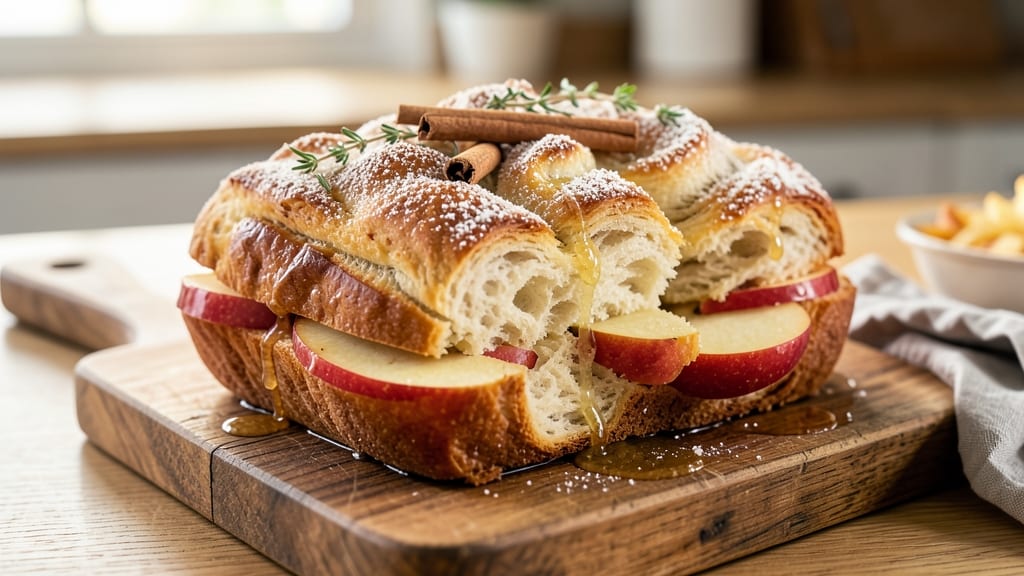
This apple cinnamon brioche bread recipe delivers the perfect balance of buttery layers and spiced sweetness that makes every bite irresistible. 💛 The secret lies in a rich, flaky brioche dough wrapped around a caramelized apple-cinnamon filling that transforms a simple loaf into something extraordinary.
I've perfected the technique to ensure tender, golden layers with a filling that's both aromatic and just sweet enough to satisfy any craving.
The key to success is in the dough—enriched with eggs and butter for that signature brioche texture, then layered with a spiced apple mixture that softens beautifully during baking. This isn't just bread; it's a dessert-worthy centerpiece that pairs perfectly with coffee or a glass of milk.
The aroma alone will fill your kitchen with warmth, making it impossible to resist slicing into a fresh batch.
By the time it emerges from the oven, you'll have a loaf with crisp edges, tender crumb, and a filling that's caramelized to perfection. The cinnamon infuses every bite with its signature warmth, while the apples add natural sweetness that balances the buttery richness of the dough.
Serve it warm, dusted with powdered sugar, or let it cool slightly for clean slices that reveal those beautiful layers.
This recipe is ideal for special occasions or when you want to impress with something that feels homemade yet restaurant-quality. The dough is forgiving enough for beginners but refined enough to impress seasoned bakers. Once you try it, you'll never settle for store-bought again.
Ingredients for apple cinnamon brioche bread
Buttery brioche dough meets spiced apple filling in this showstopper loaf.
| Ingredient | Amount | Notes |
|---|---|---|
| All-Purpose Flour 🌾 | 4 cups | Spooned and leveled for accuracy |
| Granulated Sugar 🍚 | ¼ cup | Standard white sugar preferred |
| Instant Yeast 🍞 | 0.03 oz | Or 2¼ tsp active dry yeast |
| Unsalted Butter 🧈 | 1 cup | Cold, cubed for dough |
| Large Eggs 🥚 | 2 whole | Room temperature for best mixing |
| Whole Milk 🥛 | ½ cup | Warmed to room temperature |
| Salt 🧂 | ½ tsp | Diamond Crystal preferred |
| Ground Cinnamon 🍃 | 1 ½ tbsp | Freshly ground for best flavor |
| Apples 🍎 | 2 medium | Sweet-tart variety like Honeycrisp |
| Light Brown Sugar 🍚 | ¼ cup | Packed for filling mixture |
| Powdered Sugar 🍚 | ¼ cup | For dusting finished bread |
| Vanilla Extract 🌿 | 1 tsp | Pure vanilla preferred |
The butter is non-negotiable here—Plugrá or Land O'Lakes cultured butter gives the best flavor. I always grab mine from Whole Foods or the bakery section of Kroger since it's less watery. For the apples, Honeycrisp or Fuji are perfect—they hold their shape but get tender when baked. If you can't find them, Granny Smith works too, but you'll need to add a touch more sugar to balance the tartness. The flour should be all-purpose, not bread flour—this dough needs that tender crumb, not a chewy texture.
No vanilla extract? Vanilla bean paste works just as well. Running short on butter? Vegetable shortening at 90% of the amount keeps the layers flaky, but you'll lose that rich flavor. The brown sugar in the filling can be swapped for white sugar plus 1 tsp molasses if that's what you've got. For the apples, if they're too watery after peeling, pat them dry with paper towels—moisture makes the dough soggy. And if you're feeling fancy, toss the apple slices in 1 tsp lemon juice before adding them to the filling to keep them bright.
This dough needs time to rise—at least 2 hours at room temperature, or overnight in the fridge for deeper flavor. Wrap it tightly in plastic and it'll keep 3 days in the fridge before baking. The baked loaf stays fresh 3 days at room temperature, but slice and freeze portions for up to 3 months. I always bake two loaves—one for the table, one for breakfast the next morning. Trust me, the leftovers are just as good (if not better) the second day.
Why You'll Love This Recipe
- No-Knead Magic: I swear by this dough—just mix, let it rise overnight, and wake up to something actually worth the wait. That butter-rich brioche base makes it tender without the fuss of shaping or punching down.
- Cinnamon-Apple Bliss: The moment you slice into warm bread with those caramelized apple chunks and a whisper of cinnamon? Pure satisfaction. Honestly, the sugar in the filling melts into the dough just enough to make every bite taste like a hug.
- Breakfast to Brunch: This isn’t just toast—it’s your go-to for weekend brunch, a lazy Sunday morning, or even a fancy charcuterie board. (Yes, even on a Tuesday night.) The brioche’s buttery richness pairs perfectly with jam, cheese, or just butter alone.
- Leftovers That Last: One loaf stretches into a week of snacks: toast for breakfast, French toast for dinner, or even cubed and frozen for quick breadcrumbs. Between us, the second day is often better—the flavors deepen, and the texture gets even more addictive.
Step-by-step instructions for apple cinnamon brioche bread
Here's how to create flaky, buttery layers with warm apple-cinnamon goodness baked right in.
👨🍳 Step 1: Mix the Brioche Dough
In a stand mixer fitted with the dough hook attachment, combine the 4 cups all-purpose flour, 0.25 cup granulated sugar, and 0.5 tsp salt in the bowl. Mix on low speed for 30 seconds to aerate the flour. Add the 0.025 oz instant yeast and mix for another 10 seconds until evenly distributed.
In a separate bowl, whisk together the 1 cup cold cubed butter, 2 whole room-temperature eggs, 0.5 cup warm whole milk, and 1 tsp vanilla extract. With the mixer running on low speed, gradually pour the wet ingredients into the dry ingredients. Increase the speed to medium and mix for 5-7 minutes until the dough is smooth and elastic, pulling away from the sides of the bowl. The dough should be slightly tacky but not sticky—if it's too sticky, add 1 tablespoon flour at a time until it comes together.
🥘 Step 2: Knead and First Rise
Switch to the dough hook attachment and knead the dough on medium speed for 5-7 minutes until it becomes smooth and slightly firm. The dough should pass the "windowpane test"—stretch a small piece between your fingers; if it's elastic and doesn't tear, it's ready. Shape the dough into a ball and place it in a lightly greased bowl.
Cover the bowl with a damp towel and let the dough rise in a warm place for 1-1.5 hours, or until it has nearly doubled in size. You'll know it's ready when you poke it gently and the indentation stays. If your kitchen isn't warm enough, place the bowl near a turned-off oven with the light on to create warmth. This first rise develops the dough's structure and flavor, so don't rush it.
🍳 Step 3: Prepare the Apple Filling
While the dough rises, peel and core the 2 medium apples and cut them into ¼-inch thick slices. In a small bowl, combine the sliced apples with 0.25 cup light brown sugar and 1.5 tbsp ground cinnamon. Toss gently to coat the apples evenly. Let the mixture sit for 10 minutes to allow the flavors to meld—this makes the filling more aromatic and caramelized when baked.
Real talk: don't skip this step. The sugar and cinnamon need time to break down the apple fibers slightly, which prevents the filling from turning mushy during baking. If you're worried about the apples browning, cover the bowl loosely with plastic wrap and leave it at room temperature.
🥘 Step 4: Shape and Second Rise
Once the dough has risen, punch it down to release the air and divide it into 8 equal portions (about 6 ounces each). Roll each portion into a 12-inch long log, keeping them loose and slightly irregular—this creates beautiful layers later. Place the dough logs seam-side down in a greased 9x13-inch baking dish, leaving about ½ inch between each log.
Cover the dish with a damp towel and let the dough rise again for 30-45 minutes, until the logs have puffed up and nearly touch each other. This second rise is shorter because the dough is already well-developed. Gently press the logs together to create a single layer, then spread the apple filling evenly over the top, covering it completely. The filling should peek out slightly between the layers.
🔥 Step 5: Bake to Golden Perfection
Preheat your oven to 350°F and bake the bread for 45-50 minutes, until the top is deep golden brown and the internal temperature reaches 190°F. The bread is done when it pulls away from the sides of the pan and has a beautiful caramelized crust. If the top browns too quickly, tent the pan loosely with foil after 30 minutes to prevent over-browning.
Let the bread cool in the pan for 10 minutes, then transfer it to a wire rack. Once completely cooled, dust the top generously with 0.25 cup powdered sugar for a sweet finish. Each slice should reveal flaky, buttery layers with tender apple-cinnamon filling throughout. Serve warm with a pat of butter or a drizzle of honey for the ultimate comfort food experience.
Pro Tips For Making Apple Cinnamon Brioche Bread
- Chill the Dough: Let the shaped brioche rest overnight in the fridge—yes, even if you’re eager to bake. I learned this the hard way after three batches of dense, gummy loaves. The cold slows gluten relaxation, so when it bakes, the crumb stays tender and the apples caramelize properly.
- Use Cold Butter: Cut that unsalted butter straight from the fridge into cubes—no softening needed. Cold butter creates pockets in the dough that make the bread flaky and rich, not greasy. (Trust me, your future toast will thank you.)
- Avoid Overmixing Apples: Toss diced apples with cinnamon and sugar just before folding them into the dough—no pre-sautéing. Cooking them first turns them mushy and watery, which makes the bread soggy. Raw apples release juice as they bake, keeping things balanced.
- Steam the Oven: Spray the loaf pan with butter and add a baking sheet on the lower rack before preheating. When you pop the dough in, pour a cup of hot water into the pan—this creates steam for the first 15 minutes, guaranteeing a golden crust and soft interior. (I know, it’s extra work, but the difference is noticeable.)
Pro cooking tips for perfect results
Dough Temperature Control
The secret to perfect brioche lies in balancing cold butter and room-temperature eggs. The butter should be cold and cubed—this creates those signature flaky layers when baked. Meanwhile, the eggs and milk need to be room temperature (around 70°F) to emulsify properly with the butter.
I always check by touching the eggs—if they're cold, warm them in a bowl of warm water for 5 minutes. 🌡️
Layering the Filling
Don't just dump the apple filling on top—this is where the magic happens! After the second rise, gently press the dough logs together to create a single layer, then spread the filling evenly. The filling should peek out slightly between the layers, ensuring every bite has that spiced apple goodness.
I like to use a spatula to create a lattice pattern on top before baking for extra visual appeal. This also helps the filling caramelize beautifully during baking.
Proofing Perfection
The first rise is critical—this is when the dough develops its structure and flavor. Place your dough in a warm spot (I use my oven with the light on) and let it rise until it nearly doubles in size, about 1-1.5 hours.
A good test is the finger poke: gently press your finger into the dough. If the indentation stays, it's ready. For the second rise, keep it shorter (30-45 minutes) since the dough is already well-developed. Overproofing here will make your bread dense instead of light and fluffy.
Baking with Precision
Bake at 350°F for 45-50 minutes until the internal temperature hits 190°F. The bread is done when it pulls away from the pan edges and has a deep golden brown color. If the top browns too quickly, tent with foil after 30 minutes.
Let it cool in the pan for 10 minutes before transferring—this prevents the layers from falling apart when you slice. Patience here ensures those perfect flaky layers you're craving. 🔥
Butter Substitutions
If you're short on butter, use vegetable shortening at 90% of the amount (so 0.9 cups instead of 1 cup) to maintain flakiness. However, you'll lose that rich buttery flavor.
For a lighter version, replace ¼ cup of the butter with ¼ cup unsweetened applesauce—this keeps the moisture but reduces fat slightly. Always keep the total fat content in mind when substituting, as this affects both texture and flavor.
Apple Selection Tips
Choose apples with the right balance of sweetness and tartness—Honeycrisp or Fuji are my top picks. They hold their shape during baking but become tender enough to eat. If you must use tart apples like Granny Smith, add 1 extra tablespoon of sugar to the filling.
For extra flavor, toss the sliced apples in 1 teaspoon lemon juice before adding them to the filling. This keeps them bright and prevents browning while they wait to be baked. 🍎
Nutrition facts
Frequently asked questions
Can I make this brioche bread without a stand mixer?
This dough can be mixed by hand in a large bowl. Use a wooden spoon to combine the dry ingredients, then make a well in the center and add the wet ingredients. Mix vigorously for 5-7 minutes until the dough is smooth and elastic. You'll need strong arms, but it's definitely doable—just be prepared for some workout!
How do I store leftover brioche bread?
Wrap cooled slices tightly in plastic wrap or aluminum foil and store at room temperature for 3 days. For longer storage, slice the loaf and freeze portions in an airtight container for up to 3 months. To reheat, warm slices in a 350°F oven for 5-7 minutes or microwave for 10-15 seconds—just until warm. The texture stays best when reheated gently.
What if my dough doesn't rise properly?
Check your yeast first—it may be expired. Try activating it in ¼ cup warm milk with 1 tsp sugar for 5 minutes before mixing. If it foams, your yeast is fine. For a second rise that's too slow, place the dough in a warm spot (like a turned-off oven with the light on) or use a proofing box. Never skip proofing—this is what creates that signature brioche texture!
Can I make this with different fruits?
Yes! Swap apples for peaches, pears, or berries—just adjust the sugar. Tart fruits like peaches need 1 extra tablespoon of sugar in the filling, while sweet berries may only need ¼ cup. For a savory twist, try caramelized onions with a pinch of thyme instead of cinnamon. The brioche dough works beautifully with any fruit that holds its shape when baked.
Why did my bread turn out dense instead of flaky?
Overproofing or overmixing are the most common culprits. Make sure your dough rises until it's nearly doubled but not collapsed. Also, keep the butter cold when mixing—if it melts too soon, the layers won't develop properly. For extra flakiness, chill the shaped dough for 30 minutes before the second rise. Patience is key with brioche!