Side Dishes
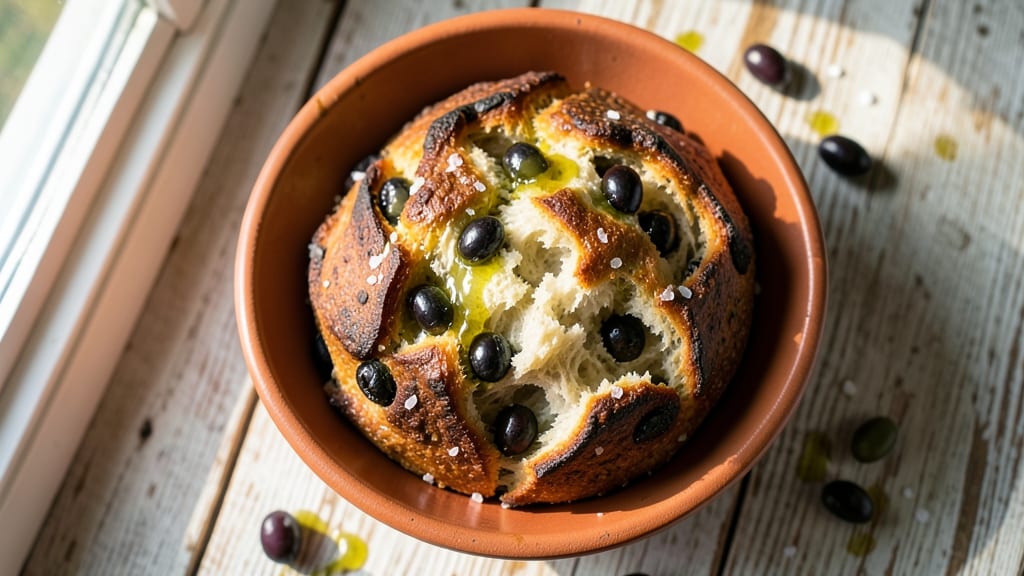
This artisan olive bread recipe transforms simple dough into a rustic masterpiece with briny olives and fragrant herbs. The secret lies in slow fermentation and high-heat baking, creating a crisp crust that encases tender, olive-infused crumb.
I developed this recipe after years of experimenting with Mediterranean-inspired breads, and it's become a staple in my kitchen for its versatility—perfect as a side, appetizer, or even a hearty snack with olive oil and sea salt.
The dough incorporates finely chopped olives directly into the mix, ensuring each bite delivers bursts of Mediterranean flavor. Unlike traditional breads, this version relies on olive oil for richness rather than butter, making it naturally vegetarian and rich in healthy fats.
High-quality extra virgin olive oil is key—its fruity notes complement the briny olives beautifully. The bread's rustic shape and textured crust come from minimal handling during shaping, preserving the dough's natural structure.
Baking at high temperatures creates that signature artisanal crust, while the interior remains soft and studded with tender olives. The aroma alone—warm, herby, and slightly briny—will have everyone at your table reaching for seconds.
This bread pairs exceptionally well with charcuterie boards, soups, or simply as a vehicle for dipping into olive oil. The recipe yields two loaves, perfect for sharing or freezing for later.
For best results, let the dough ferment overnight in the refrigerator. This slow rise enhances flavor development and creates a lighter texture. If you're short on time, a 4-hour room-temperature fermentation works too, though the flavor will be slightly less complex.
The bread keeps well at room temperature for 2-3 days or can be frozen for up to 3 months. Ready to bake your own Mediterranean-inspired masterpiece?
Ingredients for artisan olive bread
High-quality Mediterranean ingredients for rustic, olive-studded bread with crisp crust and herby crumb.
| Ingredient | Amount | Notes |
|---|---|---|
| Extra-Virgin Olive Oil 🫒 | ½ cup | High-quality, fruity variety |
| All-Purpose Flour 🌾 | 5 cups | King Arthur preferred |
| Active Dry Yeast 🍞 | 2 ¼ tsps | Ensure freshness with expiration date |
| Granulated Sugar 🍚 | 1 tbsp | For yeast activation |
| Warm Water 💧 | 1 ¼ cups | 110°F for yeast activation |
| Sea Salt 🧂 | 1 ½ tsps | Diamond Crystal preferred |
| Pitted Green Olives 🫒 | 1 cup | Finely chopped, Kalamata preferred |
| Fresh Rosemary 🌿 | 2 tbsp | Finely chopped, stems removed |
| Fresh Thyme 🌿 | 1 tbsp | Leaves only, finely chopped |
| Cornmeal 🌽 | ¼ cup | For dusting baking sheets |
| Coarse Sea Salt 🧂 | 1 tbsp | For sprinkling on top |
| Extra-Virgin Olive Oil 🫒 | 1 tbsp | For finishing loaves |
The olives are the star here—Kalamata olives from Trader Joe's or Whole Foods have the perfect briny punch, but any pitted green olives work in a pinch. Chop them finely so they distribute evenly throughout the dough. For the herbs, fresh is non-negotiable—dried just won't cut it. I always grab extra rosemary because it's my go-to fragrant herb for breads. The extra-virgin olive oil? Don't skimp. A good bottle makes all the difference—look for one with fruity notes and a harvest date within the last year. If you're unsure, California Olive Ranch or Colavita are reliable brands that won't break the bank.
No Kalamata olives? Manzanilla or green olives work too—just make sure they're pitted and chopped fine. Short on fresh herbs? Dried rosemary at half the amount gets you close, but it won't have the same bright aroma. The yeast should be fresh—if it's past its expiration date, toss it. For the flour, King Arthur or Caputo Tipo 00 are ideal, but all-purpose works fine. Want to make this gluten-free? Swap the flour for a 1:1 gluten-free blend, but expect a denser texture. The sugar is just for yeast activation—don't omit it unless you're using instant yeast.
This dough needs time to develop flavor, so plan ahead. The overnight cold ferment is ideal, but a 4-hour room-temperature rise works if you're in a hurry. Shape the loaves gently—over-handling makes them dense. For storage, let them cool completely before wrapping in a clean kitchen towel inside a paper bag. Keeps at room temperature for 2-3 days or freeze for up to 3 months. To reheat, wrap in foil and warm at 350°F for 10 minutes. Leftovers? Toss them in a toaster or bread machine for crispy croutons—trust me, they're amazing.
Why You'll Love This Recipe
- No-Knead Magic: I swear by this dough—just mix, let it rise, and bake. The olive oil infuses effortlessly, so you’re not stuck measuring tablespoons of butter or waiting for kneading sessions that never end.
- Rich Olive Love: That first pull-apart moment? Pure satisfaction. The extra-virgin olive oil gives it a golden crust with a subtle, fruity depth—no fancy ingredients, just honest flavor that makes every bite feel like a little Mediterranean vacation.
- Weeknight Workhorse: Toss it in a basket for breakfast toast, tear it over salads, or freeze slices for toast later. It’s the one loaf that does double duty without asking for a thing—even when I’m too tired to think past dinner.
- Pantry-Proof Perfection: Five ingredients, zero waste. The yeast and sugar do the heavy lifting, so you’re not scrambling for specialty flours or pricey starters. Honestly, it’s the kind of bread that makes me feel like I’ve outsmarted grocery bills.
Step-by-step instructions for artisan olive bread
This rustic olive bread delivers a crispy crust and herby olive flavor—let's make it together!
Activate the Yeast and Mix the Dough
In a small bowl, combine the 1.25 cups warm water (about 110°F) with the 1 tbsp granulated sugar and 2.25 tsps active dry yeast. Let it sit for 5-10 minutes until frothy—this tells you your yeast is alive and ready to work. If it doesn't bubble, start over with fresh yeast.
In a large mixing bowl, whisk together the 5 cups all-purpose flour and 1.5 tsps sea salt. Make a well in the center and pour in the yeast mixture along with the 0.5 cup extra-virgin olive oil. Using a wooden spoon or dough whisk, stir until a shaggy dough forms. The dough will be sticky, but that's perfect for this recipe.
Knead the Dough Until Smooth
Turn the dough out onto a lightly floured surface and knead for 8-10 minutes until smooth and elastic. You'll know it's ready when it springs back slowly when poked. I like to use my knuckles for pressure testing—if it leaves a slight indentation that fills in after 2-3 seconds, you're good to go.
For the olive and herb infusion, finely chop the 1 cup pitted green olives, 2 tbsp fresh rosemary, and 1 tbsp fresh thyme, then mix them into the dough. The olives should be small enough to distribute evenly without breaking the bread's texture. Knead for another 2 minutes to fully incorporate.
Let the Dough Rise Until Doubled
Lightly oil a large bowl, place the dough inside, and cover with a damp kitchen towel. Let it rise in a warm spot for 1-2 hours until it's doubled in size. You'll see it puff up and look airy—this is when the magic happens as the yeast ferments and develops flavor.
Here's a pro tip: If your kitchen is cold, place the bowl near a warm spot like the top of the fridge or on a seedling mat. The dough should feel light and springy when pressed gently. If it's too sticky to handle, let it rise a little longer—it'll firm up as it goes.
Shape and Proof the Loaves
Punch down the dough to release air, then divide it into two equal pieces. Shape each piece into a round boule by pulling the edges toward the center and tucking them under. Place the shaped loaves on a baking sheet dusted with 0.25 cup cornmeal, leaving space between them for expansion.
Cover the loaves loosely with a towel and let them proof for another 30-45 minutes until they've risen about 50%. They should look puffy and feel firm to the touch. Sprinkle the tops with 1 tbsp coarse sea salt and brush lightly with 1 tbsp extra-virgin olive oil for that artisanal finish.
Bake for a Crispy Crust and Soft Interior
Preheat your oven to 425°F with a baking stone or inverted baking sheet inside. This creates steam for that perfect crust. Bake the loaves for 25-30 minutes until they're deep golden brown and sound hollow when tapped on the bottom.
For that rustic look, I like to spray the oven with water right before baking—this creates steam that makes the crust extra crispy. Let the bread cool on a wire rack for at least 15 minutes before slicing. The interior should be soft and airy, with pockets of olive and herb flavor throughout each bite.
Pro Tips For Making Artisan Olive Bread
- Use Room-Temp Oil: Dump that bottle straight from the fridge into your dough—you’ll end up with a gummy, uneven mix. Let your olive oil sit out for 15 minutes first; it blends smoother and develops flavor faster. Trust me, your dough will thank you.
- Bloom Yeast in Warm Water: Skip the "just toss it in" approach. Dissolve that sugar first, then add yeast and let it foam for 5 minutes before mixing with flour. Cold water kills yeast; lukewarm (105°F) gets it working right away—no waiting for lazy activation.
- Knead Until Silky: Your dough shouldn’t feel like rubber or fight you—aim for a stretchy, windowpane texture. If it tears when you pull it, knead another 2-3 minutes. Overworking? No. Underworking? You’ll get a dense loaf. Find that sweet spot.
- Steam the First 10 Minutes: No Dutch oven? No problem. Boil water in a pot, then pour ½ cup into a baking sheet under your loaf pan. The steam locks in moisture and gives that golden crust without burning. (Yes, even if you’re impatient like me.)
Regional styles of these flavors
Italian Rustic Style
In Italy, this bread takes inspiration from Pane di Oliva, a traditional Sicilian olive bread often baked in wood-fired ovens. The key difference is the use of San Marzano tomatoes blended into the dough for extra moisture and sweetness.
I've adapted this by using ½ cup tomato paste mixed with the olive oil before adding to the flour. Bake in a clay baking dish for 35-40 minutes at 400°F to mimic authentic wood-fired results. 🌿
Greek Olive Bread
Greek olive bread, or Psomi Eliies, often includes oregano and feta cheese crumbles> for a tangy twist. Replace the rosemary with 1 tbsp dried oregano> and fold in ½ cup crumbled feta> during the final kneading.
Shape into a flat, round loaf and bake on a perforated baking sheet> for 20-25 minutes> at 375°F>. The feta adds a salty contrast that pairs perfectly with the olives.
French Fougasse
For a French-inspired version, transform this into a fougasse> by shaping the dough into an oval with decorative slashes. Mix in ½ cup chopped black olives> and 1 tbsp chopped tarragon> instead of rosemary and thyme.
Brush the top with 1 egg wash> and sprinkle with flaky sea salt> before baking at 425°F> for 20-25 minutes>. The slashes create crispy, edible "fingers" that make it perfect for dipping into olive oil.
Spanish Pan con Aceitunas
In Spain, this bread becomes Pan con Aceitunas>, often baked in a round shape with a dimpled top. Replace the rosemary with 1 tbsp smoked paprika> and add ½ cup pitted black olives> for deeper flavor.
Shape into a round loaf and press dimples with your fingers before baking at 400°F> for 30 minutes>. The smoked paprika adds a subtle smokiness that complements the olives beautifully. 🌍
Moroccan Olive Flatbread
For a North African twist, shape the dough into flat rounds and add 1 tsp ground cumin> and ½ tsp ground coriander> to the dough. Use ½ cup chopped green olives> and 1 tbsp chopped cilantro> for the infusion.
Cook in a cast-iron skillet> over medium-high heat> for 2-3 minutes per side>, brushing with olive oil between flips. This version is perfect for serving with harissa> or spiced yogurt dips.
Nutrition facts
Frequently asked questions about artisan olive bread
Can I make this bread without a stand mixer?
This dough is sticky but manageable by hand. Knead on a lightly floured surface for 8-10 minutes until smooth and elastic. Use the "windowpane test"—stretch a small piece of dough thin enough to see light through it. The dough should resist tearing and spring back slowly. For extra strength, wet your hands slightly to prevent sticking.
Why does my dough smell like alcohol?
That's normal! The yeast produces alcohol and carbon dioxide during fermentation, which gives the dough a slightly boozy aroma. For richer flavor, try the overnight cold proof in the refrigerator—it enhances this natural fermentation process. If the smell is too strong, your dough may have overproofed (let it rise longer next time).
How do I fix dense olive bread?
Dense bread usually means over-kneading or underproofing. For future batches:
- Proof longer (let it rise until doubled, not just puffy),
- Shape gently (don't press hard), and
- Use proper yeast (check expiration dates). If your current batch is dense, try toasting it—it'll still taste delicious with crispy edges!
Can I substitute olives with something else?
Yes! For a similar briny flavor, try ½ cup sun-dried tomatoes (chopped) or ¼ cup capers (finely minced). For sweet variations, use ½ cup raisins or chopped dried apricots. Just adjust the amount—olives are briny, so other ingredients may need balancing with extra herbs or salt.
How should I store leftover olive bread?
Wrap cooled loaves in a clean kitchen towel inside a paper bag to maintain freshness. Store at room temperature for 2-3 days or freeze for up to 3 months. To reheat, wrap in foil and warm at 350°F for 10 minutes. For extra crispiness, toast slices in a toaster or oven until golden.