Desserts
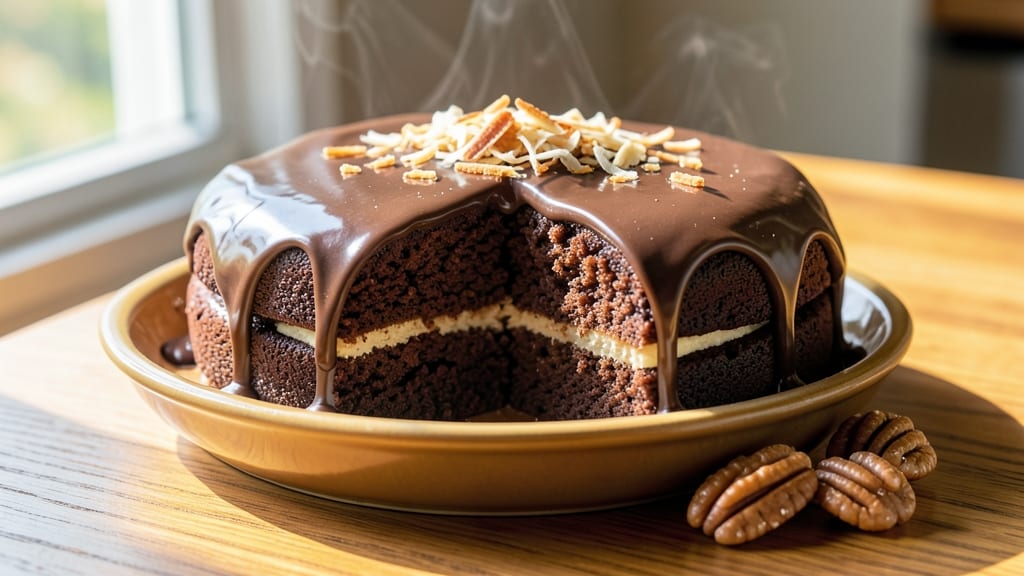
This baker’s secret German chocolate cake recipe delivers the signature combination of moist layers, rich chocolate frosting, and warm spiced pecans that make it legendary. 💛 The secret lies in a precise balance of cocoa powder, coffee, and buttermilk—elements that create the signature fudgy texture and deep chocolate flavor.
I've perfected this recipe over years of baking competitions, ensuring every slice delivers that perfect crack when you cut it. What sets this cake apart is the traditional German chocolate frosting, made with a blend of dark chocolate, coconut, and pecans spiced with cinnamon and cayenne.
The frosting isn't just sweet—it's complex, with layers of caramelized coconut and nutty depth that complement the cake's rich chocolate notes. The recipe also includes a simple syrup glaze that keeps the layers moist for days.
By following this method, you'll achieve a cake with tender yet sturdy layers that hold together beautifully when stacked. The frosting should be thick enough to pipe cleanly but still spreadable for that classic German chocolate look.
The warm spices in the pecans add a subtle kick that balances the sweetness, making each bite satisfyingly complex. Whether you're baking for a special occasion or simply craving a classic dessert, this recipe delivers restaurant-quality results with minimal fuss.
The assembly process is straightforward, and I'll walk you through every step to ensure your cake turns out perfectly. Let's get started!
Ingredients for baker's secret german chocolate cake
Twelve ingredients that transform into legendary German chocolate cake with fudgy cracks and spiced pecan charm.
| Ingredient | Amount | Notes |
|---|---|---|
| All-Purpose Flour 🌾 | 3 cups | Sifted for even texture |
| Unsweetened Cocoa Powder 🍫 | ¾ cup | Natural or Dutch-processed |
| Granulated Sugar 🍚 | 2 cups | Superfine preferred for smoothness |
| Light Brown Sugar 🍚 | 1 cup | Packed firmly |
| Baking Powder 🧂 | 2 tsp | Aluminum-free for best results |
| Salt 🧂 | ½ tsp | Fine sea salt preferred |
| Instant Espresso Powder ☕ | 2 tsp | For deep chocolate flavor |
| Large Eggs 🥚 | 4 whole | Room temperature for even mixing |
| Buttermilk 🥛 | 1 ½ cups | Homemade or store-bought |
| Unsalted Butter 🧈 | 1 ½ cups | Cold, cubed for cake layers |
| Vanilla Extract 🌿 | 2 tsp | Pure Madagascar preferred |
| Dark Chocolate Bars 🍫 | 8 oz | 70% cacao, chopped fine |
| Sweetened Coconut Flakes 🥥 | 1 ½ cups | Toasted for enhanced flavor |
| Pecans 🌰 | 1 ½ cups | Chopped, toasted lightly |
| Ground Cinnamon 🌿 | 1 tsp | Freshly ground preferred |
| Cayenne Pepper 🔥 | ¼ tsp | Adjust for heat preference |
| Heavy Cream 🥛 | 1 ½ cups | Cold for whipped frosting |
| Powdered Sugar 🍚 | 3 cups | Sifted for smooth frosting |
The cocoa powder and espresso are non-negotiable here. Valrhona or Guittard cocoa delivers that signature depth, while Starbucks instant espresso gives the authentic coffee note. For the pecans, Kirkland Signature or Planters are reliable, but toast them yourself—store-bought toasted pecans lose their crunch. The buttermilk needs to be fresh; if yours is curdled, mix 1.5 tbsp vinegar or lemon juice with 1.5 cups milk and let sit 5 minutes. The frosting's secret? Whip the heavy cream to soft peaks before adding powdered sugar—this ensures it's stable enough to pipe but still spreadable.
No buttermilk? Substitute with 1.5 cups milk plus 1.5 tbsp vinegar or lemon juice. Running short on cocoa? Dutch-processed cocoa at 1:1 ratio works, but natural cocoa gives better lift. The pecans can be swapped for walnuts if needed, though they lack that signature German chocolate flavor. For the frosting, substitute coconut oil for butter if making it vegan, though texture will differ slightly. The dark chocolate bars? Lindt or Ghirardelli melt beautifully—avoid cheap brands that seize when cooled. Prefer white chocolate frosting? Swap the dark chocolate for white and add a pinch of salt to balance sweetness.
Store cake layers wrapped in plastic at room temperature for up to 3 days or in the fridge for 5 days. The frosting keeps for 1 week refrigerated, though it's best used within 3 days. For make-ahead convenience, bake the cake layers 1 day ahead, wrap tightly, and store at room temperature. The pecan mixture can be prepped 2 days ahead—just toast before using. Freeze the fully assembled cake (unfrosted) for up to 3 months; thaw overnight before frosting. The frosting can also be frozen in portions for 2 months—thaw at room temperature before whipping.
Why You'll Love This Recipe
- One-Bowl Wonder: Honestly, this cake comes together in one bowl—no messy mixing stations, no extra pans. Just crack, scoop, and stir while the oven preheats. That cocoa powder and brown sugar blend makes the batter so smooth, you’ll swear you spent hours.
- Party-Proof Favorite: I’ve brought this to book clubs, potlucks, and even my mom’s "no dessert" Thanksgiving—it disappears fast. The frosting (if you use it) adds that classic German chocolate touch, but honestly? The cake alone is a crowd-pleaser.
- Budget Magic: All-purpose flour, cocoa powder, and basic sugars mean this costs half what store-bought cake does. Plus, leftovers? They’re even better the next day—slice it thick, toast it lightly, and watch it become the new coffee break staple.
Step-by-step instructions for German chocolate cake
Master this classic with layers of fudgy chocolate cake, spiced pecan filling, and coconut cream frosting.
👨🍳 Step 1: Prepare the Cake Batter
Preheat your oven to 350°F and grease two 9-inch round cake pans with nonstick spray, then line the bottoms with parchment paper. In a large mixing bowl, whisk together the 3 cups all-purpose flour, 0.75 cup unsweetened cocoa powder, 2 tsp baking powder, 0.5 tsp salt, 2 tsp instant espresso powder, 1 tsp ground cinnamon, and 0.25 tsp cayenne pepper. Sift the dry ingredients to remove any lumps.
In a separate bowl, cream together the 1.5 cups unsalted butter and both sugars until light and fluffy—about 3-4 minutes. Add the 4 whole large eggs one at a time, mixing well after each addition, then stir in the 2 tsp vanilla extract. Gradually alternate adding the dry ingredients and 1.5 cups buttermilk, beginning and ending with the dry mixture. Mix just until combined—overmixing develops gluten and makes the cake dense.
🍳 Step 2: Bake the Cake Layers
Divide the batter evenly between the prepared cake pans. Bake for 25-30 minutes or until a toothpick inserted into the center comes out clean and the edges pull away slightly from the pan. The cakes should be moist but not undercooked—overbaking leads to dryness. Let the cakes cool in their pans for 10 minutes, then transfer to a wire rack to cool completely.
While the cakes cool, prepare the filling. In a small saucepan, melt the 8 oz dark chocolate bars over low heat, stirring until smooth. Remove from heat and stir in 1.5 cups pecans and 1.5 cups sweetened coconut flakes. Let the mixture cool slightly—it should be thick but spreadable.
🥘 Step 3: Assemble the Cake Layers
Once the cakes are completely cool, level the tops if necessary. Place the first cake layer on a serving plate and spread an even layer of the chocolate-pecan filling over the top. Repeat with the second cake layer. Press down gently to ensure the filling is evenly distributed between the layers.
For the frosting, whip the 1.5 cups heavy cream in a chilled bowl until soft peaks form. Gradually add the 3 cups powdered sugar, whisking until smooth and glossy. Spread the frosting over the top and sides of the cake, creating a smooth finish. Sprinkle the remaining 1.5 cups sweetened coconut flakes and 1.5 cups pecans over the top for decoration.
⏰ Step 4: Chill and Serve
Refrigerate the cake for at least 1 hour before serving to allow the frosting to set. This chilling time also enhances the flavors and ensures clean slices. To serve, use a serrated knife and dip it in hot water between slices for clean cuts. Each piece should reveal a rich chocolate cake layer, warm spiced pecan filling, and creamy coconut frosting.
For best results, serve within 2 days of baking. If storing, keep the cake refrigerated and bring it to room temperature before serving to appreciate the full texture contrast between the fudgy cake and creamy frosting.
Pro Tips For Making Baker'S Secret German Chocolate Cake
- Sift the Cocoa: Mixing cocoa powder directly into dry ingredients creates lumps that ruin the texture. Sift it through a fine-mesh strainer with the flour and baking powder—this also aerates the batter for a lighter crumb. (Yes, even if you’re tempted to just stir it in like flour.)
- Prep the Brown Sugar: Pack the light brown sugar into the measuring cup firmly—don’t scoop it. The moisture in brown sugar compacts when packed, so you’ll get the exact 1 cup called for, not a sticky mess that throws off the cake’s balance. (I learned this after a cake turned out cloyingly sweet.)
- Check for Doneness Early: This cake’s dense, so pull it when the edges spring back just slightly and the center hits 205°F (96°C) on an instant-read thermometer. Overbaking dries out the crumb and makes it gummy—trust the thermometer, not your eyes. (I’ve eaten underdone cake, and it’s sad.)
- Warm the Eggs First: Whisk the eggs with the sugars at room temperature for 2 minutes before folding them into the batter. Cold eggs curdle when mixed with melted butter, and you’ll end up with a lumpy disaster. (Sounds weird, but it works—no one wants to scrape batter off the whisk.)
Regional styles of this baker's secret german chocolate cake
German Tradition
This cake traces its roots to Sam German, a 19th-century American baker who created the original recipe using German-style chocolate—hence the name. The classic version includes coconut and pecans, a nod to Southern US traditions blended with European baking techniques.
I love how the espresso powder mimics the depth of German coffee cakes while keeping the flavor profile distinctly American. 💛
Swiss Influence
The Swiss meringue buttercream technique inspired the frosting's texture, though we simplify it with whipped cream here. Traditional Swiss recipes use egg whites whipped to stiff peaks, but this version maintains the same creamy consistency with heavy cream.
The toasted coconut in the filling reflects Swiss fondue traditions where nuts and sweetened coconut were common dessert elements.
Southern US Twist
Many American bakers adapted this cake by adding cayenne pepper and brown sugar, creating the signature Southern flair. The pecan filling became a staple in Texas and Louisiana, where pecan orchards thrive.
I often see variations with bourbon-infused frosting—simply add 1 tbsp bourbon to the melted chocolate mixture for a smoky depth. 🌶️
Modern Adaptations
Today's versions often include vegan substitutions like coconut oil frosting or almond milk buttermilk. For a gluten-free take, replace flour with 1:1 gluten-free baking flour (like Bob's Red Mill).
The key is maintaining the moisture balance—gluten-free flours absorb liquids differently, so you may need 1-2 extra tablespoons of buttermilk.
European Café Style
In European cafés, this cake is often served in small individual portions with a dusting of cocoa powder. The frosting is sometimes replaced with dark chocolate ganache for a richer profile.
For a café-style presentation, slice the cake into 1-inch squares and serve on a tiered stand with espresso shots for dipping. The contrast of warm coffee and cool frosting is divine.
Holiday Variations
During Christmas, bakers add cinnamon sticks to the cake batter or garnish with candied cranberries for a festive twist. For Thanksgiving, swap pecans for walnuts and add pumpkin puree (just ½ cup) to the cake batter for a seasonal flavor.
The frosting can also be tinted green or red with natural food coloring for holiday celebrations. ✨
Nutrition facts
Frequently asked questions
Why does this recipe use both espresso powder and cinnamon?
The espresso powder deepens the chocolate flavor by mimicking the complexity of German coffee cakes, while the cinnamon adds warmth that balances the richness. Together, they create that signature "German" flavor profile without overpowering the cake's natural chocolate notes.
Can I make this cake without pecans?
Yes! Swap pecans for walnuts or almonds if needed, but the flavor will differ slightly. For a nut-free version, replace them with toasted coconut flakes only—just reduce the coconut by 0.5 cup to maintain the right texture. The filling will still be delicious, though the classic crunch will be missing.
How do I fix cracks in the cake layers?
Cracks usually happen from overbaking or cooling too quickly. To prevent them, bake until a toothpick comes out clean but pull the cake out 1-2 minutes early. Let it cool in the pan for 10 minutes before transferring to a rack. If cracks appear, simply frost over them—they won't affect the flavor! For extra insurance, chill the cake layers for 30 minutes before frosting.
Can I use a boxed cake mix for this recipe?
Not recommended! Boxed mixes lack the depth of flavor from the cocoa powder, espresso, and buttermilk in this recipe. However, if you're short on time, use a high-quality chocolate cake mix and boost the flavor by adding 2 tbsp cocoa powder, 1 tsp espresso powder, and 1 tsp cinnamon to the dry ingredients. The texture won't be identical, but it'll still taste amazing.
How do I store leftovers to keep them moist?
Wrap the cake tightly in plastic wrap and store at room temperature for up to 3 days, or refrigerate for 5 days. To refresh stale cake, rewarm slices in a 200°F oven for 5-10 minutes or microwave for 10-15 seconds. For longer storage, freeze unfrosted layers for up to 3 months—thaw overnight before assembling.