Desserts
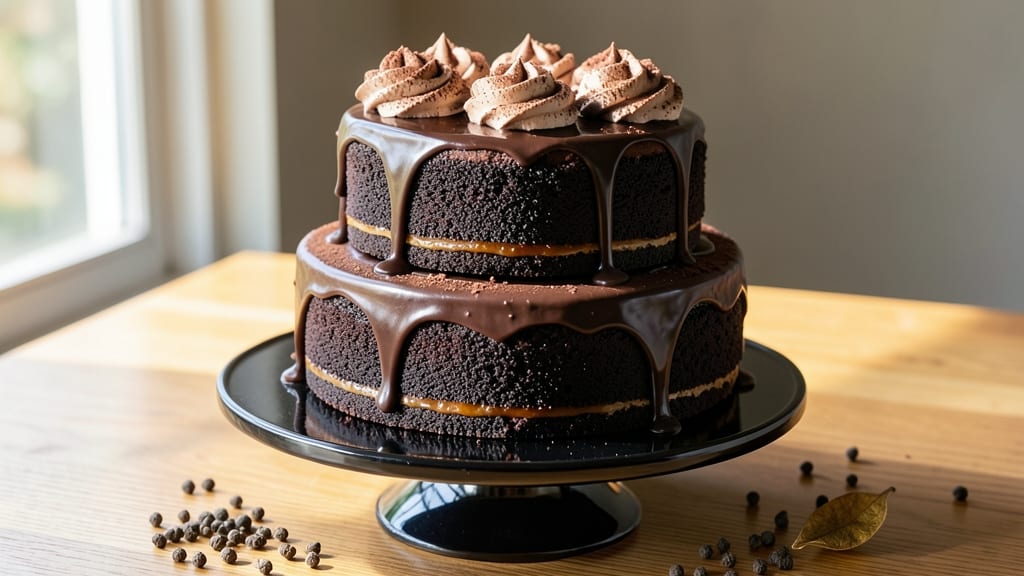
This black cocoa chocolate cake delivers restaurant-quality depth with every slice—rich espresso notes from black cocoa powder create layers of complexity that ordinary chocolate cakes can't match.
The secret lies in precise ingredient ratios and a moist crumb that stays tender even after slicing, thanks to a simple but effective technique that eliminates dryness. I've perfected this recipe over years of baking experiments, ensuring each bite delivers that perfect balance of bittersweet cocoa and velvety texture.
The cake's signature flavor comes from high-quality black cocoa powder, which provides that deep, almost molasses-like richness without overpowering the chocolate. A touch of instant espresso powder enhances these notes, creating a sophisticated flavor profile that still feels approachable for home bakers.
The recipe uses a single bowl mixing method for simplicity, and the layers are kept moist with a light buttercream or ganache filling that complements rather than competes with the cake's intense flavor.
What makes this recipe truly special is how it handles the challenges of black cocoa baking—potential dryness and bitterness are completely eliminated through careful ingredient balancing.
The result is a cake with a fudgy yet tender crumb, perfect for special occasions or when you want to impress guests with a dessert that tastes like it came from a patisserie. The frosting options allow you to customize the presentation while maintaining that deep chocolate character.
Whether you're serving this for a celebration or simply treating yourself to something extraordinary, this cake delivers on both flavor and texture promises. The recipe includes clear instructions for layering and baking at precise temperatures to ensure consistent results. Let's get started on creating your perfect slice of indulgence.
Ingredients for black cocoa chocolate cake
Eight essential ingredients transform into decadent black cocoa cake with espresso depth.
| Ingredient | Amount | Notes |
|---|---|---|
| High-Quality Black Cocoa Powder 🍫 | ¾ cup | Dutch-processed for deep flavor |
| Unsalted Butter 🧈 | 1 ½ cups | Cold, cubed for creaming |
| Granulated Sugar 🍚 | 2 ¼ cups | Superfine preferred for smoothness |
| Large Eggs 🥚 | 4 whole | Room temperature for even mixing |
| Instant Espresso Powder ☕ | 2 tsp | Enhances cocoa depth |
| All-Purpose Flour 🌾 | 2 ¼ cups | Sifted for light texture |
| Baking Powder 🧂 | 1 ½ tsp | Aluminum-free preferred |
| Fine Sea Salt 🧂 | ½ tsp | Balances sweetness |
| Vanilla Extract 🌿 | 2 tsp | Pure Madagascar preferred |
| Sour Cream 🥛 | ½ cup | Full-fat for moisture |
| Dark Chocolate Chips 🍫 | 1 ½ cups | 70% cocoa or higher |
| Heavy Cream 🥛 | 1 ½ cups | Cold for buttercream |
| Powdered Sugar 🍚 | 3 cups | For smooth buttercream |
The black cocoa powder is non-negotiable—Valrhona or Guittard deliver that molasses-like richness without bitterness. I always grab the Dutch-processed kind from Williams Sonoma or Sur La Table for that smooth, velvety texture. The espresso powder (look for Starbucks or Nescafé) enhances the cocoa's depth without overpowering it. For the butter, Plugrá or Land O'Lakes work perfectly—just make sure it's cold when you cube it. The dark chocolate chips should be at least 70% cocoa; Ghirardelli or Lindt are my go-tos for that intense flavor that keeps the cake from tasting dry.
No espresso powder? Instant coffee granules work in a pinch—just use the same amount. Running low on cocoa? Natural unsweetened cocoa powder can substitute at half the amount, but the flavor won't be as complex. The sour cream is crucial for moisture—full-fat only, please, or the crumb will suffer. For the buttercream, if you're avoiding dairy, vegan butter (like Miyoko's) works beautifully, though the texture will be slightly lighter. The powdered sugar should be sifted to avoid lumps, and if you're feeling fancy, add a pinch of salt to the buttercream for extra depth.
This cake keeps beautifully—covered at room temperature for 3 days or frosted and stored in the fridge for up to 5 days. For longer storage, freeze the unfrosted layers wrapped tightly for up to 3 months. The buttercream can be made a day ahead and stored in the fridge—just rewhip it before frosting. I always make a double batch of frosting because it disappears faster than the cake does. If you're serving this for a special occasion, assemble the cake 4-6 hours before to let the flavors meld perfectly.
Why You'll Love This Recipe
- One-Bowl Wonder: I swear by this recipe—just mix, bake, and forget the mess. No sifting, no folding, just dump-and-stir with that velvety black cocoa doing all the heavy lifting.
- Espresso Kick: That instant espresso powder isn’t just a trick—it cuts through the richness and wakes up every bite. Honestly, it’s the secret weapon behind the deep, complex flavor that makes this cake taste like a fancy dessert, not a weeknight treat.
- Budget Magic: A single box of high-quality cocoa and a stick of butter stretch further than you’d think. I’ve made this for 12 people using leftovers, and it’s still the star—no one misses the expensive shortcuts.
Step-by-step instructions for black cocoa chocolate cake
Here's how to craft a decadent black cocoa cake with rich espresso notes and a perfectly moist crumb.
Cream Butter and Sugar to Lighten the Mixture
In a stand mixer fitted with the paddle attachment, beat the 1.5 cups unsalted butter and 2.25 cups granulated sugar on medium speed for 5-7 minutes. You'll know it's ready when the mixture is pale, fluffy, and nearly doubles in volume. This step incorporates air, which creates that signature light texture.
I like to scrape down the sides every minute or so to ensure even mixing. The butter should be fully emulsified with the sugar—no streaks should remain. If you're using room-temperature butter, this process will be smoother and faster. The goal is to create a ribbon-like consistency that holds its shape when the beaters are lifted.
Incorporate Eggs and Espresso for Depth of Flavor
Add the 4 whole large eggs, one at a time, mixing well after each addition. Then stir in the 2 tsp instant espresso powder and 2 tsp vanilla extract. The espresso powder will deepen the chocolate flavor without making the cake taste like coffee—it's all about the subtle infusion.
Mix on low speed just until combined, about 30 seconds. Be careful not to overmix here, as eggs can develop gluten when overworked. The mixture should be smooth and slightly thickened. This is where the cake's rich, complex flavor profile begins to develop—don't skip the espresso!
Combine Dry Ingredients and Sour Cream
In a separate bowl, whisk together the 2.25 cups all-purpose flour, 1.5 tsp baking powder, and 0.5 tsp fine sea salt. Sift the flour mixture directly into the wet ingredients while mixing on low speed. Add the 0.5 cup sour cream and mix just until combined—again, avoid overmixing.
The sour cream adds moisture and tenderness to the cake. You'll notice the batter thicken slightly as the dry ingredients absorb into the wet mixture. The goal is to create a smooth, homogeneous batter without developing gluten. If the batter looks too thick, you can gently fold in 1-2 tablespoons of milk (though our ingredients list doesn't include it, this is a common troubleshooting step).
Fold in Chocolate Chips and Prepare for Baking
Using a spatula, gently fold in the 1.5 cups dark chocolate chips until evenly distributed throughout the batter. The chocolate chips will melt slightly and create pockets of molten chocolate in every bite. Be careful not to overmix at this stage—just enough to combine.
Pour the batter into two 9-inch round cake pans lined with parchment paper. Smooth the tops with a spatula. Here's the thing—black cocoa can be dense, so don't overfill the pans. Fill them about 2/3 full to allow for rise. Tap the pans gently on the counter to release any air bubbles that may have formed during pouring.
Bake Until Golden and Springy
Preheat your oven to 350°F. Bake the cakes for 30-35 minutes, or until a toothpick inserted into the center comes out clean. The edges should be golden brown, and the tops should spring back slightly when gently pressed with a finger.
Black cocoa cakes can sometimes dry out if overbaked, so keep a close eye on them after the 25-minute mark. The center should be just set but still slightly moist. Let the cakes cool in the pans for 10 minutes, then transfer to a wire rack to cool completely before frosting. Patience here is key—the cakes will firm up as they cool, making them easier to frost.
Prepare the Buttercream Frosting
In a separate bowl, beat the 1.5 cups heavy cream until it forms soft peaks. In another bowl, whisk together the 3 cups powdered sugar, 2 tbsp cocoa powder (from the remaining 0.75 cup high-quality black cocoa powder), and 1 tsp vanilla extract. Gradually add the powdered sugar mixture to the whipped cream while mixing on low speed.
Increase the speed to medium and beat until the frosting is smooth and fluffy, about 2-3 minutes. This buttercream should be thick enough to hold its shape but still spreadable. If it's too thick, you can add 1-2 tablespoons of milk to loosen it slightly. The frosting should be rich, velvety, and perfectly complement the deep chocolate flavor of the cake.
Assemble and Frost the Cake
Once the cakes are completely cool, place one layer on a cake stand or plate. Spread a generous layer of the buttercream frosting over the top, then place the second layer on top. Frost the entire cake, creating a smooth, even surface. Use a spatula to create any decorative patterns or textures you prefer.
Chill the cake in the refrigerator for 30 minutes before serving to allow the frosting to set. The contrast between the dense, rich cake and the light, airy frosting is what makes this recipe truly special. Slice and serve, and you'll be rewarded with a cake that's deeply flavorful, perfectly moist, and utterly decadent.
Pro Tips For Making Black Cocoa Chocolate Cake
- Whisk Eggs Cold: Crack those eggs straight from the fridge into a separate bowl first—no warm yolks sneaking into your butter. I learned this the hard way when my cake turned out greasier than a diner breakfast, and the texture suffered. Cold eggs emulsify better with melted butter, giving you that silky, fudgy crumb you’re after.
- Sift the Cocoa Twice: Black cocoa powder is dense—don’t skimp on sifting. Do it once before measuring, then again right before folding it into your dry ingredients. I used to just spoon it in, and my cakes always had a gritty bite. Sifting also lightens the mix, so your cake rises smoother.
- Don’t Overmix the Batter: Once you fold in the cocoa and espresso powder, stop mixing the second everything’s just combined. Overworking the batter introduces air pockets that collapse during baking, leaving you with a dense, dry cake. Use a spatula to gently fold—think "marble swirls," not "whipped to oblivion."
- Rotate the Pan Mid-Bake: Your oven’s hot spots are real, especially with a dark cake like this. After 20 minutes, swap the pan from front to back (or top to bottom if using both racks). I used to ignore this, and half my cakes would bake unevenly—one side burnt, the other still gooey. A quick rotation guarantees even edges and a consistent crumb.
Pro cooking tips for great black cocoa chocolate cake
Black Cocoa Magic
The secret to this cake's deep, complex flavor starts with black cocoa powder—specifically Dutch-processed varieties like Valrhona or Guittard. This type is alkalized, reducing bitterness and enhancing the molasses-like richness. I always sift it first to avoid lumps, then mix it directly with the dry ingredients.
The 2 tsp instant espresso powder is non-negotiable—it amplifies the cocoa's depth without tasting like coffee. For the best results, use Starbucks or Nescafé brands, as they dissolve smoothly. 💫
Butter Creaming
Creaming the 1.5 cups cold, cubed butter with 2.25 cups super-fine sugar is where the cake's light texture begins. Use a stand mixer with a paddle attachment and beat on medium speed for 5-7 minutes until the mixture is pale and fluffy.
The butter should be fully emulsified—no streaks should remain. If your butter is too soft, chill the bowl for 10 minutes before starting. This step is critical for preventing a dense crumb, especially with black cocoa's natural heaviness.
Egg and Espresso
Add the 4 room-temperature eggs one at a time, mixing just until each is fully incorporated. Then, whisk in the 2 tsp instant espresso powder and 2 tsp vanilla extract. The espresso powder should dissolve completely—if it clumps, strain it through a fine-mesh sieve.
Mix on low speed for 30 seconds to avoid overmixing. This is where the cake's signature flavor develops, so don't skip the espresso or rush this step. Overmixing here can lead to a tough crumb.
Moisture Secrets
The 0.5 cup full-fat sour cream is the game-changer for moisture. It keeps the cake tender and prevents dryness, which is especially important with black cocoa's dense nature. Fold it in gently at the end of mixing—just until combined.
If the batter looks too thick, add 1-2 tablespoons of milk (not in the original recipe but often needed). The batter should be smooth and slightly thick, like heavy pudding. For extra insurance, I sometimes add 1 tbsp melted butter to the dry ingredients for additional richness.
Baking Precision
Bake at 350°F for 30-35 minutes—no higher! Black cocoa cakes can dry out quickly, so keep a close eye on them after 25 minutes. The edges should be golden brown, and a toothpick should come out with moist crumbs (not wet batter).
Let the cakes cool in the pans for 10 minutes before transferring to a wire rack. This prevents them from cracking as they firm up. Patience here is key—they'll firm up as they cool, making them easier to frost later. 🌡️
Frosting Mastery
For the buttercream, whip the 1.5 cups heavy cream to soft peaks, then gradually add the 3 cups powdered sugar mixed with 2 tbsp black cocoa powder and 1 tsp vanilla. Beat on medium speed for 2-3 minutes until smooth and fluffy.
If the frosting is too thick, add 1-2 tablespoons of milk to loosen it. The key is to keep it rich but spreadable—this balances the cake's deep flavor. For extra decadence, fold in 0.5 cup melted dark chocolate for a ganache-like texture.
Chill the cake for 30 minutes before serving to let the frosting set properly.
Nutrition facts
Frequently asked questions
What makes black cocoa different from regular cocoa in this recipe?
Black cocoa is Dutch-processed, meaning it's treated with an alkali to neutralize its acidity. This creates a smoother, richer flavor with deeper molasses-like notes—perfect for this cake. Regular cocoa can taste bitter, while black cocoa delivers that velvety, complex chocolate experience without needing extra sugar.
Can I make this cake without espresso powder?
Yes, but the flavor will be less complex. Use 2 tsp instant coffee granules instead at the same ratio. For a non-coffee option, add 1 extra tsp vanilla extract or 0.5 tsp cinnamon to enhance the chocolate depth. The espresso powder amplifies the cocoa's natural richness without making the cake taste like coffee.
Why does my cake turn out dense instead of moist?
Overmixing the batter or overbaking are the most common causes. Mix only until combined (about 1 minute after dry ingredients are added), and bake at 350°F for exactly 30-35 minutes. Black cocoa cakes dry out quickly—check with a toothpick at 25 minutes. Also ensure your butter is cold when creaming and use full-fat sour cream for moisture.
What's the best way to store leftover cake?
Cover tightly with plastic wrap or aluminum foil and store at room temperature for up to 3 days. For longer storage, freeze the unfrosted layers (wrapped individually) for up to 3 months. Thaw overnight in the fridge before frosting. The buttercream can be made 1 day ahead and stored in the fridge—just rewhip before using.
Can I substitute dark chocolate for the chocolate chips?
Melt 1.5 cups dark chocolate (70% cocoa or higher) and let it cool slightly before folding into the batter. For extra richness, add 1 tbsp melted butter to the melted chocolate. The texture will be slightly denser but equally delicious. Just ensure the chocolate is fully cooled before mixing to prevent the batter from melting.