
Desserts
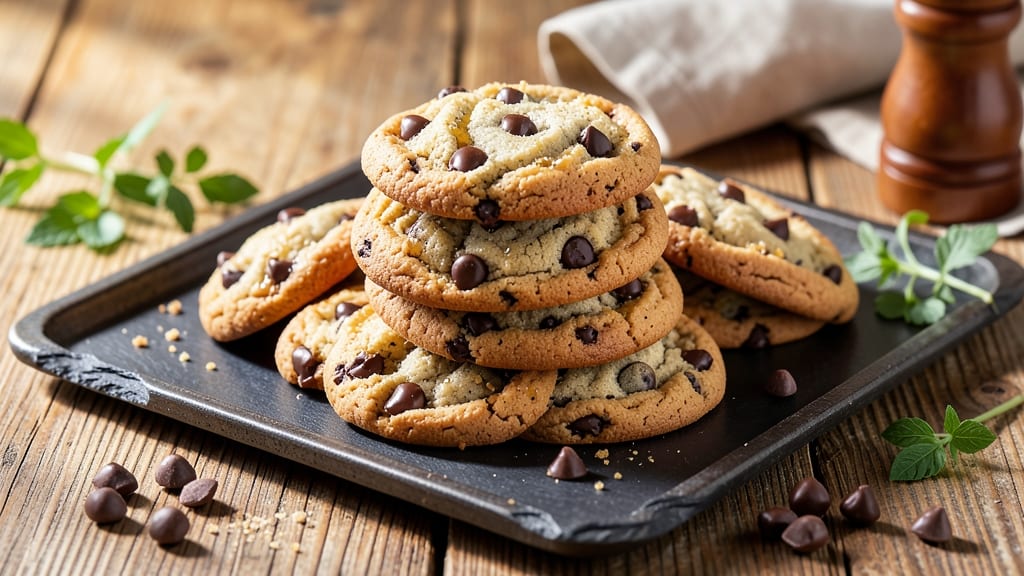
This butter-free chocolate chip cookie recipe delivers all the classic flavors—crunchy edges, melty centers—without a single stick of butter. 💛 The secret lies in using a blend of coconut oil and applesauce, which creates that signature texture while keeping the cookies tender and rich.
I developed this version after years of experimenting with plant-based baking, and it's become a staple in my kitchen. What makes these cookies special is the balance of ingredients: almond flour adds nutty depth, while flax eggs bind everything together without compromising structure.
The chocolate chips stay gooey in the center, and the edges develop a perfect golden-brown crispness that's impossible to resist. It's the kind of recipe that proves plant-based baking can be just as indulgent as traditional versions.
The process is straightforward but requires attention to detail—mixing the dough just until combined ensures tender cookies, and baking at the right temperature guarantees that crispy edge. These cookies also hold up well for storage, making them perfect for meal prep or sharing with friends who might have dietary restrictions.
What's most impressive is how these cookies satisfy even the most devoted chocolate chip cookie lovers—no one will guess they're butter-free. Ready to bake a batch that's as good for you as it tastes?
Ingredients for butter free chocolate chip cookie
Eleven plant-based ingredients crafting cookies with crispy edges and melty centers—no butter needed.
| Ingredient | Amount | Notes |
|---|---|---|
| Almond Flour 🌰 | 2 cups | Finely ground, unsweetened preferred |
| Coconut Oil 🥥 | ½ cup | Refined, solid at room temperature |
| Unsweetened Applesauce 🍎 | ½ cup | No sugar added, smooth texture |
| Granulated Coconut Sugar 🍯 | ½ cup | Or substitute maple syrup 1:1 |
| Flaxseed Meal 🌾 | 2 tbsp | Ground flaxseed for binding |
| Vanilla Extract 🌿 | 1 tsp | Pure, high-quality vanilla |
| Sea Salt 🧂 | ½ tsp | Fine grain preferred |
| Baking Soda 🧪 | ¼ tsp | Pure, aluminum-free |
| Dark Chocolate Chips 🍫 | 1 cup | Vegan, 70% cocoa minimum |
| Flaky Sea Salt 🧂 | 1 tsp | For sprinkling on top |
| Cold Water 💧 | ¼ cup | For flax egg activation |
The almond flour is non-negotiable here—it provides that signature cookie texture while keeping the recipe nutritious. Bob's Red Mill or Anthony's Goods brands offer finely ground versions perfect for baking. For coconut oil, refined is key—it has no coconut flavor and stays solid at room temperature. I always grab the 365 brand at Whole Foods for consistency. The applesauce should be unsweetened; Mott's or Starkist brands work perfectly. Dark chocolate chips are crucial for that rich flavor—Enjoy Life brand ensures they're vegan and melt beautifully.
No almond flour? Oat flour works in a pinch—just pulse rolled oats in a food processor—but texture will differ slightly. Substituting coconut sugar? Maple syrup at a 1:1 ratio keeps moisture balance. For vanilla, imitation extracts won't cut it—look for pure vanilla in the baking aisle. The flaxseed meal must be freshly ground for best binding properties. If your chocolate chips are too firm, microwave them for 20 seconds before folding into the dough. And that flaky sea salt? Maldon brand is worth the investment for that perfect finishing touch.
Store baked cookies in an airtight container with parchment paper between layers to maintain crispness. They'll keep for 5-7 days at room temperature or 3 months in the freezer. For meal prep, bake a double batch and freeze half—just thaw at room temperature before serving. The dough itself can be refrigerated for up to 48 hours if you prefer to bake in batches. These cookies reheat beautifully in a 200°F oven for 5 minutes to restore that fresh-from-oven warmth.
Why You'll Love This Recipe
- No-Fuss Mixing: The dough comes together with zero fuss—just pulse almond flour, coconut oil, and applesauce in a food processor until it clumps like magic. No creaming, no chilling, no stress. Honestly, I’ve made this while scrolling through my phone.
- Rich Without Butter: Coconut oil and flaxseed meal give them that just-baked richness, while coconut sugar keeps it subtly caramel-y—not cloying, not artificial. The chocolate chips melt into little pockets of gooey perfection, and the almond flour adds a nutty depth that surprises everyone.
- Snack Attack Ready: These hold up for days in an airtight container, making them my go-to for lunchboxes, post-workout fuel, or when I forget to pack dinner. (Yes, even on a Tuesday night.) They’re sturdy enough for road trips but still soft enough to satisfy a sugar craving.
- Budget-Friendly Upgrade: Almond flour and coconut sugar might sound fancy, but they stretch further than traditional dough—plus, no butter means no spoilage. I’ve made two batches for the price of one store-bought tub, and my wallet (and waistline) thank me.
Step-by-step instructions for butter-free chocolate chip cookies
Here's how to achieve bakery-style texture using only plant-based fats.
👨🍳 Step 1: Create the Flax Egg and Whisk Wet Ingredients
In a small bowl, combine the 2 tbsp flaxseed meal with the 0.25 cup cold water. Stir vigorously and let sit for 5 minutes until it thickens into a gel-like consistency—this is your egg substitute. The mixture should resemble raw egg whites in viscosity.
In a separate large bowl, measure out the 0.5 cup coconut oil and 0.5 cup unsweetened applesauce. Use a hand mixer to cream them together on medium speed for 2-3 minutes until light and fluffy. This step incorporates air, which creates the signature cookie texture. You'll see the mixture nearly double in volume and become pale.
👨🍳 Step 2: Combine Dry Ingredients and Fold in Chocolate
In a medium bowl, whisk together the 2 cups almond flour, 0.5 cup granulated coconut sugar, 0.5 tsp sea salt, and 0.25 tsp baking soda. Sift the mixture through a fine-mesh sieve directly into your wet ingredients to prevent clumping. The almond flour should be finely ground—any grit will affect texture.
Add the flax egg to the dry mixture and mix on low speed for 30 seconds until just combined. Then fold in the 1 cup dark chocolate chips using a silicone spatula, ensuring even distribution. The dough will be thick and slightly sticky—this is normal with almond flour-based recipes. If it seems too dry, add 1 tsp cold water at a time until it holds together when pressed.
🥘 Step 3: Chill the Dough for Perfect Structure
Transfer the dough to a bowl, cover tightly with plastic wrap, and refrigerate for at least 30 minutes (up to 24 hours for enhanced flavor). Chilling firms up the coconut oil, which prevents excessive spreading in the oven. It also allows the almond flour to fully hydrate, resulting in a more tender cookie.
While the dough chills, preheat your oven to 350°F and line two baking sheets with parchment paper. The dough will be quite thick—don't be tempted to add extra flour. Almond flour absorbs moisture differently than wheat flour, and overworking it will make the cookies dense.
🔥 Step 4: Bake for Crisp Edges and Melty Centers
Using a 2-tablespoon cookie scoop, portion the chilled dough onto the prepared baking sheets, spacing the cookies 2 inches apart. They won't spread much, so you can place them closer than traditional wheat-flour cookies. Sprinkle each with a pinch of flaky sea salt for that classic finishing touch.
Bake for 10-12 minutes until the edges are deep golden brown but the centers remain slightly soft. The cookies will continue firming up as they cool. For perfect doneness, look for edges that are crisp while the centers still have a slight give when pressed gently. Remove from the oven and let cool on the baking sheet for 5 minutes before transferring to a wire rack.
⏰ Step 5: Rest and Enjoy for Maximum Flavor
Allow the cookies to cool completely on the wire rack for at least 15 minutes. This resting period lets the chocolate chips set properly and intensifies the flavors. The cookies will firm up as they cool, developing that perfect balance of crisp edges and chewy centers.
Store in an airtight container at room temperature for up to 5 days, or freeze for up to 3 months. For best results, let them come to room temperature before serving—this enhances their texture and allows the chocolate to melt beautifully in your mouth.
Pro Tips For Making Butter Free Chocolate Chip Cookie
- Chill the Dough: DESCRIPTION: I learned this the hard way—skipping the fridge makes these cookies spread like pancakes. Press the dough into a flat disc, wrap it in parchment, and refrigerate for at least 30 minutes (yes, even if you’re impatient like me). The cold fat in coconut oil firms up, so you get thick, chewy centers instead of crispy edges that look like they’ve been flattened by a truck.
- Measure Applesauce Right: DESCRIPTION: That unsweetened applesauce isn’t interchangeable—use a scale or a proper measuring cup. Packed cups leave you with soggy cookies, while scooped cups make them dry. Press it into the measuring cup with a spoon, then level it off. Trust me, your cookies will thank you with the perfect crumb.
- Use Melted Coconut Oil: DESCRIPTION: Solid coconut oil? Skip it. Melt it first—just enough to turn it liquid but not hot enough to smell like coconut toast. Cold oil pockets won’t mix evenly, and you’ll end up with greasy spots in the dough. Microwave for 15 seconds, stir, and let it cool slightly before mixing. Your cookies will bake uniformly, no surprises.
- Press, Don’t Roll: DESCRIPTION: Almond flour dough is stubborn—don’t try to roll it like pie crust. Press it into the pan with your hands or a fork, then dimple it lightly. This keeps the texture tender and prevents cracking when it bakes. I used to flatten it with a rolling pin, and half the time, it’d tear. Pressing? Zero drama, all flavor.
Make-ahead tips for leftovers
Dough Prep Ahead
Make your life easier by prepping the dough a full 24 hours in advance. After mixing all ingredients, wrap the dough tightly in plastic wrap and refrigerate. The longer it rests, the more flavor develops and the better the texture becomes.
I often make a double batch on Sundays so I have fresh cookies ready all week. 💛
Freezing Dough Balls
Portion the chilled dough into 2-tablespoon balls and place them on a parchment-lined tray. Freeze solid for 30 minutes, then transfer to an airtight container or freezer bag.
Thaw at room temperature for 30-60 minutes before baking—no need to defrost completely. This method preserves texture perfectly for up to 3 months.
Baking from Frozen
For a shortcut, bake directly from frozen. Add 1-2 extra minutes to the baking time (about 12-14 minutes total) and ensure the oven is fully preheated.
The cookies will still achieve that crisp edge and melty center—just watch them closely to prevent over-browning. I love this method for last-minute cravings. ✨
Storage Tips
Store baked cookies in an airtight container with parchment paper between layers to maintain crispness. They’ll stay fresh at room temperature for 5-7 days, or freeze for 3 months for long-term storage.
To reheat, place cookies on a baking sheet and warm in a 200°F oven for 3-5 minutes—this restores that fresh-from-oven warmth.
Portion Control
Use a 2-tablespoon cookie scoop for consistent size—this ensures even baking and prevents overcrowding on the sheet. If you’re baking multiple batches, rotate the baking sheets halfway through for even heat distribution. The dough is thick, so don’t flatten the balls before baking—they’ll hold their shape beautifully. 🔥
Flavor Boosting
For extra depth, add ½ tsp vanilla bean paste to the wet ingredients or sprinkle crushed toasted nuts (like pecans or walnuts) on top before baking. The dough also freezes beautifully after mixing—just thaw before portioning.
I like to add a pinch of cinnamon to the dough for warmth, but keep it subtle.
Nutrition facts
Frequently asked questions
Can I substitute regular flour for almond flour in this recipe?
While you can technically use all-purpose flour, the texture will be completely different. Almond flour creates that signature tender yet crisp cookie, while regular flour will make them denser. For a compromise, try a 50/50 blend of almond flour and oat flour—but expect slightly chewier results. The fat content in almond flour is what gives these cookies their perfect balance.
Why do my butter-free cookies spread more than traditional ones?
This usually happens when the coconut oil isn't properly chilled before baking. Always refrigerate the dough for at least 30 minutes to firm up the fat. Also, avoid overmixing—the dough should be thick and sticky, not runny. If it's too soft, add 1 extra tablespoon of almond flour to help stabilize the shape.
Can I make these cookies gluten-free?
This recipe is already gluten-free thanks to almond flour. For even better texture, use a gluten-free 1:1 baking flour blend (like Bob's Red Mill) in place of half the almond flour. Just be sure to sift it well to prevent clumping. The cookies will still maintain their crisp edges and chewy centers.
How do I prevent the chocolate chips from sinking to the bottom?
Fold the chocolate chips in gently at the very end of mixing, and don't overmix the dough. The flax egg helps bind everything together while keeping the chips suspended. For extra insurance, chill the dough longer (24 hours) before baking—this gives the flour time to fully hydrate and hold the chips in place.
What's the best way to tell when these cookies are fully baked?
Look for edges that are deep golden brown while the centers still have a slight give when pressed gently. The cookies will continue firming up as they cool, so don't overbake. A toothpick inserted should come out with a few moist crumbs—not wet batter. These cookies are done when they look perfect but still feel warm in the center!