Desserts
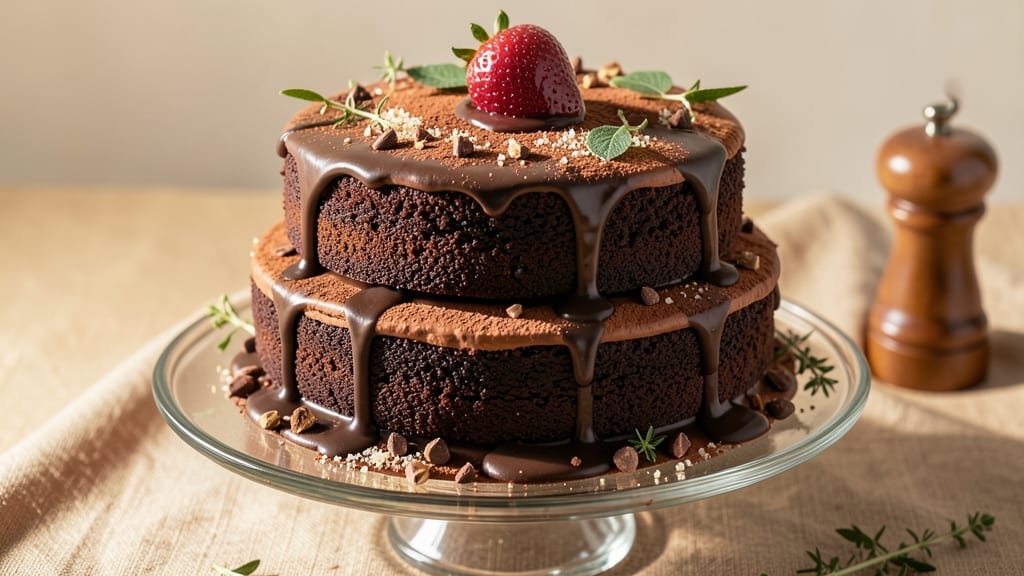
This cacao chocolate cake recipe delivers deep, fudgy richness with a moist crumb and espresso-infused depth—all while being completely plant-based. 💛 The secret lies in raw cacao powder and aquafaba (chickpea brine), which replace eggs and dairy without sacrificing texture or flavor.
I developed this recipe after years of testing vegan chocolate cakes that either dried out or tasted artificial, and this version finally cracked the code for restaurant-quality results at home.
What sets this cake apart is the dual-chocolate approach: high-quality cocoa powder for structure and raw cacao nibs for intense chocolate flavor and nutritional benefits. The espresso boost enhances the chocolate notes without overpowering them, creating a complex, satisfying bite that’s perfect for special occasions or indulgent weeknight treats.
The recipe uses simple pantry staples—no specialized equipment required—just a 325°F oven and a little patience for resting. By the time you slice into this cake, you’ll be greeted with fudgy cracks on the surface, a velvety crumb, and a deep chocolate aroma that fills your kitchen.
The frosting (optional but recommended) adds a glossy finish and extra richness, making every bite feel like a decadent dessert experience. This is the kind of cake that impresses guests while keeping the ingredients approachable.
Whether you’re baking for a celebration or simply craving something rich and chocolatey, this recipe delivers. Let’s get started—your taste buds will thank you.
Ingredients for cacao chocolate cake
Pantry staples meet restaurant-quality chocolate magic in this vegan cake.
| Ingredient | Amount | Notes |
|---|---|---|
| All-Purpose Flour 🌾 | 2 cups | Sifted for light texture |
| Raw Cacao Powder 🍫 | ¾ cup | High-quality, unsweetened |
| Cocoa Powder 🍫 | ½ cup | Natural or Dutch-processed |
| Granulated Sugar 🍚 | 1 ½ cups | Organic preferred |
| Coconut Sugar 🍯 | ½ cup | For caramel notes |
| Aquafaba 🥫 | ¾ cup | From 2 cans chickpeas |
| Instant Espresso Powder ☕ | 2 tsp | For deep espresso flavor |
| Vanilla Extract 🌿 | 1 tbsp | Pure, high-quality |
| Raw Cacao Nibs 🍫 | ½ cup | For intense chocolate crunch |
| Baking Powder 🧂 | 1 ½ tsp | Aluminum-free preferred |
| Salt 🧂 | ½ tsp | Fine sea salt |
| Unsweetened Almond Milk 🥛 | ¾ cup | Room temperature |
| Melted Coconut Oil 🫒 | ½ cup | For moisture and richness |
| Apple Cider Vinegar 🍏 | 1 tsp | For rise and tang |
The cacao powders are non-negotiable here. Navitas or Guittard raw cacao powder delivers that intense, slightly bitter depth without artificial aftertaste. For the cocoa powder, Hershey's Special Dark or Dutch-processed varieties work best—they're more refined than natural cocoa. Cacao nibs? Lily's or Navitas brands are top-tier, but any organic store's bulk section will have decent options. The espresso powder should be instant and high-quality—Starbucks or Nescafé work, but avoid pre-ground coffee. Pro tip: buy your cacao nibs in small batches—they lose freshness fast once opened.
No aquafaba? Flax eggs (3 tbsp ground flaxseed + 9 tbsp water = 3 eggs) work as a 1:1 substitute, though texture may vary slightly. Short on almond milk? Oat or soy milk are fine, but coconut milk adds richness. The apple cider vinegar can be swapped for white vinegar at half the amount, but it won't have the same fruity depth. For the coconut oil, virgin, unrefined is ideal—it has a more pronounced flavor. If you're feeling fancy, avocado oil works too, though it's pricier. The sugars can be swapped 1:1, but coconut sugar adds subtle caramel notes that complement the chocolate beautifully.
This batter needs 30 minutes of rest before baking—trust me on this. Store leftovers in an airtight container with parchment between layers for 5 days, or freeze for 3 months. The cake actually improves overnight as the flavors meld. For make-ahead magic, bake the cake, let it cool completely, then wrap tightly in plastic wrap. The frosting (if using) keeps 1 week refrigerated or 3 months frozen. I always make a double batch—one for now, one for later. The nibs in the batter? They soften slightly but still add texture—don't skip them!
Why You'll Love This Recipe
- No Mixer Needed: I swear by this—just a bowl and a whisk. The raw cacao and cocoa powder blend into a velvety batter without a lick of effort, and honestly? That’s my kind of baking.
- Rich Without Guilt: Here’s what sold me—the deep, earthy notes from raw cacao pair with just enough sweetness from coconut sugar to feel indulgent, but not heavy. (Yes, even on a Tuesday night.)
- Double-Duty Ingredients: That same flour and sugar mix works for brownies, cookies, or even a quick frosting. I keep a bag of raw cacao and cocoa on hand just for this—it’s my secret weapon for dessert emergencies.
- Keeps Like a Champ: Serve it fresh or slice it up for days—this cake stays moist and rich without drying out. Between us, I’ve had it last a week in the fridge, and it’s still the star of my snack rotation.
Step-by-step instructions for deep chocolate cacao cake
Let's create a rich, fudgy chocolate cake with intense espresso notes and perfect texture.
👨🍳 Step 1: Whisk Wet Ingredients for Silky Foundation
In a large mixing bowl, combine the 0.75 cup aquafaba, 0.5 cup melted coconut oil, 1.5 cups granulated sugar, and 0.5 cup coconut sugar. Whisk vigorously for 3-4 minutes until the mixture becomes pale, thick, and triples in volume. You'll see ribbons form when you lift the whisk—this is your signal the mixture is properly aerated.
I like to use a stand mixer with the whisk attachment for this step, but a hand whisk works too if you're patient. The sugar should dissolve completely, and the mixture should hold its shape when you lift the whisk. This aeration creates the cake's signature tender crumb. In a separate small bowl, whisk together the 0.75 cup unsweetened almond milk, 1 tbsp vanilla extract, 1 tsp apple cider vinegar, and 2 tsp instant espresso powder. This espresso mixture will deepen the chocolate flavor and add subtle bitterness that balances the sweetness.
👨🍳 Step 2: Combine Dry Ingredients and Fold Gently
In a separate medium bowl, sift together the 2 cups all-purpose flour, 0.75 cup raw cacao powder, 0.5 cup cocoa powder, 1.5 tsp baking powder, and 0.5 tsp salt. This sifting step is crucial—it prevents dense pockets in your cake and ensures even distribution of the dry ingredients. Gently fold one-third of the dry ingredients into the wet mixture using a spatula, being careful not to deflate the air you've already incorporated.
Add the espresso mixture you prepared earlier, then gently fold in the remaining dry ingredients until just combined. You're looking for a smooth, thick batter with no visible streaks of flour—this indicates proper incorporation. Don't overmix here; you want to preserve that airy texture. Once combined, fold in the 0.5 cup raw cacao nibs using a spatula, reserving a few for garnish if desired. The nibs will add that incredible crunch and visual appeal.
🔥 Step 3: Bake Until Perfectly Set
Preheat your oven to 350°F and grease two 8-inch round cake pans thoroughly with coconut oil or butter, then line the bottoms with parchment paper. Divide the batter evenly between the prepared pans. Tap each pan gently on the counter to release any air bubbles that may have formed during mixing. Bake for 30-35 minutes or until a toothpick inserted into the center comes out with just a few moist crumbs (not wet batter).
Here's where attention to detail pays off: the cake should be set but still slightly springy to the touch. Overbaking leads to dryness, while underbaking results in a gummy texture. I like to check at the 28-minute mark—if the toothpick comes out clean, your oven runs hot and you should reduce the time slightly next time. The edges should be pulling away from the pan slightly, and you should see a crackly crust forming on top.
⏰ Step 4: Cool and Develop Fudge Cracks
Remove the cakes from the oven and let them cool in their pans for 10 minutes. Then transfer them to a wire rack to cool completely. This cooling process is where those beautiful fudge cracks develop—patience is key. Don't be tempted to remove the cakes from their pans too soon, as this can cause them to collapse.
Once completely cool, run a thin knife around the edges to loosen the cakes from the pans. If you reserved some cacao nibs, sprinkle them over the top of each cake layer before assembling. These nibs will add that perfect crunchy contrast to the tender cake. The cake should have a deep, rich chocolate aroma that fills your kitchen—this is your reward for all the careful preparation.
Pro Tips For Making Cacao Chocolate Cake
- Sift the Powders Together: Dump both cacao and cocoa powder into a fine-mesh sieve first—don’t just eyeball it. Raw cacao is dense, and cocoa powder can clump; shaking them together breaks up lumps and ensures even distribution in the batter. (Yes, even if you’re impatient like me, this makes a real difference.)
- Use Room-Temp Eggs: Cold eggs sink like stones in your batter, creating dense pockets. Let them sit in warm water for 10 minutes before whisking—they’ll blend smoother and help the cake rise more evenly. I learned this the hard way after a cake that looked like a brick.
- Skip the Overmixing: Once you fold in the dry ingredients, stop after 20 strokes—no more. Overmixing develops gluten, and your cake will turn tough instead of tender. The batter will look slightly lumpy, but that’s normal. (Your future self will thank you.)
- Rotate Pans Mid-Bake: Cacao cakes bake unevenly—hot spots form near the oven’s heat source. After 20 minutes, swap the pans front to back. This guarantees a consistent rise and prevents a domed, undercooked center. (Does it look weird? Yes. Does it work? Every single time.)
Regional styles of these flavors
Mexican Chocolate Twist
Transform this cake into a Mexican chocolate masterpiece by swapping the espresso powder for 1 tsp cinnamon and ½ tsp ground ancho chili powder. Add ½ cup chopped Mexican chocolate (like Abuelita or Ibarra) to the batter for a spiced, slightly tangy depth.
Top with a chili-chocolate ganache made by melting ½ cup vegan dark chocolate with ¼ cup coconut cream and 1 tsp cinnamon. This variation is perfect for celebrating Día de los Muertos or spice-loving chocolate enthusiasts. 🌶️
Italian Espresso Affogato
For an Italian-inspired version, infuse the almond milk with 1 tsp vanilla bean paste (instead of extract) and add 1 tbsp finely ground coffee beans to the batter for a deeper, more complex espresso flavor.
Serve each slice with a scoop of vegan vanilla gelato and a drizzle of hot espresso—this is the ultimate affogato experience. Garnish with crushed amaretti cookies for a crunchy, almond-kissed finish. This version shines at Italian-themed dinner parties or as a decadent dessert after a pasta course. ☕
French Chocolate Ganache
Elevate this cake with a French-style chocolate ganache by melting 1 cup vegan dark chocolate (70% cacao) with ½ cup full-fat coconut cream over a double boiler. Once smooth, fold in 1 tbsp powdered sugar and a pinch of salt.
Spread this glossy ganache between layers and on top, then decorate with edible gold leaf or chopped hazelnuts for a luxurious touch. This version is ideal for French-inspired desserts or special occasions like Valentine’s Day or anniversaries. 💛
German Black Forest
Give this cake a Black Forest twist by folding ½ cup chopped cherries (pitted) into the batter and adding 1 tsp almond extract for depth.
Top with a cherry-chocolate glaze made by simmering ½ cup cherry jam with ¼ cup water and 2 tbsp powdered sugar, then thinning with a splash of almond milk. Add vegan whipped cream and extra cherries for a festive finish.
This variation is perfect for German-inspired celebrations or as a holiday dessert with a classic twist. 🍒
Japanese Matcha Fusion
For a Japanese-inspired take, replace ½ cup of the cocoa powder with ½ cup high-quality matcha powder (like Ippodo or Jade Leaf).
Add 1 tsp white miso paste to the batter for umami depth, and top with a matcha-white chocolate ganache (melt ½ cup vegan white chocolate with 1 tbsp matcha and 1 tsp coconut oil). Garnish with red bean paste or crushed senbei rice crackers for texture.
This fusion is ideal for tea ceremonies or as a unique gift cake. 🍵
Nutrition facts
Frequently asked questions
What’s the difference between raw cacao and cocoa powder in this recipe?
Raw cacao powder is less processed and delivers a more intense, slightly bitter chocolate flavor with nutritional benefits like magnesium and antioxidants. The recipe uses both: raw cacao powder for depth and cocoa powder for structure. Think of it as the difference between dark chocolate and milk chocolate—raw cacao is the richer, more complex base.
Can I make this cake without aquafaba?
Yes! Use 3 tbsp ground flaxseed + 9 tbsp water (let it sit for 5 minutes to thicken) as a 1:1 substitute. For best results, whisk the flax "egg" until frothy before mixing. The texture may be slightly denser, but it’ll still be delicious. Pro tip: add 1 extra tbsp coconut oil to compensate for moisture loss.
Why does the cake need to rest before baking?
The 30-minute rest lets the flour absorb moisture and the baking powder activate fully, preventing dense pockets. This step also helps the espresso flavor meld with the batter. Skipping it can lead to a cake that’s either gummy or crumbly. Think of it like letting dough rise—patience pays off with a better texture!
How do I fix a sunken middle in my cake?
This usually happens from overmixing or opening the oven too early. Next time, check for a toothpick with moist crumbs (not wet batter) at 30 minutes. For recovery: slice off the sunken top, level the cake, and frost generously. The frosting will mask the imperfection while adding richness. A water bath during baking can also help prevent sinking.
Can I use this recipe for a gluten-free version?
Replace the all-purpose flour with a 1:1 gluten-free baking flour blend (like Bob’s Red Mill) and add 1 tbsp xanthan gum to improve texture. For extra moisture, reduce the flour by 2 tbsp and increase the almond milk by 2 tbsp. Gluten-free cakes often benefit from slightly longer baking times—check at 35 minutes.