Desserts
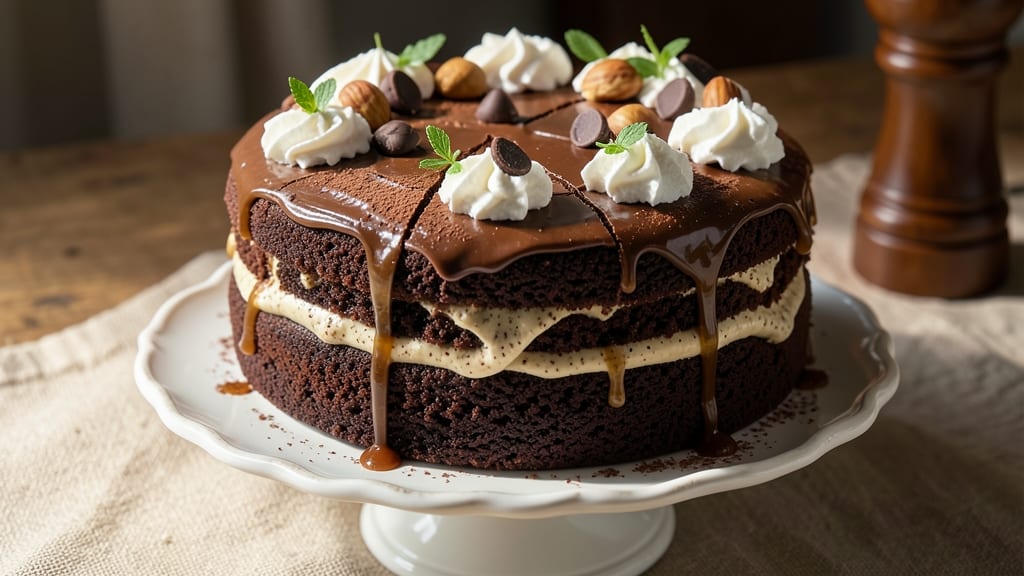
A café latte chocolate cake delivers the perfect marriage of rich chocolate and aromatic espresso in every bite. This recipe combines moist, fudgy layers infused with espresso powder and a velvety coffee buttercream that balances sweetness and depth.
The secret lies in using high-quality cocoa and freshly brewed coffee to enhance the cake's moisture and flavor without overpowering the chocolate. What sets this cake apart is the buttery crunch layer between each moist chocolate layer, adding texture that keeps every bite exciting.
The latte-inspired frosting, made with espresso syrup and whipped cream, ties the flavors together beautifully. This cake is ideal for coffee lovers who crave dessert with a sophisticated twist—no coffee drinker will resist a slice.
The result is a visually stunning cake with layers that reveal rich chocolate and fragrant coffee at every cut. Perfect for birthdays, coffee-themed parties, or simply treating yourself to a decadent dessert. Let's create this café-inspired masterpiece that combines the best of chocolate and coffee.
This recipe ensures a perfectly balanced flavor profile by carefully controlling the coffee content—just enough to enhance the chocolate without dominating it. The cake layers stay moist thanks to a combination of buttermilk and espresso-infused simple syrup, while the buttercream adds a light, airy contrast.
Each component is designed to complement the other, resulting in a harmonious dessert that's as impressive to look at as it is to eat. For those who love texture, the buttery crunch layer between each cake layer adds an unexpected delight that elevates the experience.
The frosting, made with espresso syrup and whipped cream, creates a smooth, creamy finish that ties everything together. This cake is sure to become a favorite for anyone who appreciates the perfect blend of chocolate and coffee flavors.
Whether you're baking for a special occasion or simply indulging in a coffee-infused treat, this café latte chocolate cake delivers restaurant-quality results at home. The combination of rich chocolate and aromatic coffee creates a dessert that's both comforting and sophisticated.
With each bite, you'll experience the perfect balance of flavors and textures, making this cake a standout dessert for any occasion.
Ingredients for cafe latte chocolate cake
Rich cocoa, bold espresso, and velvety buttercream—this café latte cake delivers restaurant-quality layers at home.
| Ingredient | Amount | Notes |
|---|---|---|
| Unsalted Butter 🧈 | 2 cups | Room temperature for creaming |
| Granulated Sugar 🍚 | 2 ½ cups | Superfine preferred for smoothness |
| Dark Chocolate Chips 🍫 | 2 cups | 70% cocoa, high-quality |
| Large Eggs 🥚 | 4 whole | Room temperature, separated |
| Espresso Powder ☕ | 2 tbsp | Finely ground, not instant |
| Unsweetened Cocoa Powder 🍫 | ½ cup | Dutch-processed for smoothness |
| All-Purpose Flour 🌾 | 2 cups | Sifted, plus extra for dusting |
| Baking Powder 🍞 | 1 ½ tsp | Aluminum-free preferred |
| Salt 🧂 | ½ tsp | Fine sea salt |
| Buttermilk 🥛 | 1 cup | Fresh, not powdered |
| Vanilla Extract 🌿 | 2 tsp | Pure Madagascar preferred |
| Crushed Butter Cookies 🍪 | 1 ½ cups | For buttery crunch layer |
| Heavy Whipping Cream 🥛 | 3 cups | Cold for buttercream |
| Powdered Sugar 🍚 | 4 cups | Sifted for smooth frosting |
| Espresso Syrup ☕ | ½ cup | Store-bought or homemade |
| Whipped Cream Stabilizer 🍦 | 1 tsp | Optional, for extra stability |
The chocolate and espresso are non-negotiable here. Valrhona cocoa powder or Ghirardelli dark chocolate elevate the flavor—don't skimp on quality. For espresso powder, Lavazza or Illy brands deliver the most aromatic punch. The buttercream's secret? Cold heavy cream whipped to stiff peaks before folding in powdered sugar. If you're using store-bought espresso syrup, Torani or Monin are my go-tos—they're consistently flavorful without being overly sweet. For the buttery crunch layer, Oreos or homemade shortbread cookies work perfectly, but avoid overly sweet varieties that'll clash with the chocolate.
No espresso powder? Strong brewed coffee reduced by half works in a pinch, but the texture will differ slightly. Substituting cocoa powder? Natural unsweetened cocoa at the same amount, but Dutch-processed gives that signature smoothness. Short on buttermilk? Mix 1 tbsp vinegar or lemon juice with 1 cup milk—it's a classic swap. The frosting can be made ahead and stored in the fridge for 2 days, but let it come to room temperature before whipping again. For a lighter texture, add 1 tsp cornstarch to the powdered sugar before sifting—it prevents graininess. The cookie crumbs? Toast them lightly before crushing for extra flavor.
This cake keeps beautifully—3 days at room temperature covered loosely with plastic wrap, or 1 week refrigerated in layers separated by parchment. The buttercream can be stored separately for 5 days in the fridge or 3 months frozen. To assemble after chilling, let layers sit at room temperature for 10 minutes before frosting—the contrast makes all the difference. For a showstopper presentation, dust with powdered cocoa or sprinkle with crushed coffee beans between layers. The cake actually improves overnight as flavors meld—perfect for making ahead for parties!
Why You'll Love This Recipe
- No Mixer Needed: I swear by this recipe when my stand mixer’s out of commission. Creaming butter and sugar by hand feels almost meditative—plus, the espresso powder cuts through the richness so smoothly, you’d never guess it’s low-effort.
- Espresso Kicks It Up: That pinch of espresso powder? It’s the secret weapon. The cake stays moist without being heavy, and the dark chocolate chips melt into pockets of pure indulgence—like a dessert version of your morning coffee.
- Leftovers? Even Better: This cake actually improves the next day. The flavors meld, and the texture gets even more tender. I’ve sent slices to work with coworkers, and they’ve all asked for the recipe—no lie.
- Budget-Friendly Luxury: Rich but not pricey. Dark chocolate chips and espresso powder are affordable staples, and the butter-sugar ratio means every bite tastes like a café treat without the markup. My wallet thanks me every time.
Step-by-step instructions for café latte chocolate cake
Here's how to create layers of rich chocolate cake with espresso depth and buttery crunch between each.
Cream Butter and Sugars to Light and Fluffy
In a stand mixer fitted with the paddle attachment, beat the 2 cups unsalted butter and 2.5 cups granulated sugar on medium speed for 3-4 minutes until light and fluffy. You'll see the mixture nearly double in volume and become pale in color. This step incorporates air, which creates that tender, moist texture we want in our cake.
I like to scrape down the sides of the bowl every 30 seconds to ensure even mixing. The butter should be completely smooth with no lumps remaining. This is your foundation—don't rush it. If you're using room temperature butter, it should leave a slight imprint when pressed with your finger.
Incorporate Eggs and Espresso Infusion
Add the 4 whole large eggs, one at a time, mixing on low speed for 30 seconds after each addition. This gradual incorporation prevents curdling. Then add the 2 tbsp espresso powder and 2 tsp vanilla extract, mixing just until combined. The espresso powder will give us that signature café latte flavor without overpowering the chocolate.
Next, sift in the 2 cups all-purpose flour, 1.5 tsp baking powder, 0.5 tsp salt, and 0.5 cup unsweetened cocoa powder all at once. Mix on low speed just until the dry ingredients disappear—you should still see some flour streaks. Overmixing develops gluten, which can make our cake tough. Stop mixing as soon as everything comes together.
Fold in Chocolate and Buttermilk
Remove the bowl from the mixer and gently fold in the 2 cups dark chocolate chips using a silicone spatula. Then stir in the 1 cup buttermilk just until combined. The batter will be thick but pourable. I like to divide it evenly between two 9-inch round cake pans lined with parchment paper and lightly greased with butter.
Here's the thing—don't overfill your pans. The batter should come about ¾ of the way up the sides to allow for rising. Tap each pan gently on the counter to release any air bubbles. Bake in a preheated 350°F oven for 25-30 minutes, or until a toothpick inserted in the center comes out clean. Rotate the pans halfway through for even baking.
Prepare the Crunch Layer and Buttercream
While the cakes cool, let's make the buttery crunch layer. In a small bowl, combine the 1.5 cups crushed butter cookies with 2 tbsp of the espresso syrup. This will create a moist, flavorful crumb that contrasts beautifully with the cake layers.
For the buttercream, beat the 3 cups heavy whipping cream until soft peaks form. Gradually add the 4 cups powdered sugar and 1 tsp whipped cream stabilizer, then mix in the remaining 0.5 cup espresso syrup. Beat until smooth and fluffy—this should take about 3-4 minutes with a stand mixer. The buttercream should hold its shape when piped.
Assemble and Decorate the Cake
Once the cakes have cooled completely, level the tops if necessary. Place the first cake layer on a cake stand and spread a thin layer of buttercream. Then add half of the cookie crumb mixture, spreading it evenly. Top with the second cake layer and repeat with another layer of buttercream and the remaining crumb mixture.
Cover the entire cake with a final layer of buttercream, then smooth the sides with an offset spatula. For that café latte touch, I like to drizzle additional espresso syrup over the top and swirl it into the buttercream with a skewer. Chill the cake for at least 2 hours before slicing—this allows the flavors to meld and makes for cleaner cuts. Each slice should reveal layers of moist chocolate cake, buttery crunch, and rich espresso-infused buttercream.
Pro Tips For Making Cafe Latte Chocolate Cake
- Melt Butter Slowly: I learned this the hard way—dumping cold butter into hot sugar makes it seize up like glue. Instead, melt the butter first (just until it turns liquid), then mix it into the sugar. The batter will be smoother, and your cake won’t turn out dense. (Yes, even if you’re impatient like me.)
- Use Room-Temp Eggs: Cold eggs mix into the batter like tiny ice cubes, and your cake will have weird pockets. Take the eggs out of the fridge 30 minutes before you start—just enough time to warm up, not turn into soup. Trust me, the texture difference is noticeable.
- Don’t Overmix the Batter: I used to beat this batter until it looked like pancake batter, but that’s how you end up with a cake that’s more like a brick. Mix just until the flour disappears—maybe 20 seconds past that. Overmixing = tough cake, and no one wants that.
- Toast the Espresso Powder: Sounds weird, but it works: dry-toast the espresso powder in a small pan over low heat for 30 seconds before mixing it in. It deepens the coffee flavor without bitterness and makes the whole cake taste richer. (Your future self will thank you.)
Troubleshooting this dish
Cake Too Dense
Overmixing the batter develops gluten, making the cake dense. Mix dry ingredients just until combined—stop when you still see flour streaks. Also, ensure your butter is at room temperature (68-70°F) but not melted.
If your cake turns out dense, try adding 1 tbsp extra buttermilk to the batter next time to improve moisture. 💡
Dry or Cracked Layers
This usually happens if the cake bakes too long or the oven runs hot. Check for doneness with a toothpick at 25 minutes—it should come out with moist crumbs, not clean.
If your oven runs hot, reduce temperature to 325°F and bake for 35-40 minutes. For extra moisture, brush warm layers with espresso syrup before assembling.
Buttercream Too Thin
Cold heavy cream won't whip properly. Chill your mixing bowl and beaters for 10 minutes before whipping. If your buttercream still won't hold shape, add 1 tbsp powdered sugar at a time while mixing.
For extra stability, fold in 1 tsp meringue powder instead of whipped cream stabilizer. Let the cream sit at room temperature for 30 minutes before whipping if it's too cold.
Frosting Too Sweet
Adjust the espresso syrup ratio—reduce to ¼ cup if you prefer less sweetness. Balance by adding 1 tbsp extra cocoa powder to the buttercream. For a more café latte flavor without sugar overload, infuse the cream with 1 tbsp instant espresso powder before whipping.
Taste as you go—this frosting is delicate and can become overpowering quickly. ✨
Cookie Crumbs Too Dry
Toast your cookies lightly before crushing to enhance flavor, but don't overdo it—they should still be slightly soft. For extra moisture, mix in 1 tbsp melted butter or 1 tsp espresso syrup with the crumbs.
If using store-bought cookies, check for added sugars—low-sugar varieties like Oreos or homemade shortbread work best. Press the crumbs firmly between layers for even distribution.
Cake Sinks After Chilling
This happens when layers aren't fully cooled before assembling. Let cakes cool completely on a wire rack for 1 hour before leveling and frosting. For extra support, place a parchment-lined cake board over the first layer before adding the second.
Chill the assembled cake in the fridge for 30 minutes before final decorating to help it set properly. 💪
Nutrition facts
Frequently asked questions about café latte chocolate cake
Can I make this cake without espresso powder?
Yes! Use 1 tbsp instant espresso powder dissolved in 2 tbsp hot water as a substitute, or replace it with ½ cup strong brewed coffee reduced by half. For a milder flavor, try 1 tsp vanilla bean paste mixed with 1 tsp coffee extract—it adds depth without overpowering. The key is balancing the coffee intensity with chocolate richness.
How do I store leftovers to keep them fresh?
Cover the cake loosely with plastic wrap and store at room temperature for up to 3 days. For longer storage, refrigerate layers separately in airtight containers for 1 week. The buttercream can be refrigerated separately for 5 days or frozen for 3 months. Always bring chilled components to room temperature before reassembling for best texture.
What's the best way to decorate this cake for special occasions?
For an elegant look, dust the top with powdered cocoa or sprinkle with crushed coffee beans between layers. Add a latte-inspired touch by piping whipped cream patterns on top or drizzling chocolate ganache in swirls. For extra flair, place edible gold leaf or chocolate-covered espresso beans on the sides. The contrast of dark chocolate and light cream makes it visually stunning.
Why does my cake taste bitter?
Excessive espresso powder or overbaking can cause bitterness. Use only 2 tbsp espresso powder and check doneness at 25 minutes—the cake should have moist crumbs, not be clean. For balance, add 1 extra tbsp vanilla extract to the batter or reduce the espresso powder to 1 tbsp. Always use high-quality cocoa powder to prevent metallic aftertaste.
Can I make this cake gluten-free?
Yes, but with adjustments. Replace the 2 cups all-purpose flour with a 1:1 gluten-free baking flour blend (like Bob's Red Mill) plus 1 tsp xanthan gum. Add 2 tbsp extra buttermilk to improve moisture. For the crunch layer, use gluten-free shortbread cookies or crushed gluten-free graham crackers. The texture will be slightly denser, but the flavor remains rich and satisfying.