
Desserts
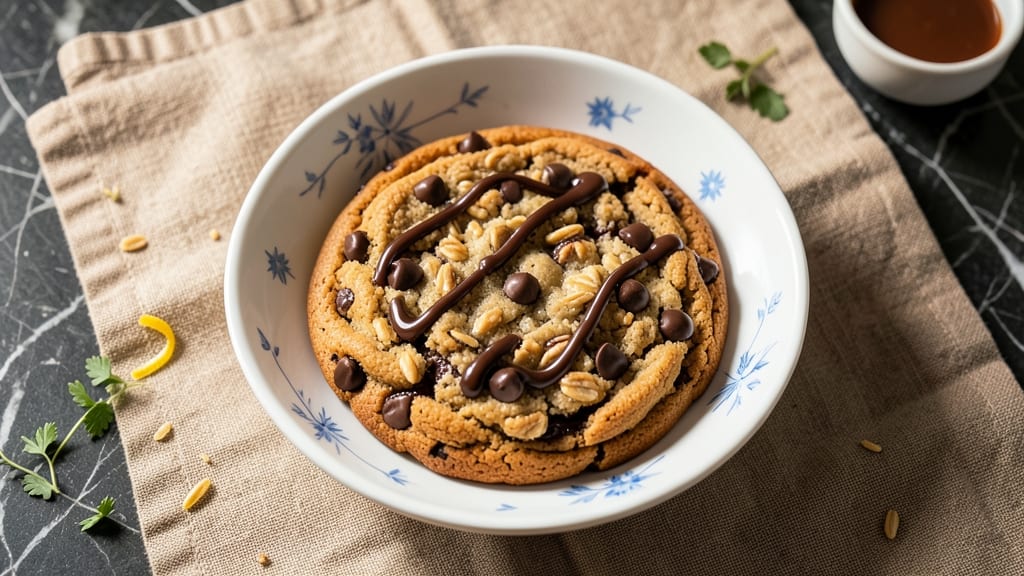
This chewy oatmeal chocolate chip cookie recipe delivers the perfect balance of golden edges and caramelized chocolate chips every time. The secret lies in the right ratio of brown sugar to white sugar—brown sugar creates that signature chewy texture, while white sugar adds crispness.
I've been perfecting this recipe for years, and the difference between these cookies and store-bought is night and day.
What sets these apart is the 30-minute chilling time before baking, which allows the dough to firm up just enough to maintain shape while still delivering that tender, chewy center.
The oats add a satisfying crunch and subtle nuttiness that complements the rich chocolate chips beautifully. This isn't just another cookie recipe—it's a foolproof method that consistently produces restaurant-quality results.
By the time they emerge from the oven, you'll have cookies with crispy edges, a soft, chewy interior, and chocolate chips that stay melty in the center. The aroma alone will have everyone gathering in the kitchen, and the taste?
Pure comfort food perfection. These cookies are perfect for holidays, potlucks, or just satisfying that afternoon sweet tooth.
Serve them warm with a glass of cold milk or a scoop of vanilla ice cream for the full experience. The recipe makes a large batch, so you'll have plenty to share—or save for later. Here's everything you need to make them from scratch!
Ingredients for chewy oatmeal chocolate chip
Golden edges and caramelized chips start with these precise ingredients—each plays its role.
| Ingredient | Amount | Notes |
|---|---|---|
| Unsalted Butter 🧈 | 1 cup | Cold, cut into 1-inch cubes |
| Packed Light Brown Sugar 🍯 | 1 ½ cups | Turbinado or dark brown preferred |
| Granulated White Sugar 🍚 | ½ cup | For crisp edges and balance |
| Large Eggs 🥚 | 2 whole | Room temperature for even mixing |
| Pure Vanilla Extract 🌿 | 2 tsp | High-quality, Madagascar preferred |
| All-Purpose Flour 🌾 | 2 ½ cups | Sifted, spooned and leveled |
| Baking Soda 🧂 | 1 tsp | Freshly measured |
| Diamond Crystal Kosher Salt 🧂 | 1 tsp | Adjusts to 1.25 tsp table salt |
| Old-Fashioned Rolled Oats 🥣 | 1 cup | Not quick oats, toasted optional |
| Semi-Sweet Chocolate Chips 🍫 | 2 cups | High-quality, 60% cacao minimum |
| Flaky Sea Salt 🧂 | 1 tbsp | For finishing cookies |
The butter should be cold to prevent spreading, so pull it from the fridge right before measuring. King Arthur or European-style butter has higher fat content—look for at least 82% fat—giving richer flavor and better texture. Brown sugar matters here; Muscovado or turbinado adds molasses depth that regular brown sugar lacks. Chocolate chips are non-negotiable: Ghirardelli or Valrhona melt beautifully and resist burning. Toast your oats in a dry pan for 5 minutes to enhance their nuttiness—this step makes all the difference in texture.
No vanilla extract? Almond extract at half the amount works, though the flavor shifts slightly. Substituting white sugar for brown? Reduce by 2 tbsp and add 1 tsp extra water to compensate for moisture loss. For chocolate, chopped chocolate bars (70% or higher) give better texture than chips. If you can't find old-fashioned oats, quick oats toasted function similarly, though texture will be slightly denser. The baking soda must be fresh—if it's more than 6 months old, replace it with 1/4 tsp baking powder plus 1/4 tsp baking soda for lift.
Store dough in an airtight container with parchment between layers for up to 5 days—it improves overnight. Baked cookies keep in a cool, dark place for 5 days or freeze for 3 months in a single layer before transferring. For extra chewiness, underbake by 1 minute and let cool on the sheet. The flaky sea salt should be sprinkled immediately after baking while still warm—this enhances the caramelization and balances sweetness.
Why You'll Love This Recipe
- No-Fuss Mixing: I swear by this—just cream butter and sugars until light, then fold in eggs and vanilla like you’re making a lazy cake batter. No food processor, no fancy techniques, just a bowl and a spoon. Honestly, I’ve made this while chatting on the phone.
- Melty Magic: That perfect chew? Brown sugar and butter caramelize into something almost buttery-toffee-like, while the eggs add richness that makes every bite feel like a hug. The chocolate chips? They melt into little pockets of gooey heaven—no one ever grabs just one.
- Double-Duty Treat: Pack these in jars for a grab-and-go breakfast or snack, or freeze half the batch for when you’re too tired to bake. They’re my go-to for potlucks, school lunches, or when I need to bribe my kid to eat something healthy-looking. (Spoiler: they’ll eat it anyway.)
- Budget-Friendly Binge: A single batch costs less than takeout and feeds a crowd—plus, the ingredients are pantry staples. I’ll be real: I’ve made three batches in a week because they’re that good, and the leftovers? Still delicious after a week if you store them right. Win.
Step-by-step instructions for chewy oatmeal chocolate chip cookies
Here's the method that guarantees chewy centers, crisp edges, and perfectly caramelized chocolate chips every time.
Cream Butter and Sugars to Light and Fluffy
In a stand mixer fitted with the paddle attachment, beat the 1 cup unsalted butter (cold and cut into 1-inch cubes) with the 1.5 cups packed light brown sugar and 0.5 cup granulated white sugar on medium speed for 3-4 minutes. The mixture should nearly double in volume and become pale golden, with ribbons forming when the paddle is lifted. This thorough creaming incorporates air, which creates those signature crackly tops and ensures proper spread.
I like to stop and scrape down the sides of the bowl every 30 seconds to ensure even mixing. The butter should be completely smooth with no visible lumps—this prevents dense cookies. If your butter is too soft, chill the bowl in the freezer for 5 minutes before continuing. The texture at this stage determines whether your cookies will be chewy or cakey.
Add Eggs and Vanilla for Richness
Add the 2 whole large eggs (room temperature) one at a time, mixing on low speed for 30 seconds after each addition. This gradual incorporation prevents the batter from curdling. Then add the 2 teaspoons pure vanilla extract and mix for another 10 seconds until fully combined. The batter should be thick but pourable, with a smooth, velvety consistency.
Here's the thing—room temperature eggs incorporate better than cold ones, creating a more uniform texture. If your eggs are straight from the fridge, let them sit in warm water for 5 minutes before using. The vanilla extract should be high-quality Madagascar bourbon for the best flavor profile—it makes a noticeable difference in the final product.
Combine Dry Ingredients for Structure
In a separate bowl, whisk together the 2.5 cups all-purpose flour, 1 teaspoon baking soda, and 1 teaspoon Diamond Crystal kosher salt. Sift the flour first to aerate it, then whisk vigorously to distribute the leavening agents evenly. Gradually add this dry mixture to the wet ingredients, mixing on low speed for 30-45 seconds until just combined—you should still see a few flour streaks. Overmixing develops gluten, which leads to tough cookies.
Remove the bowl from the mixer and fold in the 1 cup old-fashioned rolled oats and 2 cups semi-sweet chocolate chips by hand using a silicone spatula. The oats should be evenly distributed throughout the dough, and the chocolate chips should be scattered randomly. I like to press the chocolate chips into the dough slightly so they don't sink to the bottom during baking. This ensures they're distributed throughout each cookie.
Chill the Dough for Perfect Texture
Cover the bowl with plastic wrap and refrigerate for at least 30 minutes (I prefer 1 hour or even overnight). Chilling the dough solidifies the butter, which prevents excessive spreading in the oven. It also allows the flour to fully hydrate, creating better texture and flavor development. The dough should be firm but still pliable when you press it—if it's too soft, chill for another 15 minutes.
This step is non-negotiable for achieving that perfect chewy texture. Cold dough holds its shape better, resulting in thicker cookies with crispy edges and gooey centers. If you're short on time, you can also freeze the dough in a log for up to 3 months—just slice and bake straight from frozen, adding 2-3 minutes to the baking time.
Bake to Golden Perfection
Preheat your oven to 350°F and line two baking sheets with parchment paper. Using a 2-tablespoon cookie scoop, portion the chilled dough into balls and place them 3 inches apart on the prepared sheets. Gently press down on each ball with your palm to flatten slightly—this ensures even baking and prevents domed tops. Sprinkle each cookie with a pinch of flaky sea salt for a burst of flavor.
Bake for 11-13 minutes until the edges are golden brown but the centers still look slightly underdone. The tops should have crackly lines, and the chocolate chips should be caramelized around the edges. Rotate the baking sheets halfway through for even browning. Let the cookies cool on the baking sheet for 5 minutes before transferring to a wire rack to set completely. Enjoy them warm for the ultimate experience—each bite should deliver a perfect balance of chewy texture, crisp edges, and melty chocolate.
Pro Tips For Making Chewy Oatmeal Chocolate Chip
- Mix Wet First: Mix the butter, brown sugar, and white sugar together until fully combined before adding eggs—this prevents grainy spots and ensures the oatmeal gets that uniform, fudgy texture. I used to add eggs first, and the batter always ended up streaky, no matter how much I mixed after.
- Use Room-Temp Eggs: Cold eggs make the batter thick and clumpy, so let them sit out for 30 minutes before cracking them in. I learned this the hard way after making a batch that looked like it needed more flour—turns out, the eggs were the issue.
- Bake Until Golden, Not Just Set: The edges should be deep golden brown, not just set, for that perfect chewy texture. I used to pull them out when the top looked "done," but they’d end up dry—now I wait until the edges are almost caramelized.
- Press Oats In, Don’t Just Sprinkle: After pouring the batter, use a spatula to press the oats into the top in a thick, even layer. This guarantees chewy pockets in every bite instead of a few scattered pieces—no one wants to dig for chocolate chips.
Essential equipment for chewy oatmeal chocolate chip
Stand Mixer Essentials
Your stand mixer is the MVP for creaming butter and sugars to that perfect light, fluffy texture. I swear by the KitchenAid Artisan Series with the paddle attachment—it handles the 3-4 minutes of creaming effortlessly. The 5-quart bowl gives you room to scrape down the sides without spills.
For budget-friendly options, the Hamilton Beach 6-Speed delivers similar results at half the price. Pro tip: Chill your bowl in the freezer for 5 minutes if your butter gets too soft during mixing. 🔥
Cookie Scoop Precision
Uniform cookie size = consistent baking results. Grab a 2-tablespoon cookie scoop (I use the OXO Good Grips silicone version) to portion your dough. The 3-inch spacing on baking sheets ensures even browning without crowding.
For extra precision, dip the scoop in flour between uses to prevent sticking. If you don't have a scoop, use a ¼-cup measuring cup—just pack the dough firmly for consistent portions.
Baking Sheet Must-Haves
Heavy-duty baking sheets prevent warping and ensure even heat distribution. My go-to is Nordic Ware Natural Aluminum Half-Sheets—they're durable and conduct heat beautifully. Line them with parchment paper (I prefer Silpat for extra durability) to prevent sticking.
For maximum crispiness, I rotate sheets halfway through baking. Pro move: Use quartz baking stones on the lower rack to create crispier edges—just add them 15 minutes before baking.
Chilling Tools
Proper chilling transforms your cookies from flat discs to perfectly shaped chewy delights. I use clear plastic wrap (not aluminum foil) to cover dough bowls—it prevents condensation that makes dough sticky. For longer storage, I transfer dough to airtight containers with parchment between layers.
The 1-hour chill in the fridge is non-negotiable, but if you're in a hurry, a freezer-safe dough log works perfectly—just slice and bake straight from frozen with 2 extra minutes in the oven.
Temperature Control
An oven thermometer is your secret weapon for perfect cookies every time. I keep a Thermoworks Oven Thermometer in my oven at all times—it's accurate to ±1°F. Preheat for 20 minutes before baking to ensure even temperature distribution.
For even better results, place your baking sheets on the middle rack where heat circulates most evenly. If your oven runs hot, reduce temperature to 340°F—these cookies are forgiving enough to handle slight variations.
Finishing Touches
Flaky sea salt is the final flavor boost that takes these cookies to the next level. I use Maldon Sea Salt for its delicate crystals that melt beautifully. Sprinkle it immediately after baking while cookies are still warm for maximum caramelization.
For presentation, I transfer cookies to a wire cooling rack (I love the OXO Good Grips version) to prevent soggy bottoms. Keep a small bowl of salt nearby—it's the easiest way to elevate any cookie recipe. ✨
Nutrition facts
Frequently asked questions
Why do these oatmeal chocolate chip cookies turn out chewy instead of crispy?
The chewiness comes from using 1.5 cups packed light brown sugar (not white sugar) and chilling the dough for 1 hour. Brown sugar adds moisture that keeps cookies soft, while chilling prevents excessive spreading. For extra chew, slightly underbake by 1 minute—they'll firm up as they cool.
Can I substitute quick oats for old-fashioned rolled oats?
Yes, but texture will differ slightly. Toast 1 cup quick oats in a dry pan for 5 minutes first to mimic the nuttiness of rolled oats. Quick oats are finer, so cookies may be denser. For best results, stick with old-fashioned oats—they maintain the classic crunch and texture.
How do I prevent my cookies from spreading too much?
Always chill the dough for 1 hour (or freeze for 30 minutes) before baking. Use cold butter, portion dough into 2-tablespoon balls, and flatten slightly with your palm. Bake on the middle rack at 350°F—avoid high heat, which causes rapid spreading.
What's the best way to store these cookies?
Keep baked cookies in an airtight container at room temperature for 5 days or freeze for 3 months. For dough, refrigerate in an airtight container with parchment between layers for 5 days or freeze for 3 months. Re-bake frozen dough straight from the freezer—add 2-3 minutes to baking time.
Can I add nuts or other mix-ins?
Fold in ½ cup chopped walnuts or ½ cup dried cranberries with the chocolate chips. For extra richness, swap ½ cup chocolate chips for white chocolate or butterscotch chips. Keep total mix-ins to 2.5 cups to maintain texture.