Desserts
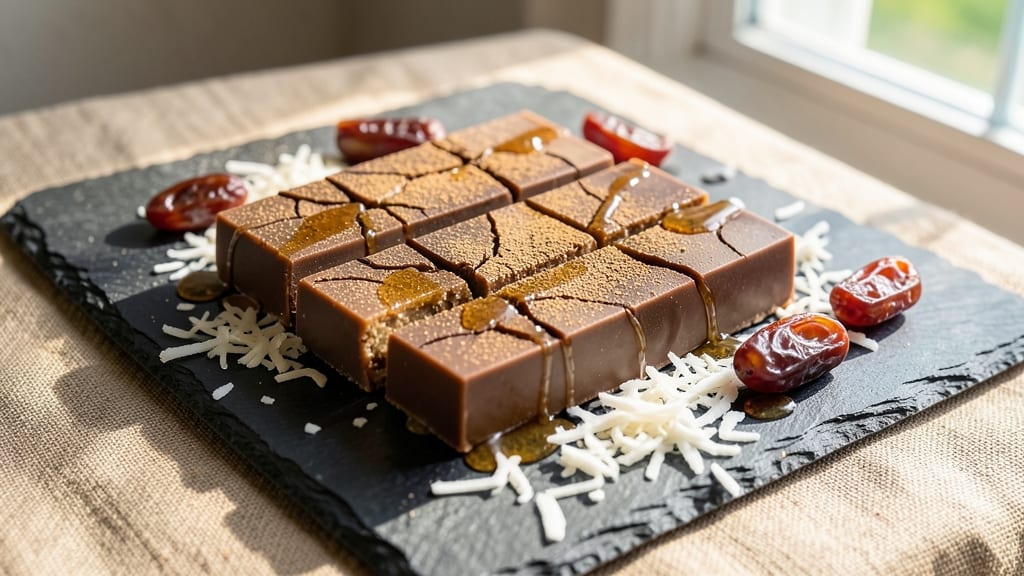
This carob chocolate bar recipe delivers rich, nutty-sweet crunch without the caffeine or sugar crash. 🌟 The secret lies in blending carob powder with coconut oil and dates to create a velvety, melt-in-your-mouth texture that mimics chocolate's decadence while offering natural sweetness and health benefits.
I developed this recipe after years of experimenting with vegan dessert alternatives that actually satisfy cravings.
The process is straightforward but requires attention to temperature control. You'll melt coconut oil gently, then combine it with carob powder, maple syrup, and vanilla for a smooth, spreadable mixture.
The key to achieving that perfect chocolate-like consistency is letting the mixture cool slightly before pressing it into a lined pan—this ensures clean breaks when cutting. No special equipment is needed beyond a mixing bowl and a spatula.
What you'll end up with is a batch of rich, carob-infused bars with a subtle nutty flavor and satisfying snap. The texture is dense yet crumbly, similar to high-quality dark chocolate but with a naturally sweet profile that doesn't require refined sugar.
These bars keep well in the refrigerator for up to two weeks, making them perfect for meal prep or gifting.
For added depth, consider mixing in toasted nuts, a pinch of sea salt, or warm spices like cinnamon. The possibilities for customization are endless while maintaining the recipe's core simplicity and health benefits. Let's get started on creating these satisfying, caffeine-free treats that taste like a dessert indulgence.
Ingredients for carob chocolate bar
Rich carob powder meets coconut oil and dates for decadent, caffeine-free bars that taste like dessert indulgence.
| Ingredient | Amount | Notes |
|---|---|---|
| Carob Powder 🌿 | 1 ½ cups | High-quality, unsweetened carob |
| Unsweetened Shredded Coconut 🥥 | 1 cup | Finely shredded, unsweetened |
| Pitted Dates 🍯 | 1 ½ cups | Pitted and chopped finely |
| Unrefined Coconut Oil 🫒 | 1 cup | Melted but not overheated |
| Pure Maple Syrup 🍁 | ½ cup | Grade B for deeper flavor |
| Pure Vanilla Extract 🌺 | 1 tbsp | High-quality, Madagascar bourbon |
| Sea Salt 🧂 | ½ tsp | Fine grain, for balance |
| Ground Cinnamon 🌶️ | 1 tsp | Freshly ground preferred |
| Toasted Almonds 🥜 | ½ cup | Chopped coarsely, optional |
| Unsweetened Cocoa Powder 🍫 | ¼ cup | For deeper chocolate flavor |
| Coconut Oil (for pressing) 🫒 | 1 tbsp | Extra for pan coating |
Carob powder is the star here—look for organic, unsweetened at health food stores like Whole Foods or Sprouts. The finer the grind, the smoother your bars will be. Dates add natural sweetness, so Medjool dates work best—chop them finely for a silky texture. Coconut oil should be unrefined and organic; Trader Joe's has a great affordable option. Pro tip: Toast your almonds lightly before chopping—they add a nutty depth that mimics chocolate's complexity.
No carob powder? Cocoa powder plus a pinch of cinnamon gets you close, but the flavor won't be identical. Dates too expensive? Date syrup or agave nectar works in a pinch, though texture might be slightly softer. Swap coconut oil for avocado oil if you prefer a neutral taste. For extra richness, add 1 tbsp tahini to the mix. The cocoa powder here isn't mandatory, but it bridges that gap between carob's nuttiness and chocolate's depth—worth the extra cupboard space.
Store these bars in an airtight container in the fridge for up to 2 weeks—they'll keep beautifully. For longer storage, wrap individually in parchment and freeze for 3 months. The coconut oil solidifies at room temp, so keep them chilled until serving. These bars reheat wonderfully—just pop them in the oven at 300°F for 2-3 minutes to soften slightly for a fudgy texture. Perfect for meal prep or gifting!
Why You'll Love This Recipe
- Five-Ingredient Magic: I swear by this—just dates, coconut oil, and a handful of pantry staples. No fancy equipment, no waiting for chocolate to temper, just pulse-blend and press. Honestly, it’s the kind of recipe that makes me feel like a baking genius without the stress.
- No-Bite Guilt: That deep, toasty carob flavor? Rich and satisfying, but without the caffeine crash or sugar spike. The coconut adds a chewy contrast, and the maple syrup ties it all together—sweet enough to feel like a treat, but made with ingredients that actually nourish you. (Yes, even on a Tuesday night.)
- Gift-Worthy in Minutes: These bars freeze like a dream, so I always make a double batch—one for the freezer, one for snacking. Wrap a few in parchment, tie with twine, and boom: a thoughtful, homemade gift that costs pennies to make. My mom’s birthday? Covered. Teacher appreciation week? Done.
- Budget-Friendly Indulgence: Carob powder and dates stretch further than chocolate, and coconut oil lasts forever. I’ve made these for under $2 a batch, and they disappear faster than store-bought bars—because they’re actually tasty. Plus, no weird additives or overpriced packaging. Just real food that hits the spot.
Step-by-step instructions for carob chocolate bars
Let's blend, melt, and mold these nutty-sweet bars with no caffeine crash in sight.
👨🍳 Step 1: Blend the Base Mixture
In a high-powered food processor, combine the 1.5 cups carob powder, 0.25 cup unsweetened cocoa powder, 1.5 cups pitted dates, and 1 tsp ground cinnamon. Pulse until the dates break down into a fine crumb—this ensures a smooth texture without gritty bits. Here's the thing: dates are your natural sweetener, so don't skip blending them thoroughly.
Add the 1 cup unsweetened shredded coconut and 0.5 cup toasted almonds (if using) to the processor. Pulse just until the coconut and almonds are chopped and evenly distributed. You want the mixture to look like coarse sand—this prevents clumping when we add liquids later. If your processor struggles, work in batches to avoid overfilling.
🔥 Step 2: Melt and Combine Ingredients
In a microwave-safe bowl, melt the 1 cup unrefined coconut oil in 30-second intervals, stirring between each, until fully liquid but not hot to the touch. Add this to the food processor along with the 0.5 cup pure maple syrup, 1 tbsp pure vanilla extract, and 0.5 tsp sea salt. Process for 1-2 minutes until everything sticks together like wet sand.
Here's where it gets fun—scrape down the sides with a spatula and give it another 30-second pulse to ensure the coconut oil is fully incorporated. The mixture should form a thick, pliable dough that holds together when pressed. If it's too dry, add 1 teaspoon of coconut oil at a time until it binds properly. Too wet? Add 1 tablespoon of carob powder to fix it.
🍳 Step 3: Press into Pan for Perfect Bars
Lightly grease an 8x8-inch baking pan with 1 tablespoon coconut oil (for pressing), ensuring the bottom and sides are well coated. Press the dough firmly and evenly into the pan using a small offset spatula or the back of a spoon. I like to use a glass measuring cup for this—it gives me even pressure. Press until the surface is smooth and the edges meet the pan's sides.
Smooth the top with the back of a wet spatula for a polished finish. The reason we press so firmly is to prevent the bars from cracking during chilling. If you see any gaps or uneven spots, press them down gently. This is the moment that matters: a perfectly even surface ensures clean cuts later.
⏰ Step 4: Chill and Set
Cover the pan tightly with plastic wrap and refrigerate for at least 4 hours—overnight is ideal. The longer it chills, the firmer the bars become, making them easier to slice. I know it seems like forever, but trust me: this waiting period is what transforms your mixture into a solid, sliceable treat.
After chilling, remove the pan from the fridge and let it sit at room temperature for 10 minutes before slicing. This prevents the bars from cracking as you cut them. Use a sharp knife to cut into 12 even squares. For cleaner cuts, dip the knife in hot water, wipe it dry, and press straight down without sawing. Store any leftovers in an airtight container in the fridge for up to 2 weeks—if they last that long!
Pro Tips For Making Carob Chocolate Bar
- Melt Dates Slowly: I learned this the hard way—dumping dates straight into hot coconut oil turns them to paste faster than you can blend. Instead, soak them in warm water (not boiling) for 10 minutes first, then drain and melt them with the oil over low heat. This keeps the texture smooth and prevents graininess in your bars.
- Toast Coconut First: Skip this, and your bars will taste like a coconut-flavored dessert instead of a rich carob treat. Dry-toast the shredded coconut in a pan for 3-4 minutes until golden and fragrant—just until it smells like a tropical vacation. Cool it completely before mixing, or the coconut oil will turn into a greasy mess.
- Blend Until Silky: After mixing everything, pulse the blender a few times, then stop and scrape down the sides. I used to rush this, but the real magic happens when you blend it again for 30 seconds after scraping—this breaks down the dates and carob into a velvety texture. If it looks streaky, keep going; your bars won’t set properly otherwise.
- Chill Bars Fully: I know, you’re eager to cut into them. But if you skip the 2+ hours in the fridge, the coconut oil won’t firm up, and your bars will be sticky, crumbly, or worse—melt in your hands. Pop them in the freezer for 10 minutes if you’re impatient, then slice while cold. Trust me, the clean break is worth the wait.
Regional styles of these flavors
Mediterranean-Inspired
Inspired by the carob trees native to the Mediterranean, this version swaps toasted almonds for crushed pistachios and adds 1 tsp orange zest for a bright, citrusy twist. The region's love for carob dates back centuries—ancient Greeks and Romans used it as a natural sweetener.
For extra authenticity, fold in ½ cup dried figs (chopped finely) and a pinch of cardamom for warmth. The result? A complex, floral flavor profile that feels like a dessert straight from a Greek taverna. 🌿
Spiced Caribbean
Bring tropical vibes to your bars by adding ½ tsp allspice and ¼ tsp nutmeg to the base mixture. Replace half the shredded coconut with toasted coconut flakes> and stir in ¼ cup chopped dried apricots for a chewy texture.
This variation mirrors the Caribbean's love of bold spices and tropical fruits. Serve with a sprinkle of toasted coconut flakes> on top for that island resort feel. The spices infuse beautifully into the carob, creating a warm, aromatic experience. 🌶️
European Nutty Crunch
For a classic European touch, replace the almonds with walnuts> (toasted and chopped) and add 1 tsp espresso powder> to deepen the chocolate-like flavor. The espresso enhances carob's natural nuttiness, while walnuts add a buttery richness.
This style is popular in Northern European countries where carob was historically used in baking. Finish with a dusting of powdered sugar> for a traditional touch—though I prefer keeping it sugar-free for health-conscious enjoyment. 🥜
Mexican Cinnamon-Spiced
Give your bars a fiesta flair by adding 1 tsp cinnamon>, ½ tsp smoked paprika>, and ¼ tsp cayenne pepper> to the base.
Swap half the shredded coconut for chopped dried mango> and fold in ¼ cup chopped pecans> for a Southern Mexican-inspired twist. The spices create a warm, slightly spicy contrast to the carob's natural sweetness.
This variation is perfect for pairing with spiced chai tea or Mexican hot chocolate. 🌶️
Japanese Matcha Twist
For a sophisticated Asian-inspired version, replace ½ cup carob powder> with 2 tbsp matcha powder> and add 1 tsp vanilla bean paste> for depth. Use white sesame seeds> instead of almonds and fold in ¼ cup crushed mochi> for texture.
The matcha adds an earthy, umami note that pairs beautifully with carob's nuttiness. This fusion is inspired by Japan's love of matcha desserts and carob's historical use in traditional sweets. Serve with a dusting of matcha powder for an elegant finish. ✨
Nutrition facts
Frequently asked questions
Why does my carob mixture taste bitter?
Carob has a naturally earthy, slightly bitter profile that needs balancing. The recipe includes dates and maple syrup to counteract this—if your mixture tastes too bitter, you may have used too much carob powder. Try adding 1 extra tablespoon of maple syrup or ½ teaspoon of vanilla extract to sweeten. Also, ensure your carob powder is high-quality and unsweetened.
Can I make these bars without a food processor?
While a food processor makes blending easier, you can still achieve great results. Use a strong blender or even a mortar and pestle to finely grind the dates and carob powder. For the coconut and nuts, pulse them separately in a blender until finely chopped. Combine everything by hand in a mixing bowl, using a fork to incorporate the melted coconut oil.
How do I store these bars for maximum freshness?
Store them in an airtight container in the refrigerator for up to 2 weeks. For longer storage, wrap each bar individually in parchment paper and freeze for 3 months. Let them sit at room temperature for 5-10 minutes before enjoying to soften slightly. The coconut oil helps preserve freshness, but refrigeration prevents melting in warm environments.
What's the best way to cut the bars cleanly?
Use a sharp knife and dip it in hot water, then wipe dry before each cut. Press straight down without sawing to avoid crumbling. For extra precision, chill the bars for 1-2 hours longer than the minimum 4 hours—this makes them firmer and easier to slice. A 8x8-inch pan yields perfect squares, but you can also use a round pan for round bars.
Are these bars safe for people with nut allergies?
Only if you omit the almonds! The base recipe is nut-free, but the optional almonds contain tree nuts. For allergy-safe bars, replace almonds with sunflower seeds or pumpkin seeds. Always check labels on carob powder and other ingredients to ensure no cross-contamination occurred during processing.